



Silver Plated Tureen Dish
A silver plated tureen dish brings heavy nineteenth-century presence to the dining table, offering deep lidded bowls designed to keep grand meals warm.
Silver Plated Tureen Dish
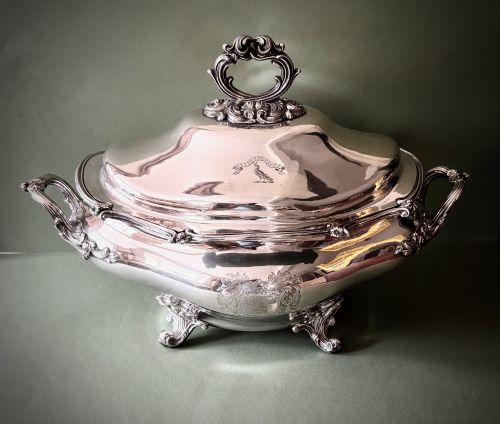
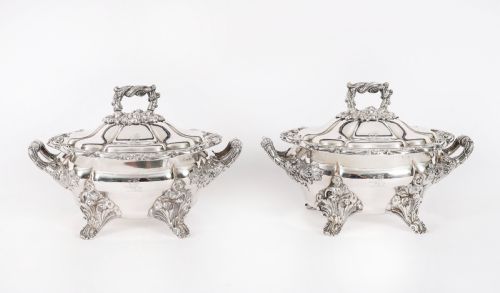
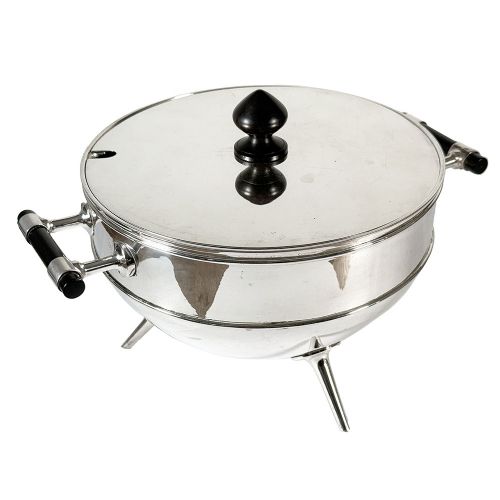
A silver plated tureen dish appears in several formal serving forms, ranging from deep soup tureens and warming dishes to lidded rectangular entree dishes. The examples found here span the Georgian, Regency, Victorian, and Edwardian periods, alongside later twentieth-century modernist and Art Deco interpretations.
Buyers most frequently encounter Edwardian and nineteenth-century pieces designed for domestic dining, including pairs of oval serving dishes and sauce tureens. These items function as practical table serveware while retaining the substantial weight and decorative handles typical of their original dining room context.
How they were made
Makers constructed these vessels using base metals such as copper, nickel silver, and electroplated nickel silver, applying methods like Old Sheffield plating or standard silver plating over the core. Certain early nineteenth-century pieces utilise the Old Sheffield technique, fusing a thin layer of real silver to a copper body, which often reveals subtle lines of copper where decades of polishing have worn the surface.
Later Victorian and Edwardian examples rely on electroplated nickel silver or standard silver plate, sometimes incorporating contrasting materials such as ebonised wood handles to provide grip and visual balance against the reflective metal surface.
Listings feature items spanning the Georgian, Regency, Victorian, Edwardian, and Art Deco periods, created in silver plate, copper, Old Sheffield Plate, and ebonised wood.
What varies in quality
The distinction between standard utility serveware and the finest examples rests on the crispness of applied cast mounts, handles, and engraved family crests. Superior items retain heavy, balanced proportions and thick plating that resists the underlying base metal showing through prominent edges.
Christopher Dresser for Hukin and Heath·Mappin and Webb·Hamilton and Inches·Daniel and Arter·Walker and Hall·Elkington·Cresswick·Dan Holy·Christofle·Reed and Barton
The Silver Plated Tureen Dish Glossary
- Old Sheffield Plate
- An early method of fusing silver to a copper base before electroplating became common. This technique creates a distinctive warm tone, often showing faint copper undertones on high-wear ridges.
- Entree Dish
- A lidded serving vessel intended for the second course of a formal meal. These pieces frequently feature removable handles to allow the base to double as an open platter.
- EPNS
- Electroplated Nickel Silver. A durable base alloy coated with a layer of pure silver using an electrical current, widely adopted by manufacturers from the mid-nineteenth century onward.
- Warming Dish
- A specialised vessel designed with a lower compartment to hold hot water or a heating element. This feature kept food warm throughout lengthy dining occasions.
Silver Plated Tureen Dish: Frequently Asked Questions
How do I clean a silver plated tureen dish?
Use a soft cloth and a dedicated silver cream designed to protect plated surfaces from harsh abrasives. Avoid scrubbing raised crests or engraved details too vigorously.
Wash the dish in warm soapy water and dry it immediately with a soft towel to prevent water spots from forming on the metal.
Can I use these tureens for daily dining?
These vessels suit regular use for serving warm food if handled with care during washing and serving. Their substantial construction allows them to hold heat effectively.
Take care to avoid metal utensils inside the bowl to prevent scratching the plated surface over time.
What is the difference between Old Sheffield plate and standard silver plate?
Old Sheffield plate involves physically fusing a sheet of silver to a copper ingot before rolling them into sheets together. This creates a thick layer with visible copper edges.
Standard silver plate applies a chemical coating of silver to a formed base metal via electricity, a process introduced around the middle of the nineteenth century.
How do I identify the period of a tureen?
Examine the overall decorative style, such as Georgian neoclassical lines, ornate Victorian floral handles, or clean Art Deco geometric shapes. Maker marks stamped on the base also help date the piece.
Check whether the metal reveals copper beneath worn spots, which often indicates older manufacturing methods like Old Sheffield plate.