
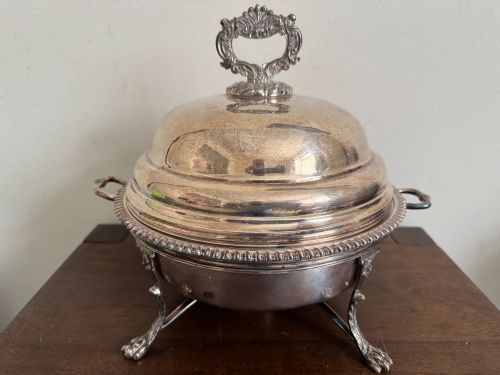


Antique Silver Food Warmer
These antique silver food warmers are practical dining vessels designed to keep dishes hot at table, prized by collectors for their clever mechanisms and gleaming surfaces.
Antique Silver Food Warmer
An antique silver food warmer is a sophisticated serveware piece designed to keep meals at an ideal temperature during long dining courses. These items encompass a variety of forms, from elaborate Georgian supper dishes with built-in lampstands to Edwardian revolving breakfast dishes and egg warmers.
The pieces on this page span several distinct historical periods, including the Georgian, Victorian, and Edwardian eras. Buyers will encounter both sterling silver creations and silver plated or electroplated nickel silver versions, alongside occasional Continental pieces and ceramic-lined designs.
Materials and construction
Many of these warmers rely on a sturdy base of copper or nickel silver that is subsequently coated in silver plate or Old Sheffield Plate. The application of silver over a base metal provided the visual splendour of solid silver at a more accessible cost for the dining room.
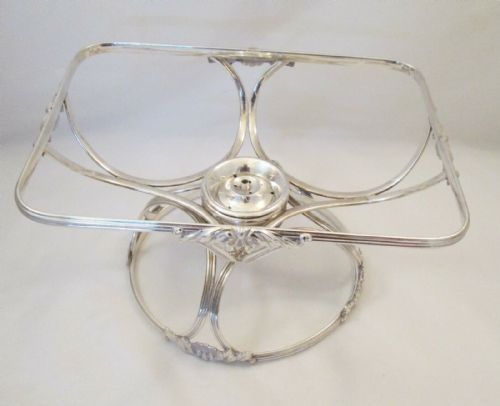
Makers utilised specialised techniques for the mechanical elements, such as the rotating mechanisms on revolving breakfast dishes and the fitted lampstands for burners. Interior ceramic liners also appear, offering a clean, heat-retaining surface for the food.
Judging quality in silver warmers
Quality in these warmers is evident in the precision of the mechanical parts, such as the smooth rotation of a revolving breakfast dish lid or the secure fit of a cover and lampstand. Superior examples exhibit balanced proportions and crisp detailing in the cast handles and decorative borders.
The choice of material also marks a distinction, with heavy sterling silver and Old Sheffield Plate occupying the upper echelon compared to standard electroplated nickel silver. Furthermore, the presence of original burners, intact ceramic inserts, and identifiable maker marks elevates a piece.
Mappin and Webb·Dan Holy
The Antique Silver Food Warmer Glossary
- Sterling Silver
- A silver alloy containing 92.5 percent pure silver by mass and 7.5 percent other metals, usually copper. This standard alloy provides durability while maintaining a bright, precious metal appearance.
- Old Sheffield Plate
- A material created by fusing a thin sheet of silver to a thicker copper base before rolling them into sheets. This early plating method produces a rich lustre that often reveals hints of the copper beneath through wear.
- Electroplated Nickel Silver
- A base metal alloy of copper, nickel, and zinc coated with a layer of silver through an electrolytic process. It became a popular and durable alternative to solid silver in the nineteenth century.
- Entree Dish
- A shallow serving vessel used for presenting individual courses or main dishes at the table. These often feature fitted covers and heated bases to maintain food temperature.
- Supper Dish
- A large, multi-compartment serving set equipped with a central lampstand or burner. These pieces were essential for extended dining in grand households.
Antique Silver Food Warmer: Frequently Asked Questions
What is an antique silver food warmer?
An antique silver food warmer is a specialised serving dish designed to keep meals warm during long dining occasions. They typically feature a base for hot water or a burner beneath a covered dish.
These pieces range from elaborate Georgian supper sets with lampstands to Edwardian revolving breakfast dishes and egg warmers. They combine practical utility with decorative elegance for the dining table.
How do revolving breakfast dishes work?
Revolving breakfast dishes feature a semi-cylindrical lid that rolls backward on a track or pivot to reveal the food inside. This clever mechanism allows diners to access the contents easily from either side of the table.
The rolling cover mechanism requires precise engineering and smooth joints, which is a hallmark of better-quality nineteenth-century and Edwardian examples.
What is the difference between silver plate and sterling silver?
Sterling silver is a solid precious metal alloy consisting of 92.5 percent silver, marked for purity and valued for its intrinsic worth. Silver plated items consist of a base metal, such as copper or nickel silver, coated with a thin layer of silver.
While solid sterling pieces represent the highest tier of craftsmanship, high-quality silver plated and Old Sheffield Plate items offer the same visual grandeur and utility.
How can I identify the period of a warmer?
The period of a warmer is often identified through its stylistic details, such as the ornate Rococo Revival curves of the nineteenth century or the cleaner lines of Edwardian pieces. Maker marks, hallmarks, and the specific metal composition also provide clear dating clues.
Examining the manufacturing techniques, such as the presence of Old Sheffield Plate versus later electroplating, helps narrow down the era of production.
Were these warmers used with water or fire?
Many warmers used compartments filled with hot water to maintain a gentle heat for delicate dishes. Others incorporated spirit burners or lamps placed beneath the serving vessel to provide continuous warmth during long meals.
Both methods allowed hosts to keep food at an appealing temperature before modern kitchen conveniences existed.