
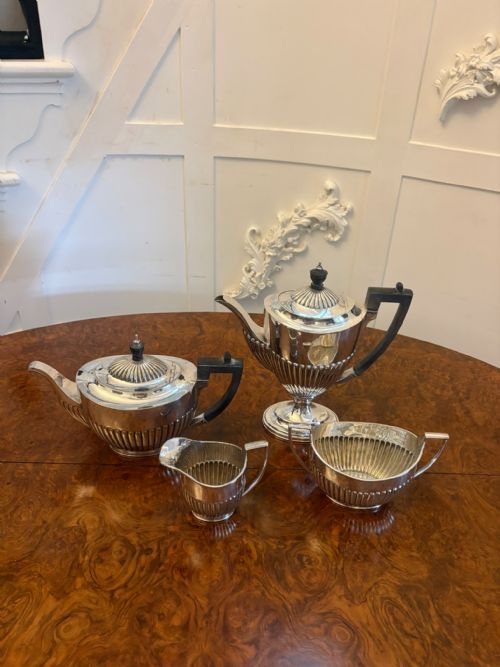
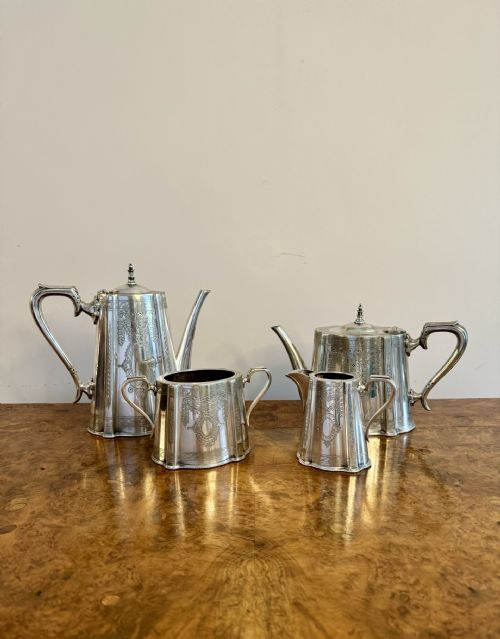


Silver Plated Sugar Bowl Set
A silver plated sugar bowl set brings polished elegance to the table, pairing gleaming metalwork with the practical charm of traditional serving ware.
Silver Plated Sugar Bowl Set
A silver plated sugar bowl set forms part of wider tea and coffee services, often appearing alongside matching cream jugs and teapots in Edwardian and Victorian dining arrangements.
Buyers seeking a silver plated sugar bowl set frequently encounter pieces from the Edwardian period and the early twentieth century, alongside occasional Georgian Sheffield plated examples and Art Deco designs.
These sets span simple domestic sugar and cream pairings up to larger multi-piece tea services equipped with specialised dishes for fruit or strawberries.
How they were made
Maker workshops utilised electroplated nickel silver and standard silver plate over base metal, creating durable surfaces that replicated the lustre of solid silver.
Interiors and handles sometimes incorporated contrasting materials such as ebonised wood, ebony, bone, and gold gilt accents to add visual depth.
Surface decoration relied on hand-applied techniques, resulting in ornate grapevine detailing and cast reliefs typical of Edwardian rococo revival pieces.
Some sets feature strawberry dishes with enough ornate grapevine detail to make even the fruit feel properly supervised.
What varies in quality
The crispness of chased and embossed detailing, such as grapevine borders and cast handles, separates standard production items from finer workshop output.
The integrity of the underlying electroplated nickel silver determines how well the plating holds its finish through decades of polishing and handling.
Walker and Hall·Mappin and Webb·Goldsmiths and Silversmiths Co·Roberts and Belk·WMF
The Silver Plated Sugar Bowl Set Glossary
- Electroplated Nickel Silver
- A base metal alloy of copper, nickel, and zinc coated with a layer of pure silver through an electrolytic process. This method became standard for domestic tableware in the nineteenth century.
- Sheffield Plate
- An earlier technique involving a thin sheet of silver fused to a copper core before rolling. Pieces made this way display distinct warmth in the metal tone.
- Gold Gilt
- A thin layer of gold applied to the interior surfaces of bowls and creamers. It protected the base metal from the corrosive effects of sugar and dairy.
- Ebonised Wood
- Timber treated to imitate ebony, commonly used for insulating handles on pots and lids. It provided a secure grip that stayed cool during tea service.
Silver Plated Sugar Bowl Set: Frequently Asked Questions
How do I date a silver plated sugar bowl set?
Examine the stylistic cues, such as the flowing curves of Edwardian rococo revival work or the geometric lines of Art Deco pieces. Maker marks and manufacturing techniques also point to specific decades between the Georgian era and the 1930s.
Matching the accompanying cream jugs and bowls helps confirm whether the set remains intact from its original period of manufacture.
Were these sets used every day?
Many households kept silver plated sugar bowl sets for formal afternoon tea and hosting guests rather than daily dining. The inclusion of creamers, trays, and specialised dishes points to formal entertaining practices.
Over time, regular use required careful hand washing and occasional polishing to maintain the bright finish of the silver plate.
Do these sets include teapots?
Some listings offer a sugar bowl and cream jug on their own, while others form part of a three, four, or six piece tea and coffee service. Larger configurations typically add a teapot, coffee pot, and matching tray.
Checking the individual item descriptions clarifies whether the set is a paired duo or part of a larger matched service.
How should I clean silver plate?
Maintain the surface with a gentle, non-abrasive silver polish formulated specifically for plated items. Avoid harsh scrubbing that can wear through the thin silver layer down to the nickel silver or base metal underneath.
Store pieces in a dry environment to prevent tarnishing and protect any ebonised wood or bone elements from excessive moisture.