
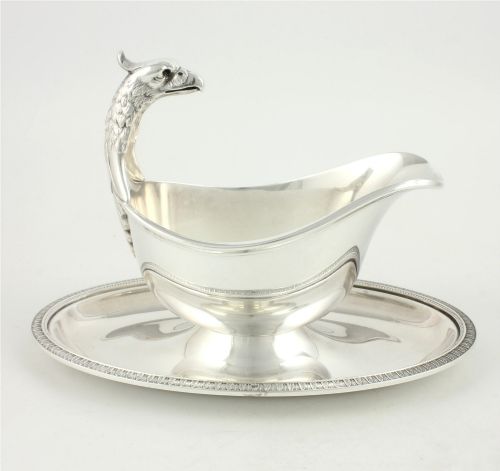


Art Deco Tableware Silver Plate
Art deco tableware silver plate brings geometric lines and modernist polish straight to the dining table.
Art Deco Tableware Silver Plate
These pieces encompass functional dining items designed to serve food and drink during the early twentieth century. When exploring art deco tableware silver plate, expect to encounter serveware, sauce boats, spoons, salt cellars, toast racks, sugar and creamer sets, serving dishes, and preserve dishes.
The dominant aesthetic belongs to the nineteen thirties, alongside examples from nineteen twenty and nineteen fifty. Forms reflect the crisp geometry and streamlined shapes characteristic of the period.
Origins span standard British production to French ateliers and Scandinavian workshops. Materials paired with the silver plating frequently include cobalt glass, cut glass, plain glass, metal, and wood.
Materials and construction methods
Manufacturing relies heavily on silver plate and electroplated nickel silver applied over a base metal core. This technique provides the lustrous appearance of solid silver while ensuring durability for everyday dining use.
Glass elements such as faceted containers and cobalt glass liners are integrated into metal frames for dishes and cellars. Wood components occasionally appear as handles or insulating bases on specific serving pieces.
Materials paired with silver plate include cobalt glass, cut glass, plain glass, metal, and wood.
Distinguishing quality across pieces
Quality rests upon the precision of the geometric moulding and the integrity of the underlying metalwork. Finer examples maintain an even distribution of the silver plating across intricate handles, feet, and hinges.
The integration of secondary materials like hand-cut crystal or vibrant cobalt glass liner inserts elevates the execution. Maker attribution to notable silversmiths further separates standard utility items from distinguished studio output.
Christofle Gallia·Mappin & Webb·Walker and Hall
The Art Deco Tableware Silver Plate Glossary
- Electroplated nickel silver
- A base alloy of copper, nickel, and zinc coated with a layer of pure silver through electrolysis. This process forms the structural foundation for many plated objects.
- Salt cellar
- A small open vessel used to hold table salt before the widespread adoption of individual shakers. These frequently feature coloured glass inserts.
- Toast rack
- A metal frame designed to hold slices of toast upright to prevent condensation from making the bread soggy. They typically feature vertical metal loops on a fitted base.
- Preserve dish
- A specialised container intended for jams, jellies, or marmalades, usually accompanied by a matching spoon and a fitted glass liner.
- Sauce boat
- A vessel shaped like a small boat with a lip and handle, designed for serving gravies or sauces at the table.
Art Deco Tableware Silver Plate: Frequently Asked Questions
How do I identify nineteen thirties pieces?
Nineteen thirties pieces display geometric symmetry, clean lines, and stylised motifs typical of the period. Forms are often streamlined rather than overly ornate.
Look for combinations of silver plate with cobalt glass liners or faceted cut glass bodies.
What is electroplated nickel silver?
Electroplated nickel silver is a durable base alloy coated with a layer of silver. It provides the visual appeal of solid silver for domestic tableware.
This technique became standard for producing high quality serving items during the early twentieth century.
How were salt cellars used?
Salt cellars held loose salt on the dining table before shaker bottles became common. Diners used small spoons to transfer salt to their plates.
Many surviving examples retain their original cobalt glass liners.