



Silver Plated Serving Set
A silver plated serving set brings matched utility and shine to the table, spanning fish servers, fruit sets, and carving knives.
Silver Plated Serving Set
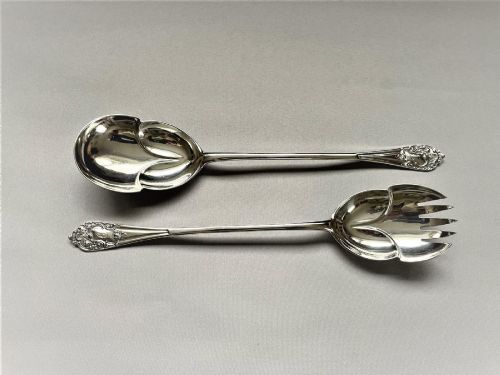
When you search for a silver plated serving set, you encounter domestic dining equipment designed for specific foodstuffs like fish, fruit, salad, and asparagus. The pieces on this page originate predominantly from the Victorian and Edwardian eras, alongside later Art Deco examples.
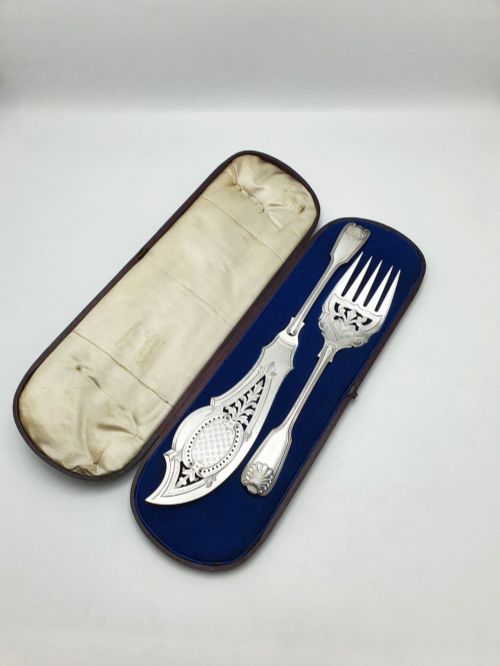
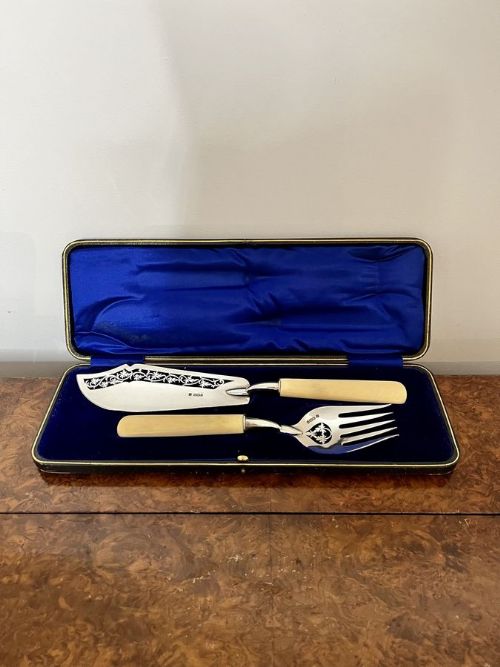
The most common forms you meet include paired fish servers with engraved blades, boxed fruit and nut sets, and salad bowls paired with wooden or ceramic elements. These groupings reflect the formal dining habits of the nineteenth and early twentieth centuries.
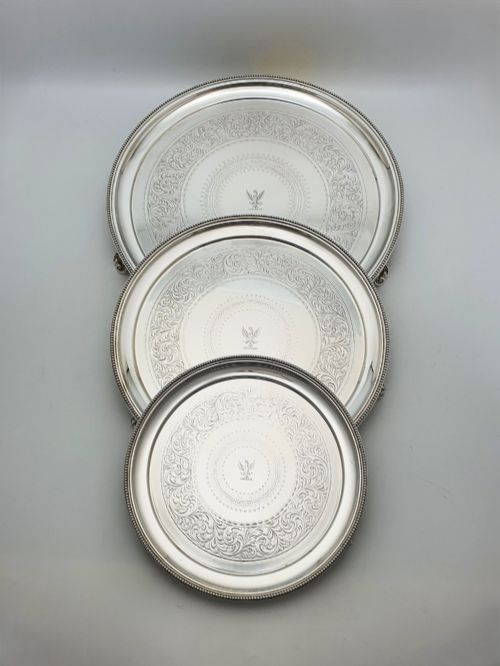
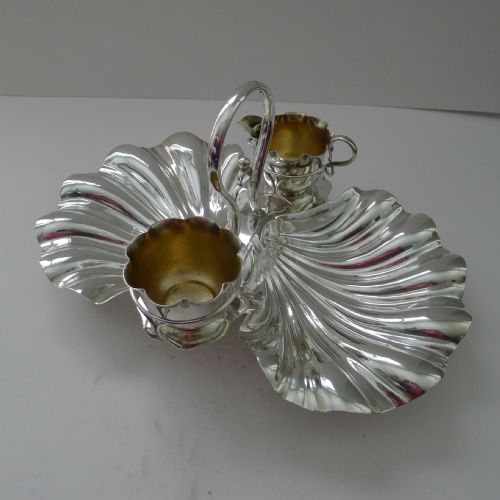
You also find specialised dishes and salvers accompanied by dedicated cutlery, such as asparagus sets and strawberry dishes. These configurations highlight the Victorian and Edwardian desire for specialised table service.
How they were made
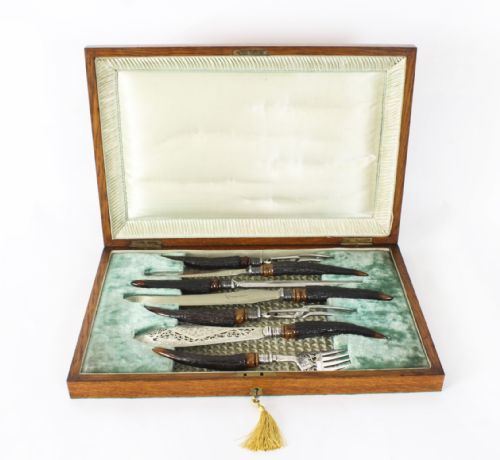
Maker operations utilised electroplated nickel silver or standard silver plate over base metals, combined with organic handles fashioned from stag antler, horn, and wood. Makers also integrated porcelain bowls, majolica ceramics, and polished oak structures into the serveware.
Blades and surfaces frequently display detailed hand engraving, etching hunting scenes, or floral motifs. Specialised pieces incorporate steel for cutting edges in carving sets, ensuring functional durability alongside decorative appeal.
Listings feature periods spanning from the early nineteenth century through the Art Deco era of 1930, utilising materials like stag antler, majolica, and silver plate.
What varies in quality
The standard of a silver plated serving set rests upon the crispness of the engraved decoration and the integrity of the base plating. Deeper, more intricate hand engraving on the metal surfaces distinguishes finer workshop production from standard commercial output.
Quality also shows in the selection and preservation of organic handle materials like stag antler and horn, as well as the completeness of original fitted boxes. Sets retaining their matched components and original presentation cases demonstrate superior provenance.
Elkington·Daniel Arter·Hukin and Heath·Walker and Hall·Lee and Wigfull·Carringtons
The Silver Plated Serving Set Glossary
- Silver Plate
- A base metal coated with a thin layer of silver through chemical or electrical processes. This technique allowed manufacturers to produce durable tableware with the appearance of solid silver.
- Electroplated Nickel Silver
- A copper, nickel, and zinc alloy coated with a layer of silver via electrolysis. Commonly abbreviated as EPNS, it served as a robust foundation for nineteenth century cutlery.
- Salver
- A flat metal tray used for serving food or drinks. These items often feature engraved surfaces and rest on small feet.
- Fish Servers
- A matched knife and fork combination designed specifically for serving fish courses. The blade is typically wide and heavily decorated with pierced or engraved patterns.
Silver Plated Serving Set: Frequently Asked Questions
What foods were these sets used for?
These sets served specialised courses at formal meals, including fish, fruit, salad, asparagus, and desserts. Each configuration matched the specific physical demands of the food.
Cutlery shapes adapted directly to the dish, such as wide blades for fish and pronged forks for fruit or berries.
Are these sets safe to use with food?
Many buyers continue to use antique silver plate for dining, provided the plating remains intact over the base metal. Modern gentle cleaning helps maintain the surface hygiene.
Careful hand washing preserves both the silver coating and the delicate organic handles like antler and horn.
How do I distinguish Victorian from Edwardian pieces?
Victorian items, dating from the nineteenth century, often feature heavier, more ornate engraving and robust proportions. They frequently reflect elaborate dining rituals.
Edwardian pieces from the early twentieth century lean towards lighter designs, simpler floral motifs, and early manifestations of geometric Art Deco styling.
Why do some sets come in boxes?
Fitted wooden presentation boxes protected delicate serveware when not in use on the dining table. These cases often lined with velvet preserved matched sets together.
Boxed examples typically indicate higher original status and better survival of the complete collection over time.