
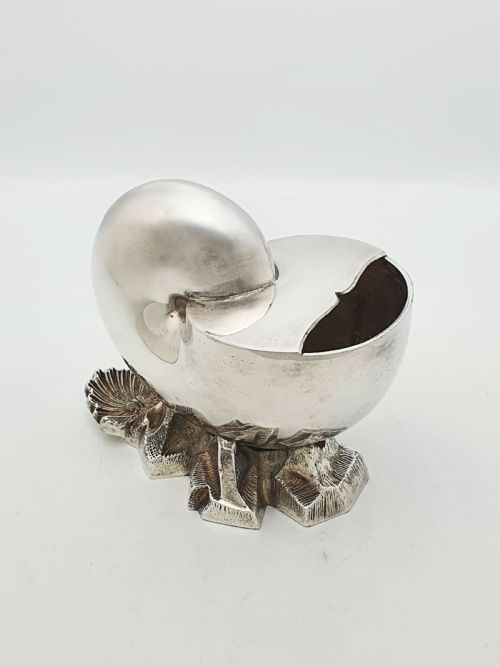


Silver Plated Gravy Warmer
These silver plated gravy warmer examples are metal tableware pieces designed to keep sauces hot at the dining table during the eighteenth and nineteenth centuries.
Silver Plated Gravy Warmer
When you search for a silver plated gravy warmer, you are looking at specialised vessels designed to keep sauces and gravies warm at the dining table. The selection spans the Georgian and Victorian eras, encompassing forms known as argyls, gravy boats, and sauce tureens.
You are most likely to meet Victorian pieces on this page, particularly nautilus shell designs and urn-shaped bodies alongside Georgian Old Sheffield Plate argyls. These domestic items solved the practical problem of congealing fats in cold dining rooms before central heating.
The physical form typically includes a double-walled body or an internal compartment for hot water or a heated iron core. Makers applied silver plate and Old Sheffield Plate over base metals, occasionally incorporating handles of wood, ebony, or cane.
Construction and materials
Old Sheffield Plate involves a thin sheet of silver fused to a copper core by heat and pressure before rolling, a technique seen in the eighteenth and early nineteenth-century pieces. Later Victorian examples utilise electroplating, known as EPNS, depositing a layer of silver onto a metal alloy base via an electrical current.
Craftsmen shaped these metal sheets by hand-raising or spinning, soldering seams and attaching cast decorative elements such as crests or shell motifs. Handles frequently incorporate insulating materials like wood, ebony, or cane to protect the hand from heat conducted through the metal body.
Listings feature items spanning the eighteenth and nineteenth centuries, utilising Silver Plate, Old Sheffield Plate, wood, ebony, cane, and EPNS.
Evaluating quality and execution
The distinction between standard domestic items and top-tier examples lies in the crispness of the chasing, the weight of the metal, and the subtlety of the form. Hand-soldered joints, well-defined crests, and integrated insulating components demonstrate superior workshop execution.
The retention of the original silver layer, particularly on Old Sheffield Plate where the copper base might show through high points, dictates the visual integrity. Novelty shapes such as shells and shoes demand a higher level of sculptural skill from the silversmith than plain urns or standard sauce boat silhouettes.
Padley Parkin And Staniforth
The Silver Plated Gravy Warmer Glossary
- Argyl
- A type of gravy warmer featuring a double wall or an internal cylinder designed to hold hot water, preventing the gravy from cooling. This design kept animal fats from solidifying during long meals.
- Old Sheffield Plate
- An early method of fusing silver to a copper core before shaping, creating a distinct material prior to electroplating. Pieces made this way often reveal faint traces of copper along high-wear edges.
- EPNS
- Electroplated Nickel Silver, a process introduced in the nineteenth century where a thin coat of silver is deposited onto a base metal alloy. This technique superseded older plating methods by offering a uniform finish more quickly.
- Nautilus Shell
- A natural marine form frequently adapted by Victorian silversmiths for novelty tableware, including spoon warmers. These decorative vessels mimic the spiral chambering of the shell.
- Sauce Tureen
- A deep, covered vessel designed for holding and serving sauces at the table, often accompanied by a matching stand and ladle. They form part of larger nineteenth-century dining services.
Silver Plated Gravy Warmer: Frequently Asked Questions
How did a gravy warmer work?
These vessels used an inner chamber filled with hot water or a heated metal rod to keep sauces fluid throughout a meal. The double-walled construction insulated the gravy from the cold dining room air.
This prevented butter and meat juices from separating or congealing on the plate. Diners poured the sauce from a spout while the heat source remained contained within the body.
What is the difference between an argyl and a gravy boat?
An argyl specifically incorporates a heating compartment, such as a water jacket or a central core tube, to maintain temperature. Standard gravy boats lack this internal mechanism and rely solely on thermal mass.
Argyls appeared during the Georgian period when multi-course dining demanded prolonged heat retention for gravies. Both forms continued into the Victorian era with evolving decorative styles.
Why are some warmers shaped like shells?
Victorian dining culture embraced novelty and naturalism, leading silversmiths to model tableware on marine specimens like nautilus and ammonite shells. These designs served a dual purpose as decorative centerpieces and functional warmers.
The natural curves also provided a practical pocket for hot water or heated spoons. Such whimsy reflects the playful aesthetic of late nineteenth-century silver production.
How do I care for silver plated tableware?
Silver plate requires gentle cleaning with non-abrasive cloths and specialised silver polishes to preserve the thin metal layer. Harsh chemical dips strip the plating and damage underlying base metals.
Store pieces in dry environments away from direct sunlight to minimise tarnishing. Regular, careful use prevents heavy tarnish accumulation and maintains the finish.