


Victorian Silver Plate Hollowware
Victorian silver plate hollowware comprises nineteenth century serveware and vessels plated over base metals, offering grand dining table presence without solid silver cost.
Victorian Silver Plate Hollowware
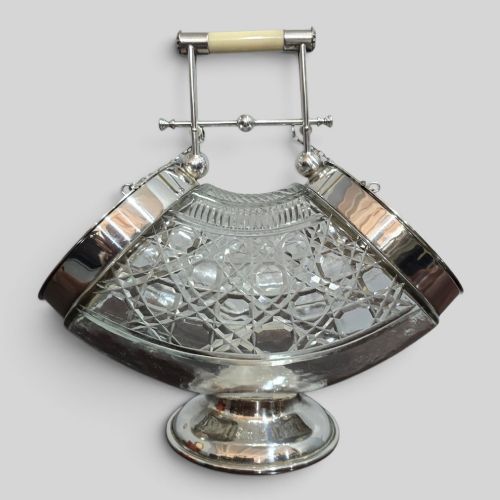
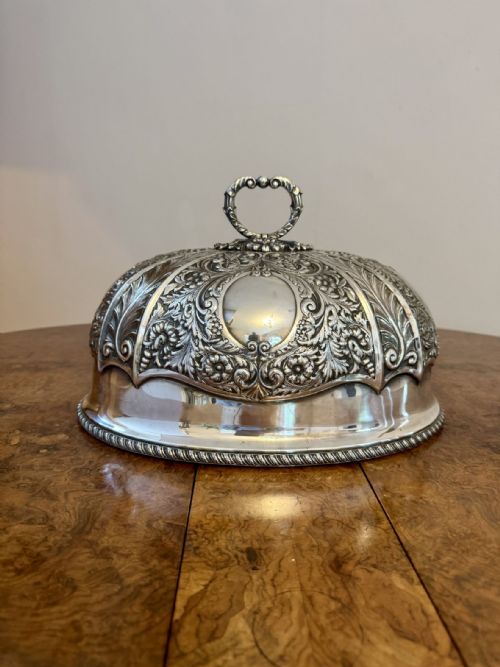
Victorian silver plate hollowware encompasses large table pieces including biscuit barrels, gravy boats, entrée dishes, wine flagons, and tea sets. These items serve functional dining roles while displaying ornamental nineteenth century design.
The pieces on this page span from the mid nineteenth century into the Edwardian era, showing styles from plain urn shapes to Victorian Rococo Revival ornamentation. Common forms include lidded boxes, bowls, and communion chalices.
Originating predominantly from English workshops, these items utilise base metals finished with silver plating techniques. Buyers encounter diverse forms ranging from sauce warmers to large ornate tea and coffee sets.
Materials and manufacture
Makers utilised base metals such as nickel silver, copper, and general metal alloys as the foundational structure for these vessels. These metals provided sturdy support for subsequent silver plating and heavy use.
Electroplating, abbreviated as EPNS, applied a thin layer of silver over the base metal efficiently. Older pieces incorporate Old Sheffield plate methods, fusing a silver sheet directly onto copper.
Assessing quality in hollowware
Quality rests upon the thickness and durability of the silver layer applied over the base metal. Substantial plating resists wear over decades of handling and cleaning.
The complexity and crispness of ornamentation distinguish finer items, particularly in Rococo Revival chasing and cast handles. Heavier gauge metal bodies indicate superior manufacturing standards.
Padley Parkin & Staniforth·Thomas Bradbury·Elkington
The Victorian Silver Plate Hollowware Glossary
- Hollowware
- Table vessels such as bowls, pots, and tureens rather than flatware like spoons and forks. These items form the central bulk of nineteenth century dining services.
- EPNS
- Electroplated nickel silver. This denotes a base metal alloy coated with silver through an electrical process.
- Old Sheffield plate
- A material made by fusing a thin sheet of silver to a copper core before shaping. This technique precedes standard nineteenth century electroplating.
- Argyll
- A gravy warmer featuring a central compartment for hot water. This design kept sauces warm throughout long Victorian meals.
- Rococo Revival
- A decorative style characterised by asymmetrical scrolls, floral motifs, and shell patterns. It appears frequently on Victorian decorative serveware.
Victorian Silver Plate Hollowware: Frequently Asked Questions
What is silver plate hollowware?
Silver plate hollowware refers to three dimensional dining vessels such as pots, bowls, and tureens made from base metals covered with a layer of silver.
These pieces were produced during the nineteenth and early twentieth centuries to provide the appearance and utility of solid silver table items at a lower cost.
How do I clean silver plate?
Cleaning requires a mild silver polish and a soft cloth to remove tarnish without abrading the thin silver layer. Avoid harsh scrubbing or abrasive compounds.
Regular gentle dusting and proper storage in dry environments help maintain the finish of nineteenth century plated metal.
What is the difference between EPNS and Old Sheffield plate?
EPNS uses an electrical current to bond silver onto a nickel silver base metal, a method common in the later nineteenth century. Old Sheffield plate involves physically fusing silver sheets to copper before shaping.
Old Sheffield pieces often show subtle traces of copper where the top silver layer has thinned through generations of use.
How were gravy warmers used?
Gravy warmers or argylls kept sauces fluid during lengthy meals by utilising an internal cylinder filled with boiling water. This prevented gravies from congealing on the dining table.
Servants filled the internal chamber from the top, ensuring the sauce remained heated while poured from the spout.