



Silver Plated Flatware
Silver plated flatware brings period elegance to the table, offering durable service across canteens, servers, and specialty utensils from the Victorian era onward.
Silver Plated Flatware
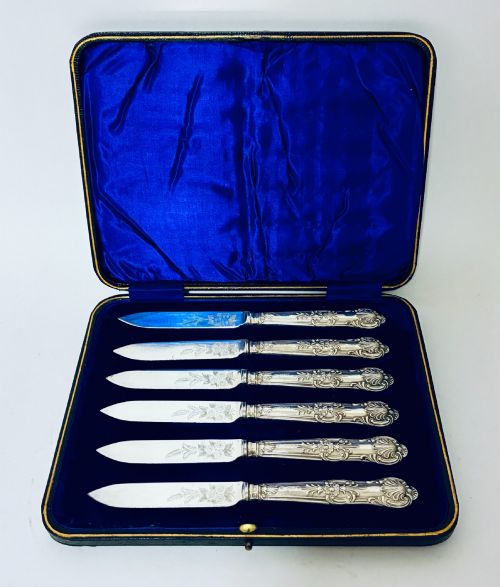
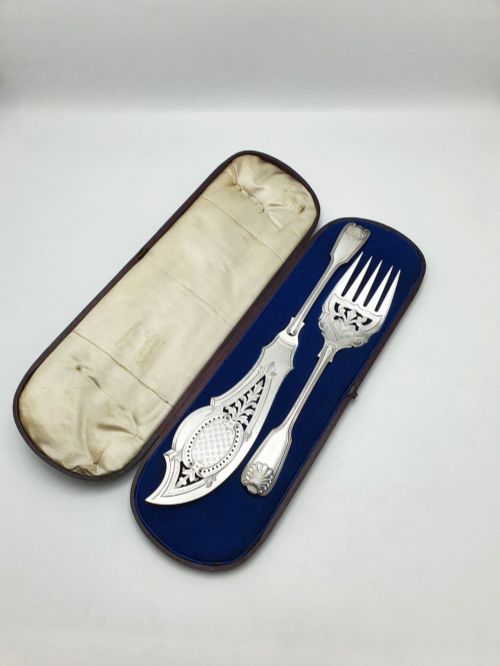
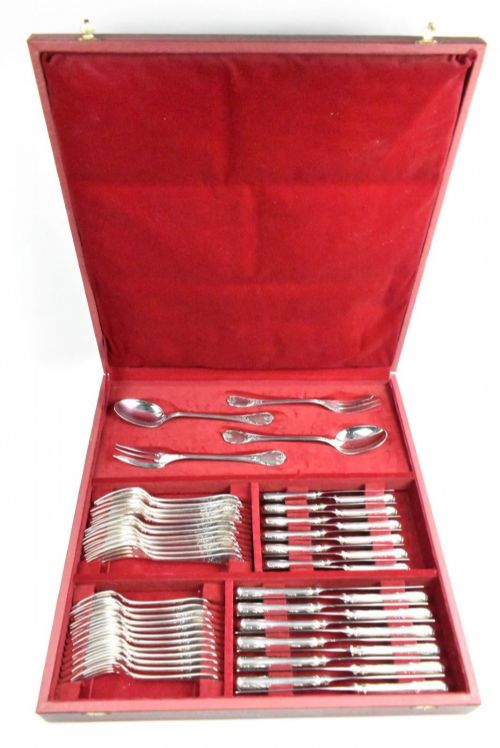
Silver plated flatware encompasses comprehensive dining canteens alongside specialist serving implements designed for fish, fruit, and seafood. Buyers searching for silver plated flatware encounter diverse forms ranging from large multi-piece sets in fitted cases to individual pairs of grape scissors and serving tongs.
The selection spans numerous periods, including Victorian, Edwardian, and Art Deco designs. Traditional styles sit alongside elaborate Rococo Revival patterns, Queen Anne influences, and geometric Arts & Crafts pieces.
How they were made
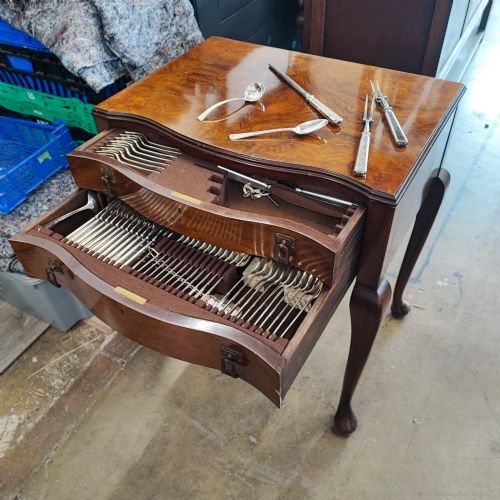
Manufacturers combined base metals with silver plating techniques, frequently pairing metal bowls and tines with handles formed from wood, antler, fabric, silk, or velvet. Canteens often utilised fitted wooden cases lined to protect the contents.
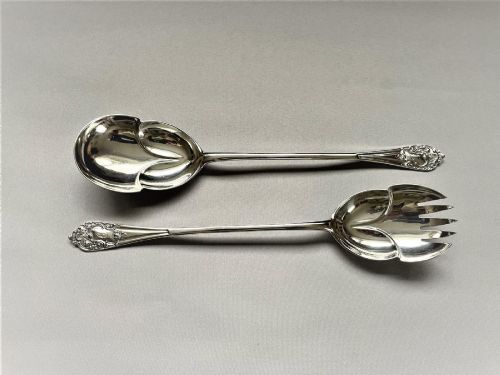
Specialist implements like fish servers and fruit knives incorporated steel blades alongside plated elements, while finer serving pieces utilised decorative engraving, pierced ends, and cast details.
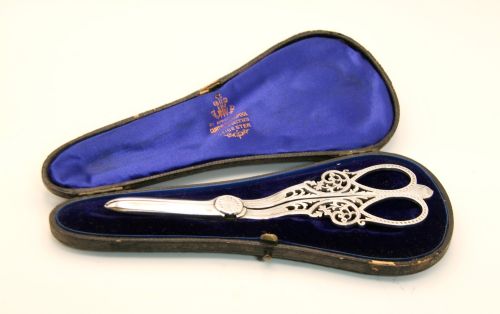
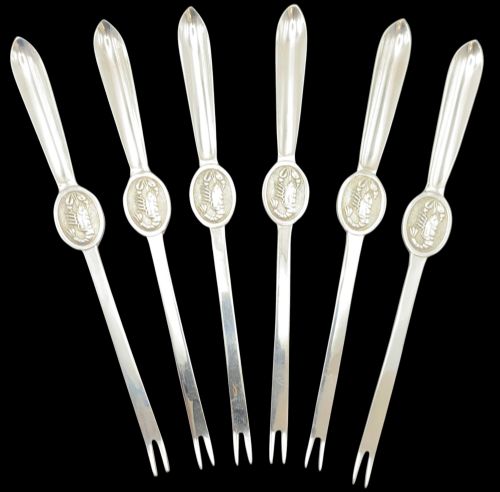
Victorian diners required dedicated lobster forks and grape scissors to tackle formal courses without losing their composure.
What varies in quality
Quality rests on the depth of the silver plating and the crispness of applied ornamentation such as engraving or pierced work. Substantial weight in the hand and robust construction of joints separate everyday utility items from finer presentation canteens.
The integrity of fitted wooden cases and the preservation of secondary handle materials, including natural antler and polished wood, influence the overall character and completeness of a set.
Christofle·Suckling Ltd.
The Silver Plated Flatware Glossary
- Canteen
- A fitted box or chest designed to store a complete set of cutlery securely. These wooden cases often feature multiple internal tiers lined with cloth.
- Flatware
- Table utensils used for eating and serving food. The term covers knives, forks, spoons, and various serving implements.
- Silver Plate
- A base metal coated with a thin layer of silver. This technique provided the visual appeal of solid silver at a more accessible cost.
- Sifter Spoon
- A specialised spoon with a perforated bowl used for dusting sugar over food. These often feature decorative pierced patterns.
- Stilton Scoop
- A long-handled utensil designed for digging out portions of hard cheese. They frequently incorporate turned bone or wooden handles.
Silver Plated Flatware: Frequently Asked Questions
How do I clean silver plated flatware?
Wash pieces gently in warm soapy water using a soft cloth and dry them immediately to prevent water spots. Avoid harsh abrasive dips that strip the underlying plating.
Store items in designated anti-tarnish rolls or lined wooden canteens when not in use. Regular, gentle polishing maintains the bright finish without wearing down the metal layer.
Can I use these sets daily?
Many robust canteens and serving sets suit regular dining provided they receive careful hand washing rather than machine cleaning. Steel blades and plated tines handle everyday food acids well when dried promptly.
Delicate antique pieces with organic handle materials like velvet or silk benefit from occasional use rather than heavy routine handling. Preserving the protective plating ensures longevity.
What is the difference between Edwardian and Art Deco sets?
Edwardian flatware leans toward traditional floral motifs, elaborate Rococo Revival flourishes, and ornate pierced ends. The forms reflect late nineteenth and early twentieth century formal dining customs.
Art Deco sets favour geometric lines, streamlined handles, and modern styling typical of the interwar period. The decoration becomes more abstract and focused on structural form.
Are canteens always complete?
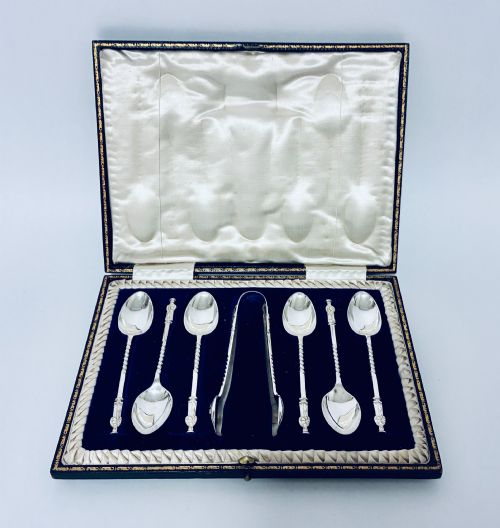
Canteens often show partial losses or assembled contents accumulated over decades of use. Replacement pieces matching the original pattern sometimes find their way into older oak cases.
Checking the individual item counts against the fitted slots reveals whether a service remains entirely original. Many buyers happily accept assembled sets for practical dining.