



Silver Plate Canteen Cutlery
Silver plate canteen cutlery brings together matched sets of plated flatware inside fitted wooden boxes, offering a practical table service with enduring style.
Silver Plate Canteen Cutlery
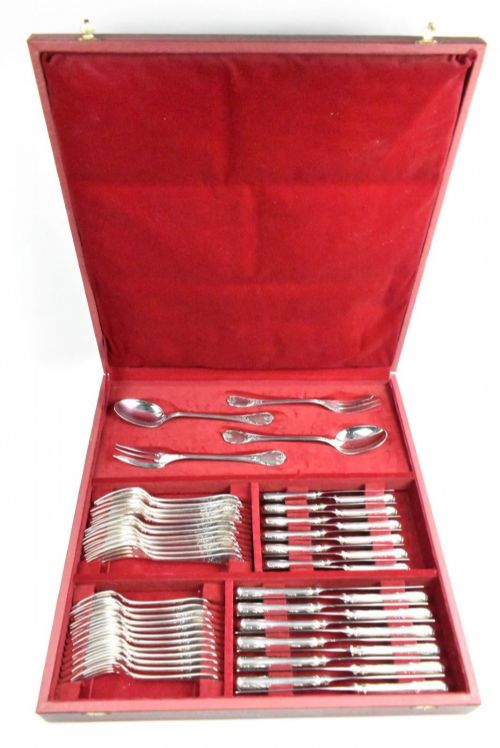
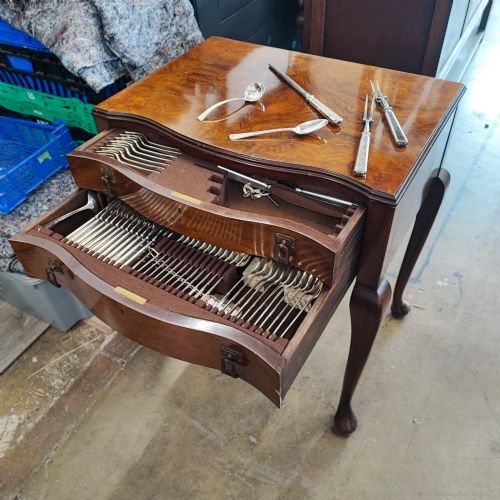
When searching for silver plate canteen cutlery, buyers encounter comprehensive sets of knives, forks and spoons housed together in fitted boxes, chests or oak canteens. These collections range from modest fish and dessert services to large dinner services spanning over one hundred pieces.
The selections on this page bridge several eras, drawing on Victorian, Edwardian and Art Deco periods alongside traditional revival styles. Sets often arrive in fitted oak or mahogany cases lined with velvet, preserving the contents ready for formal dining.
Materials and construction
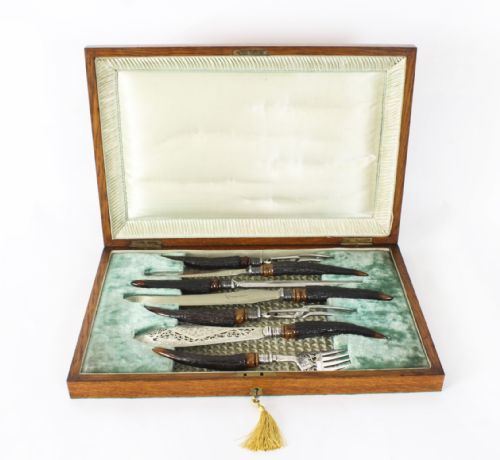
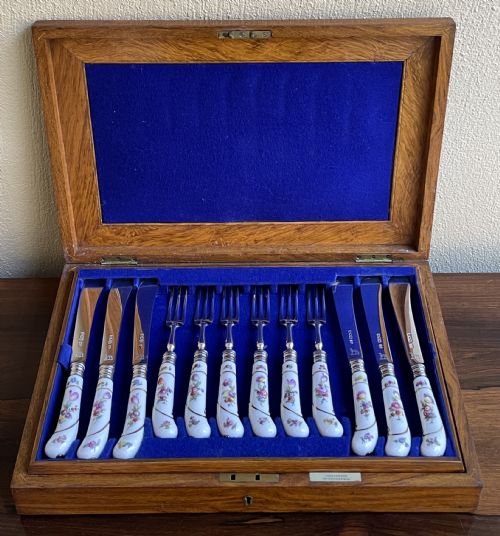
Makers utilised silver plate over a base metal, frequently pairing steel blades with plated handles or incorporating natural materials like mother of pearl, antler horn and porcelain. Cases were constructed from solid wood such as oak and mahogany, often featuring fitted internal layouts lined with velvet or fabric.
Production techniques combined traditional metalworking with specialised plating methods, while storage boxes relied on cabinet-making skills to house complex layouts of cutlery securely.
Some Edwardian fish sets include knives shaped with broad blades designed specifically to slide cleanly beneath delicate bone.
Assessing quality and craftsmanship
Quality in these sets depends upon the completeness of the service and the reputation of the maker, with prominent firms providing superior weight and finishing to the metalwork. The construction of the housing box also indicates standard, where solid oak or mahogany canteens with intact velvet linings elevate the overall ensemble.
The retention of the original plating across every individual fork and spoon separates comprehensive sets from those with heavy wear or mismatched replacements.
Christofle·Carrington·Elkington and Co·Waring and Gillows·Mappin and Webb·Cooper Bros and Sons·Walker and Hall
The Silver Plate Canteen Cutlery Glossary
- Silver Plate
- A base metal coated with a layer of silver. This process provided the visual appeal of solid silver at a more accessible cost for larger dining services.
- Canteen
- A fitted box, chest or cabinet designed specifically to store a complete set of cutlery. These containers often feature multiple tiers or slotted trays.
- Kings Pattern
- A traditional decorative pattern featuring a shell and scroll motif along the handle edge. It remains a frequent choice in formal dining sets.
- Carving Set
- A matched pairing of a large knife and fork used for serving joints of meat at the table. They frequently feature complementary handles made from antler horn or bone.
Silver Plate Canteen Cutlery: Frequently Asked Questions
What is included in a silver plate canteen?
A standard canteen contains a coordinated service of forks, spoons and knives organised within a fitted wooden box. Larger services expand to include fish servers, dessert pieces and carving sets.
Sets are structured to accommodate specific numbers of diners, ranging from smaller six-person services to extensive layouts for twelve or more places.
How do I care for plated cutlery?
Silver plate requires gentle hand washing with mild detergents followed by immediate drying to prevent spotting. Avoid abrasive cleaners that can wear away the thin silver layer over time.
Storing pieces within their original lined wooden canteen helps protect the surfaces from tarnishing when the set is not in active use.
Are these sets suitable for daily use?
Many buyers utilise these canteens for special occasions, formal dinner parties and seasonal gatherings. The robust construction of Edwardian and Victorian sets makes them durable enough for regular dining.
Hand washing is essential to preserve the finish, ensuring the pieces remain in sound condition for future generations of use.
How do I identify the period of a set?
Stylistic clues such as geometric Art Deco lines or ornate Victorian Rococo decoration help date the metalwork. Maker marks stamped onto the individual pieces provide definitive chronological reference points.
The construction style of the wooden storage case also offers clear indicators of the era in which the canteen was assembled.