


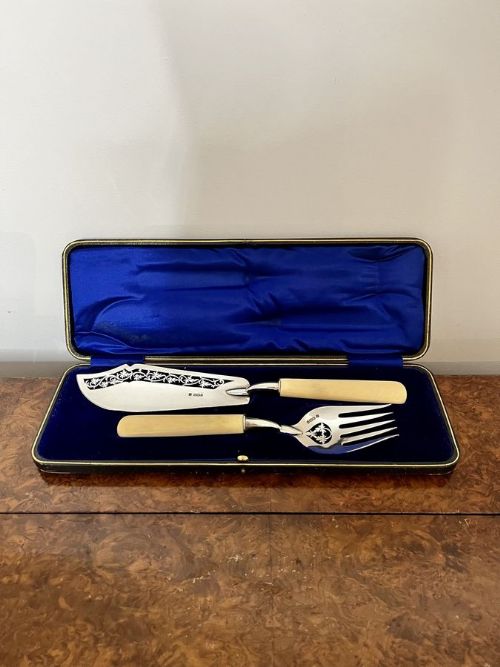

Antique Fish Knives
These antique fish knives and serving sets bring Victorian and Edwardian dining tables to life with pierced blades, engraved handles, and silver-plated craftsmanship.
Antique Fish Knives
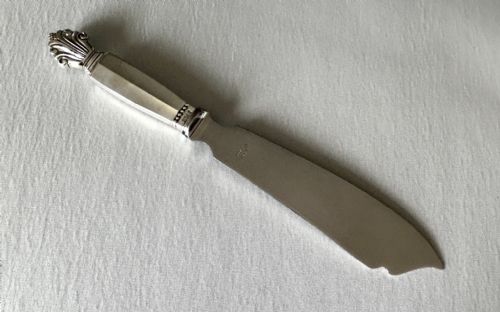
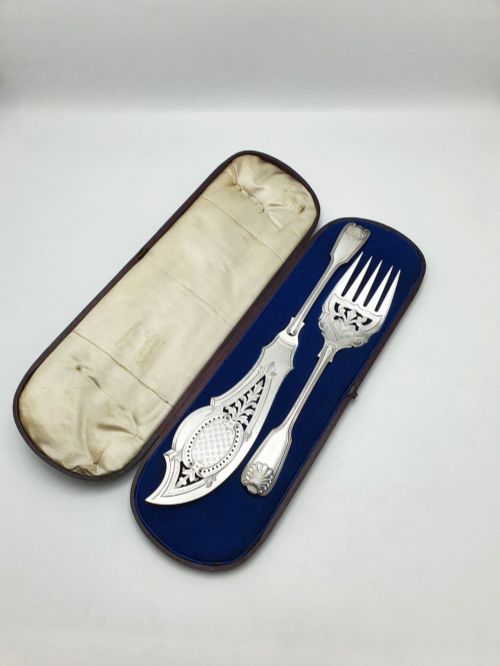
When buyers search for antique fish knives, they encounter specialised cutlery designed for the formal fish courses of the nineteenth and twentieth centuries. These pieces appear as individual place settings, boxed sets for six or twelve persons, and larger serving pairs comprising a knife and a fork.
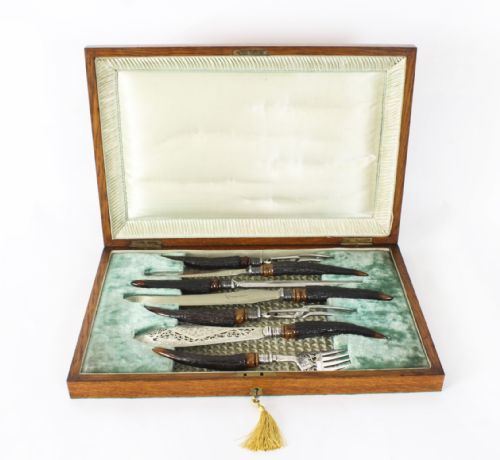
The most common examples on this page date from the Victorian and Edwardian periods, frequently executed in silver plate or sterling silver. Makers paired broad, pierced blades with natural handles such as bone, mother of pearl, horn, and wood.
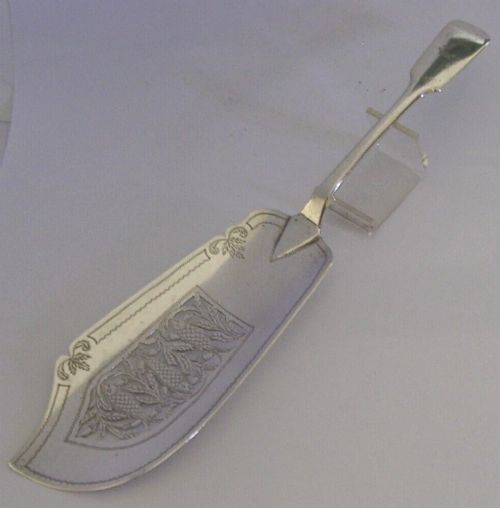
Beyond standard place knives, the category encompasses specialised serving utensils including fish slices, sardine servers, and matching carving sets. These larger implements often display detailed floral or hunting engravings on the blade surface.
Assessing quality
Quality rests upon the weight of the metal and the precision of the piercing work on the blade. Heavy gauge sterling silver or thick silver plate commands greater attention than thinner alternatives.
The choice of handle material and the integrity of its attachment dictate the standing of a piece. Matched sets featuring unblemished mother of pearl or genuine antler horn sit higher in the range than mixed or replacement components.
The archive includes complete canteens for twelve persons alongside individual serving slices, fish knives and forks, and cased sets.
George Adams·Charles Boyton·Allen and Darwin·Hammond Creake and Co·Mappin Brothers·Waring and Gillows·Georg Jensen
The Antique Fish Knives Glossary
- Fish slice
- A large, wide-bladed serving utensil designed for lifting portions of fish. It is often heavily pierced and engraved.
- Sterling silver
- A silver alloy containing 92.5 percent pure silver by mass, widely utilised in British flatware production. It carries hallmarks indicating the assay office and year of manufacture.
- Silver plate
- A base metal layer coated with a thin layer of silver. This technique offered an accessible alternative to solid sterling silver during the Victorian era.
- Fiddle pattern
- A nineteenth-century flatware handle style featuring a narrow stem that broadens symmetrically toward the base. It is frequently seen on George IV and Victorian silver.
- Ferrule
- The metal band joining the blade to the handle. It provides structural strength and conceals the junction point.
Antique Fish Knives: Frequently Asked Questions
How do I clean antique fish knives?
Clean silver components gently using a dedicated silver cloth to preserve engraved details. Avoid submerging pieces with bone, horn, or mother of pearl handles in hot water.
Hand washing in lukewarm water with mild soap is recommended for everyday maintenance. Dry them thoroughly immediately afterwards to protect the natural handle materials.
Can I use them for dining today?
These utensils remain fully functional for modern dining tables. Their sturdy construction suits contemporary meals just as it did a century ago.
Careful handling ensures these historical items survive for daily use or special dinner parties. Hand washing protects the delicate silver surfaces and natural handle materials from damage.
What is the difference between fish servers and fish knives?
Fish servers consist of a large matching knife and fork used by the host to portion the dish at the table. They feature wider, heavily decorated blades.
Fish knives are smaller implements intended for individual place settings. They work alongside matching forks to consume the fish course.
How do I date a set?
Sterling silver items carry British hallmarks that indicate the assay office, standard, and exact year of manufacture. Examining these tiny stamped symbols provides a reliable date.
Silver-plated sets rely on style, box design, and maker marks for dating. Aesthetic markers such as Victorian engraving or Edwardian proportions help narrow the period.