



Silver Plated Drink Mixer
A silver plated drink mixer brings geometric elegance and period hospitality to the modern home bar.
Silver Plated Drink Mixer
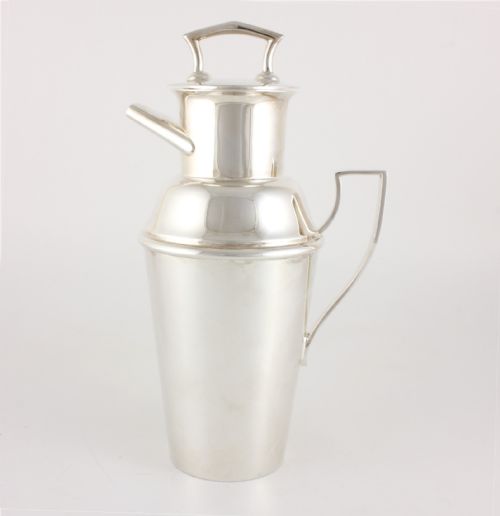
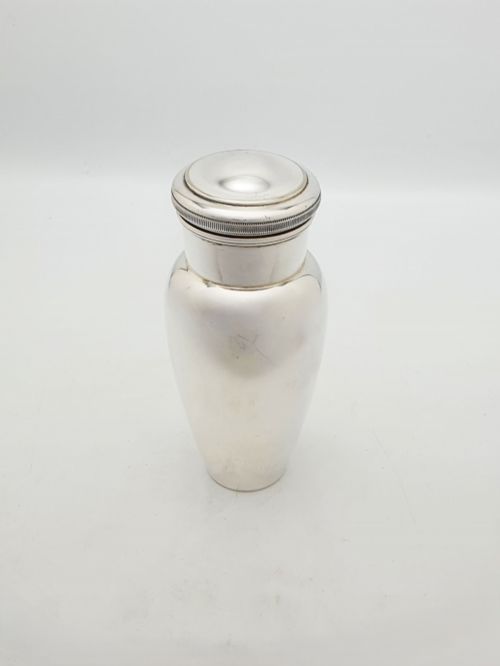
A silver plated drink mixer is primarily represented here by cocktail shakers dating from the 1920s to the 1960s, spanning Art Deco, Mid-Century Modern, and Italian Modernism styles. These vessels take various forms, from milk churn designs and cylindrical bodies to bullet shapes and novelty models incorporating practical elements like ice breakers, integral lemon squeezers, or rolling recipe mechanisms.
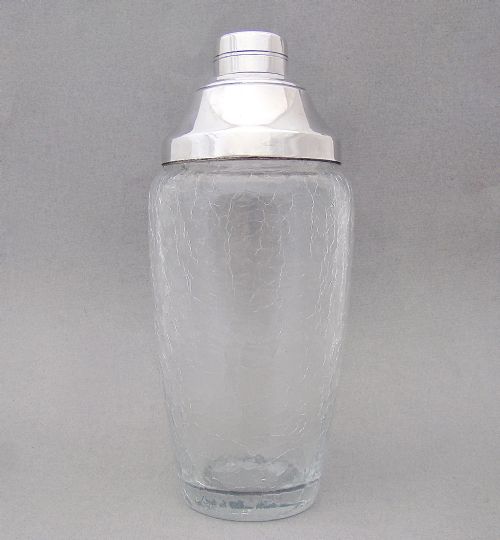
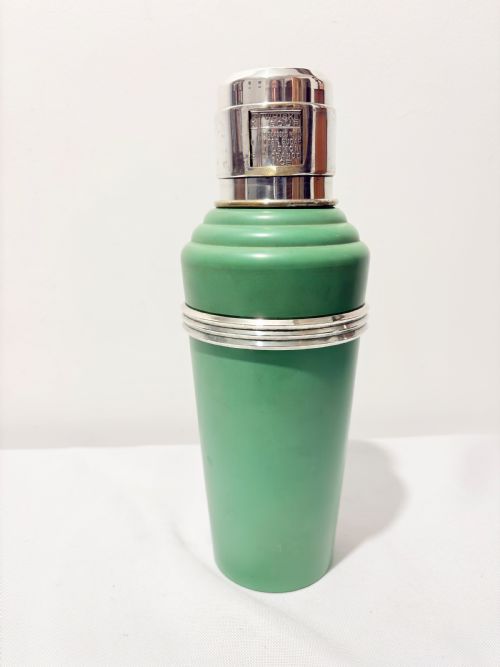
Most examples originate from British makers, alongside French, Italian, German, and Swiss workshops, capturing an era when home entertaining embraced sophisticated barware. Buyers encounter straightforward metal cylinders alongside complex designs featuring crackle glass, green Bakelite, or engine-turned surface patterns.
Materials and construction methods
Makers utilised silver plate and electroplated nickel silver over base metal foundations, frequently combining these metallic surfaces with contrasting elements such as glass, crackle glass, brass, cork, and Bakelite. Metal bodies were shaped through spinning or pressing, sometimes decorated with engine-turned geometric patterns or detailed engravings.
Functional additions like built-in juicers, ice breakers, and rotating recipe bands required precise engineering to ensure tight seals and smooth movement between components.
Silver Plated Drink Mixer Retail Price Guide 2026
Typical asking prices for silver plated drink mixer among the pieces listed under this phrase on Sellingantiques today, from the lower quarter to the upper quarter. They describe what is for sale here now, not the wider market.
Listings feature silver plated drink mixers spanning the 1920s to the 1960s, incorporating glass, brass, and Bakelite.
Factors determining quality and distinction
Quality rests upon the weight of the metal, the crispness of engine-turned or engraved details, and the reputation of the silversmith or manufacturer behind the piece. Recognised makers and distinct forms, such as novelty milk churns or complex recipe shakers, command greater attention than standard utilitarian cylinders.
The integrity of secondary materials like crackle glass inserts, Bakelite handles, and cork stoppers also distinguishes standard production items from finer studio or factory commissions.
Asprey & Co·Keith Murray·J. B. Chatterley & Sons·James Dixon & Sons·Lino Sabattini·Christofle·William Suckling·Angelletti·Hukin & Heath·C S Green & Co·Adie Brothers·Carl Deffner·William Hutton·Mappin & Webb
The Silver Plated Drink Mixer Glossary
- Silver Plate
- A thin layer of silver bonded to a base metal core such as nickel silver or brass. This technique allowed manufacturers to produce lustrous tableware at a fraction of the cost of solid silver.
- EPNS
- Electroplated Nickel Silver. A common base alloy used underneath silver plating in British manufacture during the twentieth century.
- Engine Turned
- A decorative mechanical technique that engraves precise, intricate geometric patterns into metal surfaces. It is frequently seen on Art Deco barware.
- Bakelite
- An early synthetic plastic used for handles, knobs, and decorative accents on mid-century items. Its colours range from black to vibrant greens.
- Crackle Glass
- Glass intentionally subjected to thermal shock during blowing to create a network of fine surface cracks. It offers a textural contrast to smooth silver plating.
Silver Plated Drink Mixer: Frequently Asked Questions
How do I use a vintage cocktail shaker?
Vintage shakers are designed for mixing spirits, citrus, and ice before straining into glasses. Ensure the lid and cap fit securely before shaking.
Many period pieces feature built-in strainers or removable tops to hold back ice during pouring.
What is an integral lemon squeezer?
An integral lemon squeezer is a built-in juicing cone located beneath the top cap of the shaker. It allows users to juice citrus directly into the main vessel.
This clever addition streamlines cocktail preparation without requiring separate kitchen tools.
How do I clean silver plated barware?
Wash silver plated items gently by hand using warm water and mild washing-up liquid. Avoid abrasive pads or harsh chemical dips that damage the plating.
Dry the metal thoroughly with a soft cloth to prevent water spots and maintain the shine.
How do I identify the period of a shaker?
Stylistic cues such as stepped geometric lines point towards Art Deco design of the 1920s and 1930s. Streamlined silhouettes and functional mechanics often indicate later mid-century origins.
Maker marks stamped onto the base provide further clues for dating individual pieces.