


Silver Plated Condiment Caddy
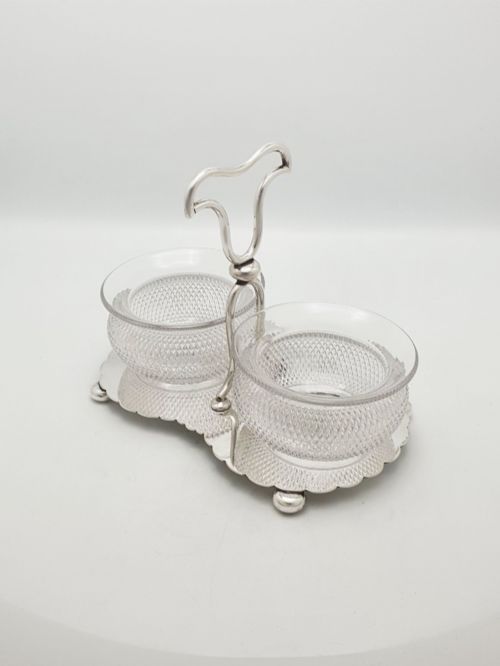
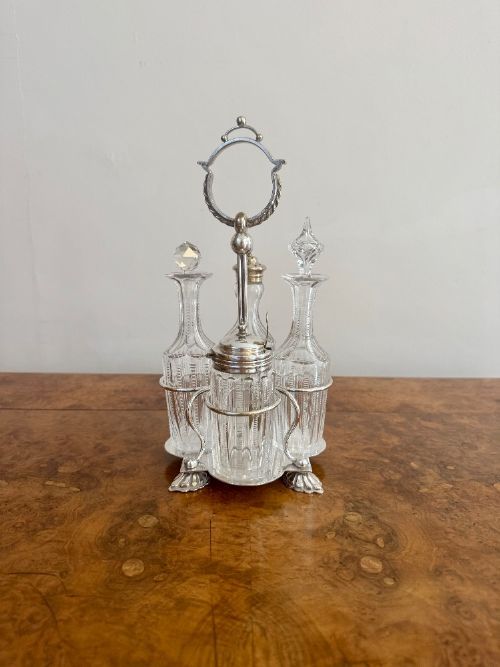
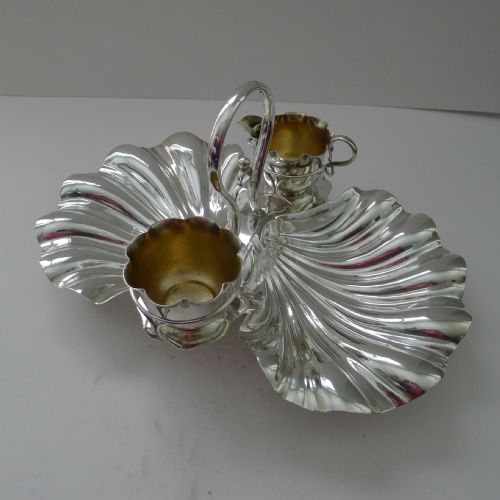
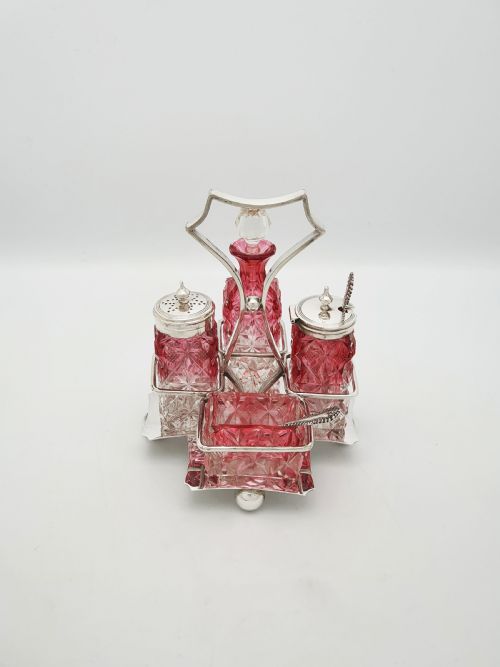
A silver plated condiment caddy holds bottles and jars at the dining table, combining bright metalwork with cut glass.

Silver Plated Condiment Caddy
When you search for a silver plated condiment caddy, you encounter tableware designed to organise sauces, mustards and seasonings for the dining table. These items include cruet sets, condiment stands, and serving dishes that hold glass containers within a metal framework.
The versions most commonly met on this page date from the Victorian and Edwardian periods, stretching into the early twentieth century. They range from simple twin bowl stands to larger six bottle cruet sets and novelty carriage designs.
Makers produced these stands in England and across other regions, utilising electroplated nickel silver and silver plate alongside clear, cranberry, and vaseline cut glass components.
Materials and construction
Silversmiths and manufacturers built these pieces using base metals coated in a layer of silver through electroplating, often denoted as electroplated nickel silver. This technique allowed workshops to produce robust tableware with the appearance of solid silver at a lower cost.
Glass houses supplied the fitted inserts, creating cut glass bottles, cranberry glass bowls, and preserve dishes that dropped securely into the metal frames. Some items incorporated gold wash finishes inside bowls or spoons for added contrast.
Materials recorded across the inventory include silver plate, electroplated nickel silver, cut glass, cranberry glass, and gold wash.
Assessing standard and execution
The standard of these pieces depends upon the crispness of the cast metalwork and the weight of the silver plate applied to the frame. Finer examples display intricate chased or pierced decoration that remains sharp and well-defined.
The glass elements contribute significantly to the overall standard, with heavy cut glass bottles and unblemished cranberry or vaseline glass vessels elevating the piece. Matching original bottles and stoppers complete a superior set.
Daniel Arter·Mappin Brothers·Wade Wingfield Wilkins
The Silver Plated Condiment Caddy Glossary
- Cruet set
- A matched collection of glass bottles for holding vinegar, oil, mustard, and pepper, housed in a dedicated metal stand. These sets formed a central part of formal dining arrangements.
- Electroplated nickel silver
- A base metal alloy of copper, nickel, and zinc coated with a thin layer of pure silver using an electrical current. This process became the standard method for producing affordable silver-appearance tableware in the nineteenth century.
- Cranberry glass
- A rich pinkish-red glass produced by adding gold chloride to the molten glass batch. It appears frequently in Victorian and Edwardian tableware and condiment sets.
- Gold wash
- A thin layer of gold applied to the interior surface of silver plated bowls or spoons. This technique protected the underlying metal from the corrosive effects of mustard and vinegar.
- Vaseline glass
- A transparent yellowish-green glass coloured with uranium oxide that glows under ultraviolet light. It turns up in late nineteenth and early twentieth century preserve dishes and small vessels.
Silver Plated Condiment Caddy: Frequently Asked Questions
What is a silver plated condiment caddy?
A silver plated condiment caddy is a table accessory designed to hold bottles, jars, and bowls containing sauces, relishes, and seasonings.
These pieces feature a metal frame with a handle, allowing diners to pass condiments around the table easily.
How were cruet sets used at the table?
Cruet sets held essential liquids and powders like vinegar, oil, mustard, and pepper during meals.
Servants or diners used the bottles to season food to individual taste before or during dining.
How do I clean silver plate?
Silver plate requires gentle cleaning with a soft cloth and a specialised silver polish to preserve the thin metal coating.
Avoid harsh scrubbing or abrasive dips that can wear away the plating over time.
How do I date an Edwardian cruet set?
Edwardian cruet sets date from the reign of King Edward VII between 1901 and 1910.
Design characteristics from this era often feature lighter, more refined frames compared to heavier Victorian pieces.