
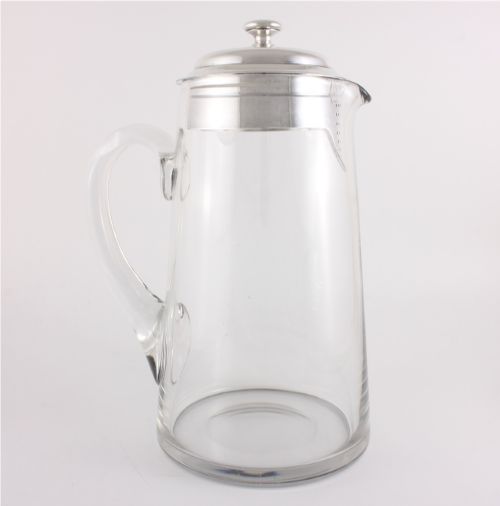
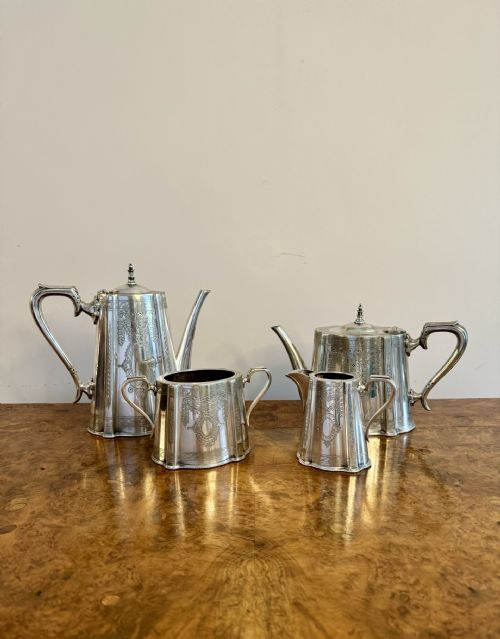


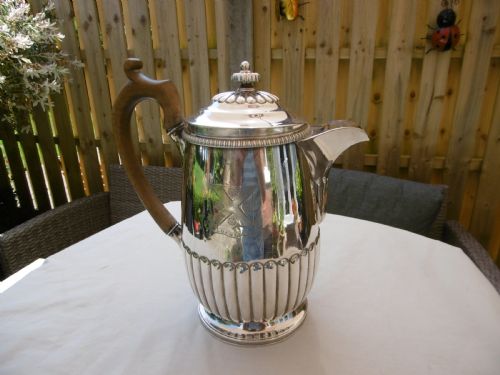


Silver Plate Water Jug
A silver plate water jug brings heavy Victorian and Georgian gravitas to the sideboard, offering bright metal and generous proportions for the table.
Silver Plate Water Jug
When you search for a silver plate water jug, you encounter heavy serving vessels designed for the formal dining table. These pieces span centuries of British and continental metalwork, ranging from early Georgian forms to Edwardian iterations.
The versions you meet most frequently on this page include tall Old Sheffield Plate coffee pots, decorative Edwardian glass combinations, and substantial Victorian beer or water jugs. Makers utilised silver plate over copper, electroplated nickel silver, and clear cut glass to create durable tableware.
Many examples arrive accompanied by matching tea sets, ice tubes, or internal coolers for practical hosting. The forms shift from barrel-shaped vessels to ornate pitchers bearing engraved crests.
Materials and Construction
The earlier pieces rely on Old Sheffield Plate, a technique fusing a thin sheet of silver to a thicker copper core. This method often reveals thin lines of copper along high wear edges, showing the underlying metal beneath.
Later manufacturing shifted towards electroplated nickel silver, applying a chemical silver coating directly over a white metal base. Cut glass bodies frequently appear paired with silver plated mounts, hinged lids, and decorative handles.
Listings feature silver plate water jugs paired with copper, wood, bone, glass, cut glass, ebony, and electroplated nickel silver.
Judging Quality and Execution
The thickness and survival of the silver layer dictate the longevity and overall finish of the vessel. Pieces retaining heavy silver deposition across high friction points like handles and spouts demonstrate superior initial manufacture.
Engraved crests, crisp chasing, and substantial baseline weights separate standard production items from master silversmith output. The integration of functional elements, such as internal ice tubes or secure hinged lids, marks the better class of vessel.
Christofle·Walker and Hall·Matthew Boulton·John Hoyland·Mappin and Webb·Elkington and Co·Boardman Glossop and Co·Adie Brothers
The Silver Plate Water Jug Glossary
- Old Sheffield Plate
- A composite material made by fusing silver to a copper base before rolling into sheets. This technique preceded modern electroplating.
- Electroplated Nickel Silver
- A base alloy of copper, nickel, and zinc coated with a layer of pure silver via electrolysis. This became the standard manufacturing method in the Victorian era.
- Claret Jug
- A specialised pouring vessel, usually combining cut glass with silver plated mounts and a hinged lid. They were designed specifically for serving wine at the table.
- Ice Tube
- A removable internal metal cylinder filled with ice to chill the contents without diluting the liquid. These cylinders are frequently found in larger Victorian lemonade and water jugs.
Silver Plate Water Jug: Frequently Asked Questions
How do I clean a silver plate water jug?
Use a non-abrasive silver polish applied with a soft cloth, working gently around engraved lines and handles to preserve the remaining plating.
Avoid soaking antique pieces in chemical dips, as these harsh solutions can strip the thin silver layer and damage underlying copper or base metals.
Can I still use these jugs for serving water?
Most antique jugs function adequately for serving cold water, provided the interior remains clean and free from heavy tarnish.
Inspect the internal lining carefully, especially on Old Sheffield Plate pieces where the underlying copper base might be exposed to liquids.
How can I tell Old Sheffield Plate from electroplate?
Look closely at the rims and high points for faint streaks of reddish copper shining through the worn silver surface.
Old Sheffield Plate exhibits a warm, layered appearance unique to the fusion method, whereas electroplate typically reveals a dull grey base metal when worn.
What is the purpose of the inner glass tube?
The internal glass or metal cylinder held ice to cool lemonade, water, or Pimm's without melting water directly into the drink.
These removable inserts are desirable additions that add functional complexity to Victorian and Edwardian serving vessels.