
Silver Plate Tray
A silver plate tray brings enduring lustre to a room, offering a versatile surface for drinks, candles or calling cards.
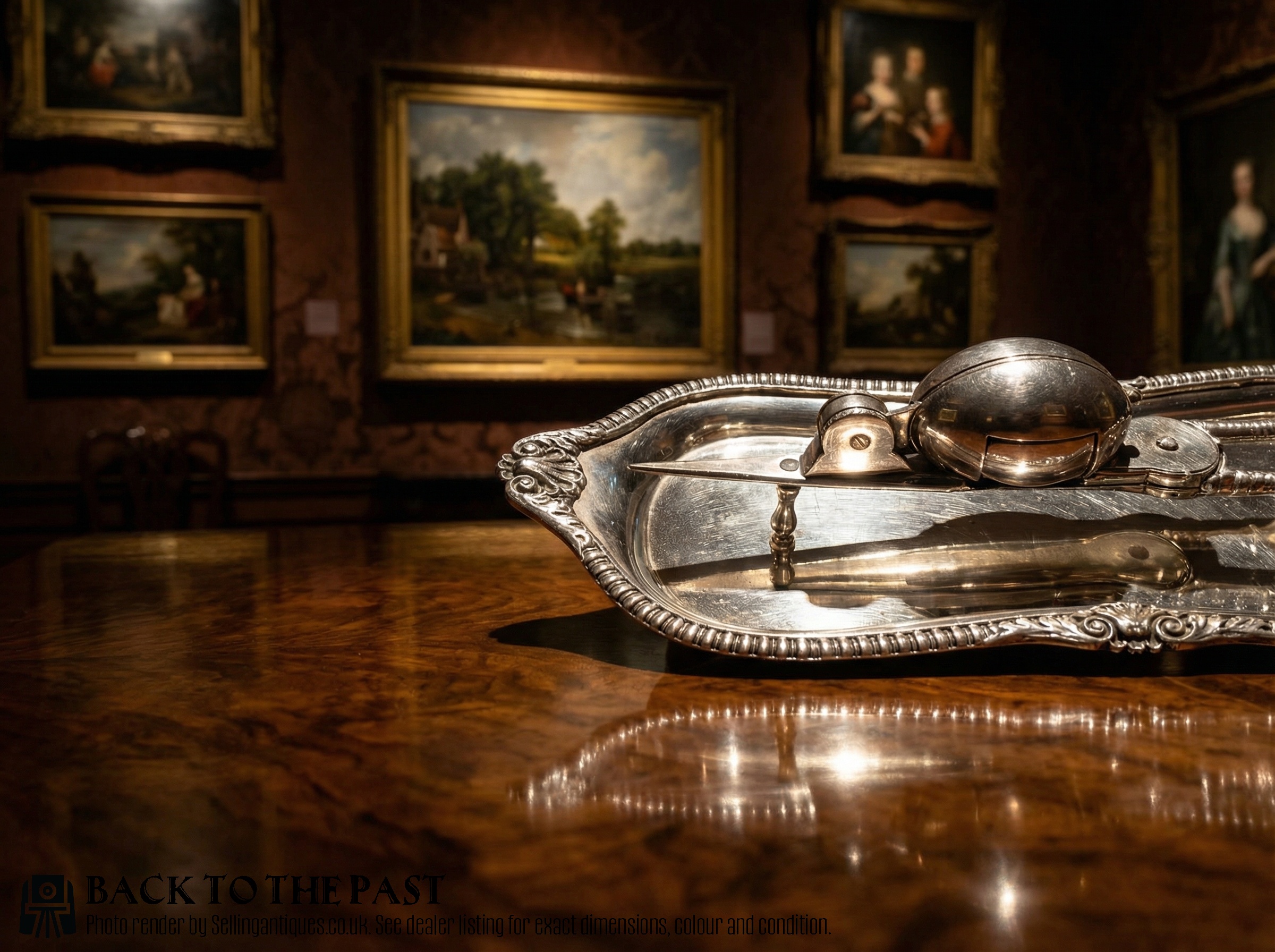
Silver plate tray
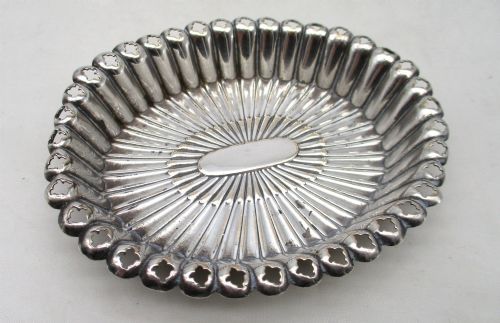
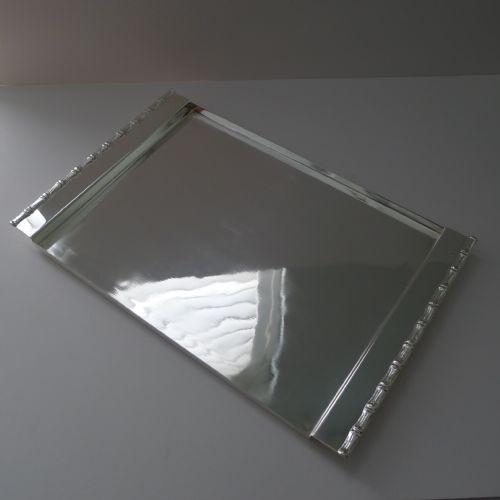
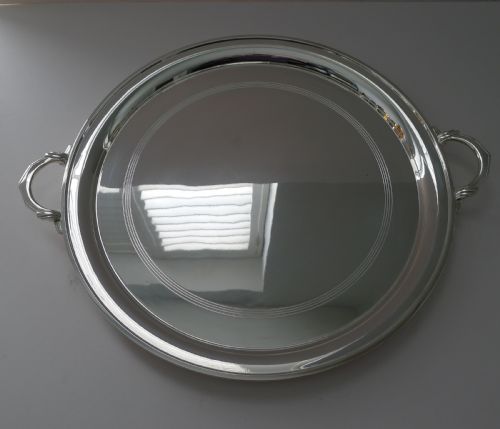
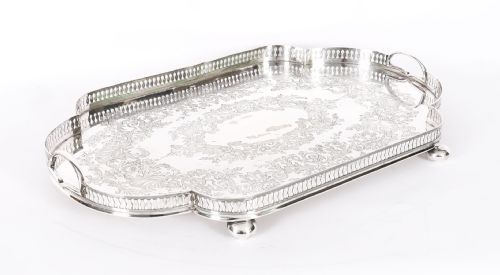
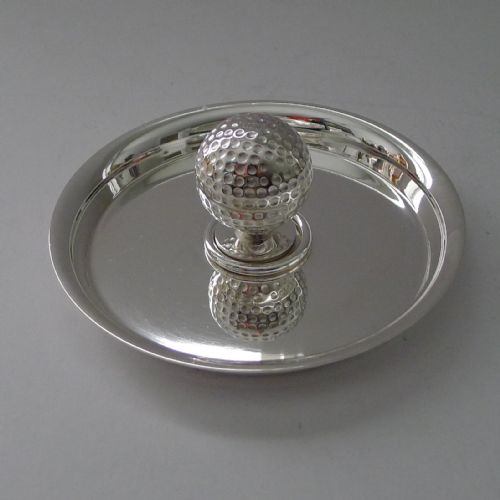
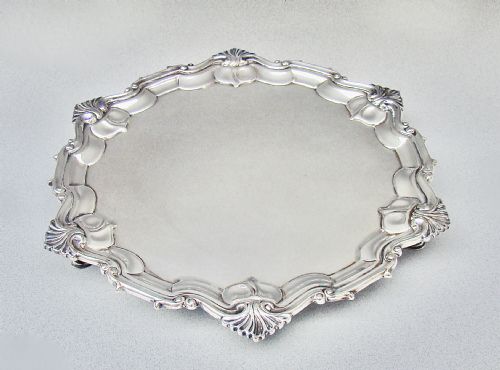
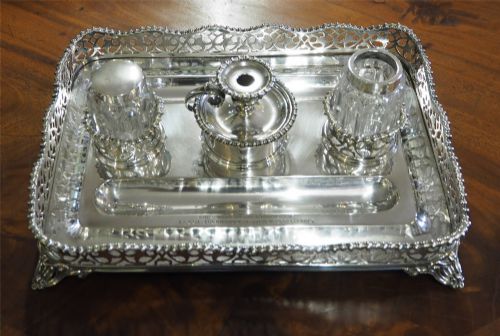
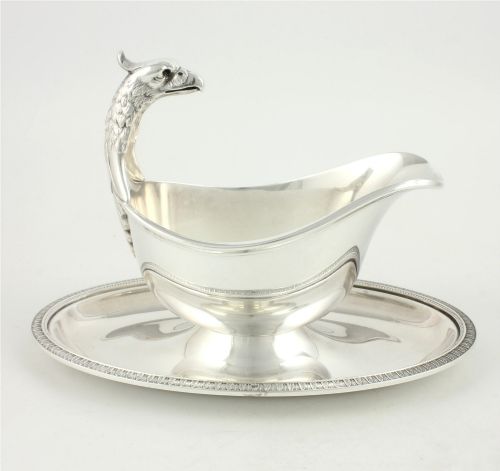
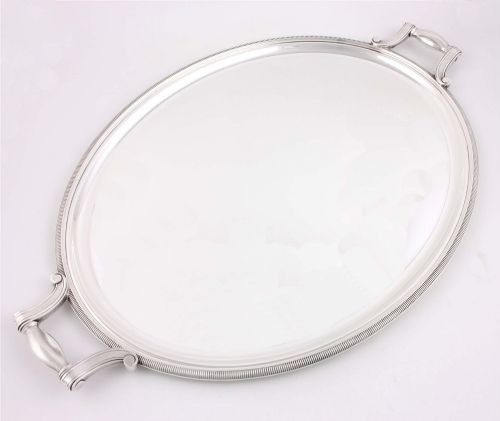
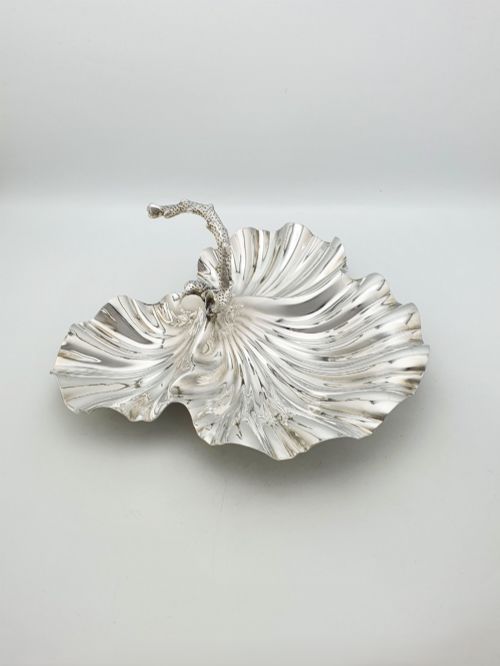
A silver plate tray serves as both a practical household piece and a decorative object, spanning formats from tea trays and cocktail servers to small snuffers and calling card dishes. Buyers looking at this selection will find domestic items originating from the Georgian period through to the mid-twentieth century.
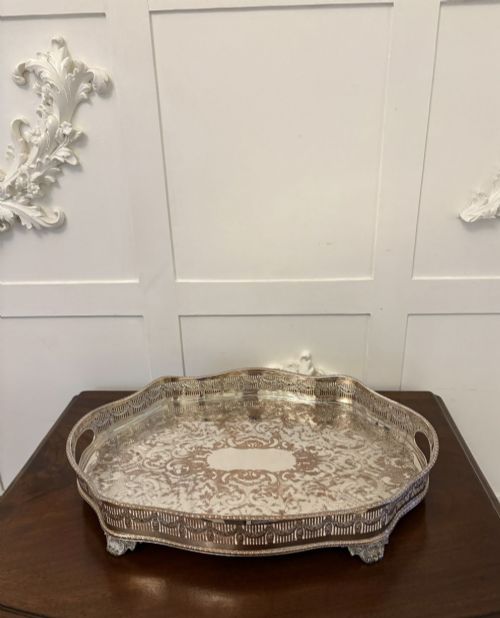
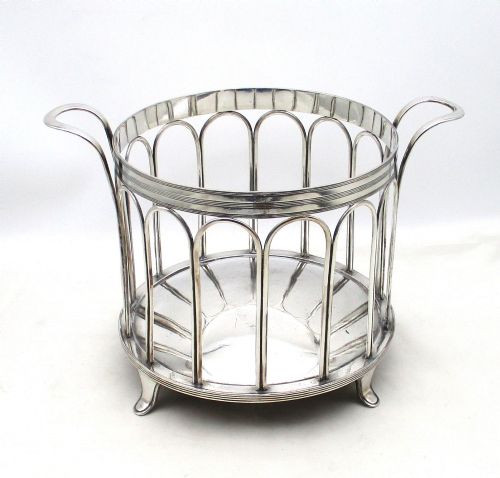
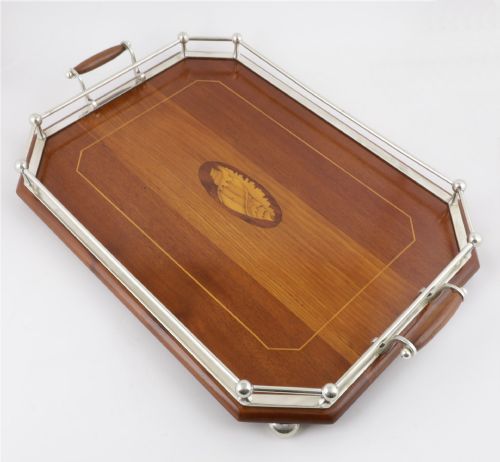
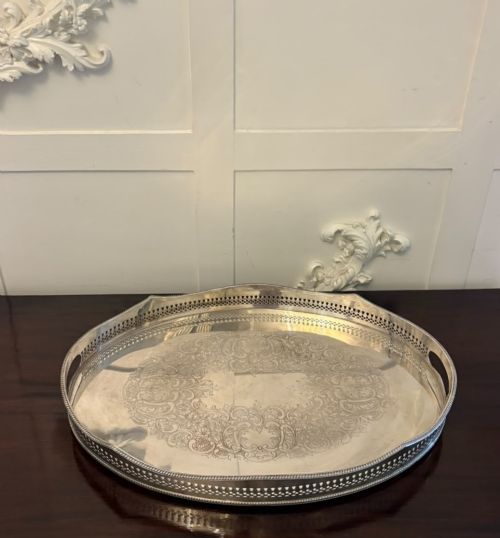
The most common forms on this page include oval and rectangular tea trays, alongside galleried cocktail trays featuring wooden bases in oak or mahogany. Smaller variations include knife trays, shaving mug inserts and candle accessory trays intended for specific domestic tasks.
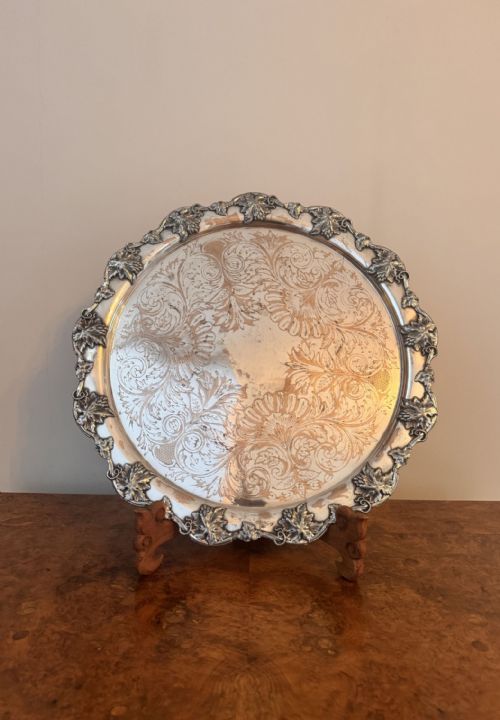
Pieces span Victorian, Edwardian, Art Deco and Secessionist aesthetics, demonstrating how makers adapted these serving surfaces to changing interior tastes. Whether plain or heavily ornamented with floral scrollwork, each silver plate tray reflects the design vocabulary of its era.
Materials and construction
Makers formed these items using a base metal foundation, frequently utilising copper or nickel silver before applying a layer of silver plating. Some variations incorporate wooden galleries made from English oak or mahogany, occasionally accented with shell inlay or glass inserts.
Techniques range from electroplating on copper to solid base metal construction finished with detailed surface engraving, cast mounts and applied borders. Handles, feet and galleries were soldered or riveted to the main body to create sturdy serving vessels.
Retail Price Guide 2026
Typical UK retail prices for silver plate tray, calculated from the Sellingantiques database of over a million retail prices indexed since 2003. This retail price guide relies exclusively on Sellingantiques data; no external sources or auction records are used, so the figures do not describe the wider market.
Materials documented across the inventory include silver plate, mahogany, English oak, base metal and nickel silver.
Judging quality
Superior examples display crispness in their chased or engraved floral scrollwork and securely seated galleries that show no looseness at the joints. Weight and balance also signal standard, as heavier foundations provide greater stability during service.
The integrity of the surface finish distinguishes exceptional work from simpler utilitarian items. Trays bearing recognised workshop stamps often exhibit finer hand-finishing on their borders and handles.
Elkington·Viners of Sheffield·William Hutton and Son·Christofle·Asprey
The Silver Plate Tray Glossary
- Gallery tray
- A serving tray fitted with an upright pierced or solid rim around its perimeter to secure glasses and decanters. This style became particularly popular for serving cocktails in the Edwardian period.
- Base metal
- The underlying alloy used beneath the silver plating, commonly comprising copper or nickel silver. The durability of the tray often depends on the thickness of this foundation.
- Salver
- A flat serving tray or dish, typically raised on small feet, used for presenting food, drinks or calling cards. They often feature scalloped or shaped rims.
- Sheffield silver plate
- An early technique involving the fusion of a sheet of silver to a copper ingot before rolling them together into sheets. This method predates modern electroplating.
Frequently Asked Questions
What was a galleried tray used for?
Galleried trays were primarily designed to keep glassware, decanters and bottles secure while being carried across a room. The raised wooden or metal rim prevented items from sliding off during service.
Over time, these pieces transitioned from formal tea service use to cocktail bars and general entertaining.
How can I tell the period of a tray?
Examine the overall style, decorative motifs and any maker marks stamped on the reverse or rim. Heavy floral scrollwork often points to Victorian production, while clean lines suggest Art Deco.
Manufacturing techniques also change over time, shifting from early fused plating methods to later electroplating processes.
Are these trays safe for serving food?
Most silver plate trays can safely serve food and drinks, provided the surface plating remains intact. Inspect the piece to ensure the base metal does not show through heavy wear areas.
Acidic foods should not be left on silver plate surfaces for extended periods to prevent tarnishing and chemical reaction.