



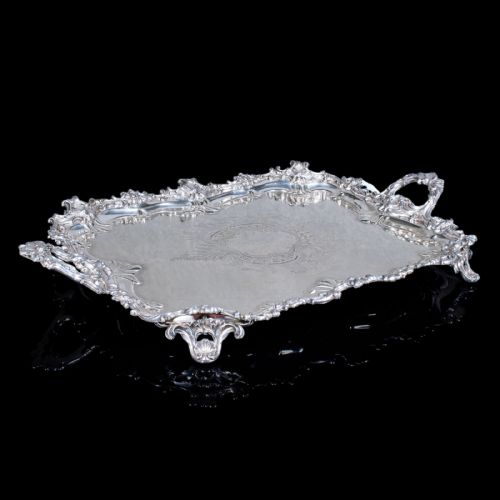
Silver Plate Tea Tray
A silver plate tea tray anchors a formal tea service with polished metal, offering a surface for pots, cups, and creamers.
Silver Plate Tea Tray
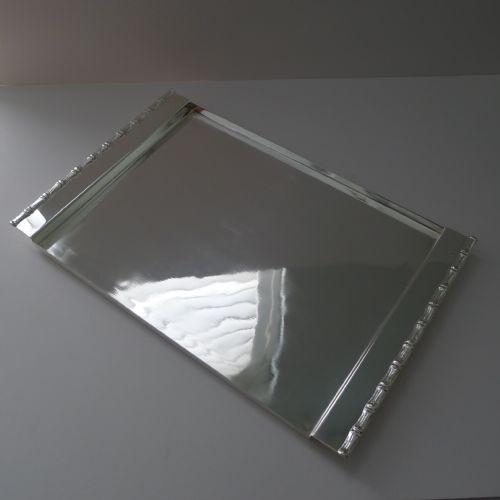
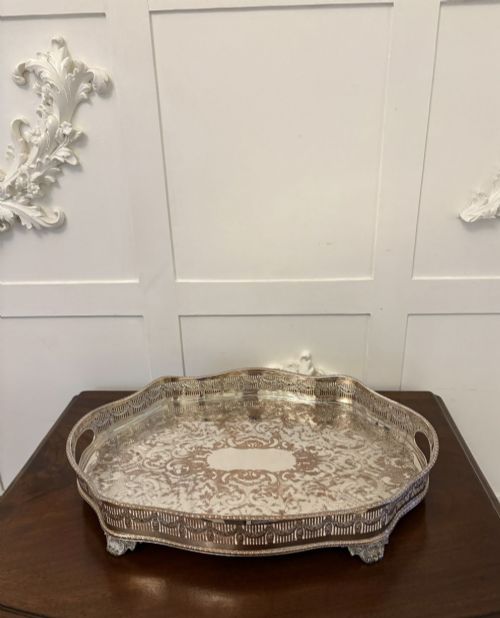
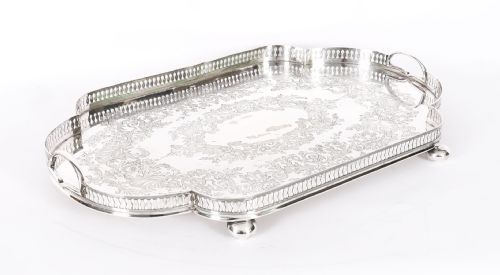
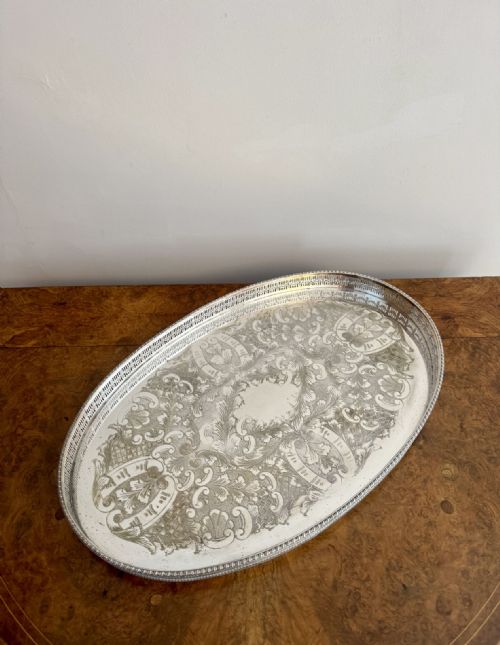
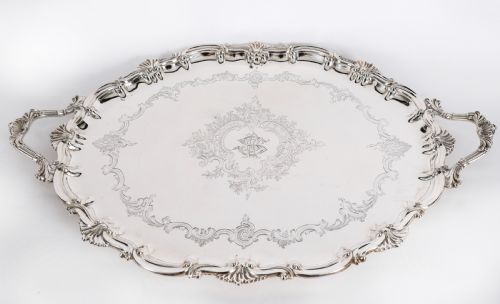
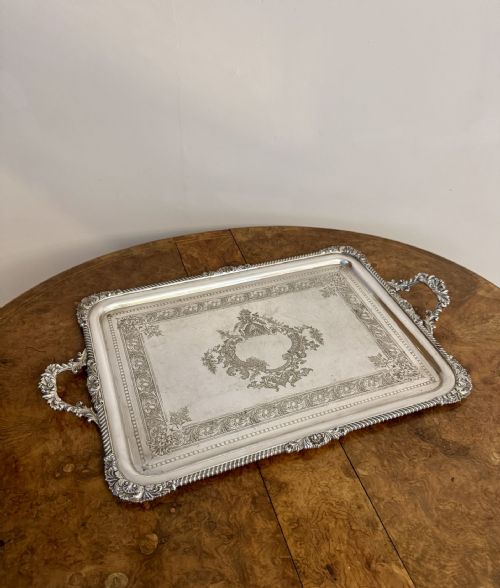
A silver plate tea tray serves as the foundational platform for afternoon tea, presenting teapots, cups, and jugs with a reflective metallic surface. These objects range from heavy Victorian presentation pieces to sleek Edwardian gallery trays and geometric Art Deco designs.
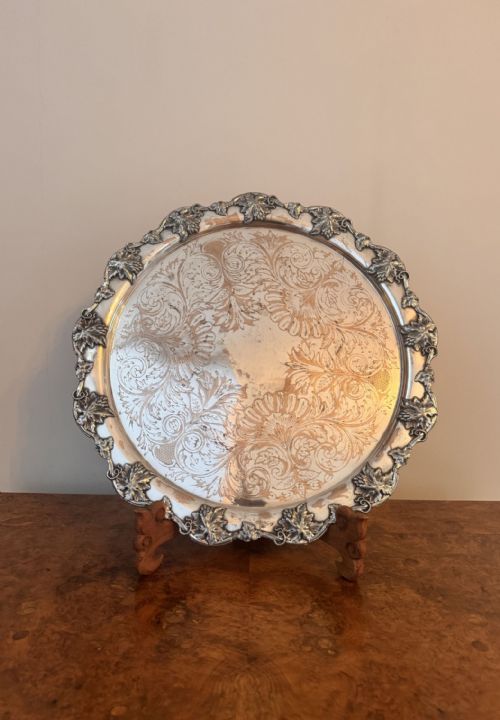
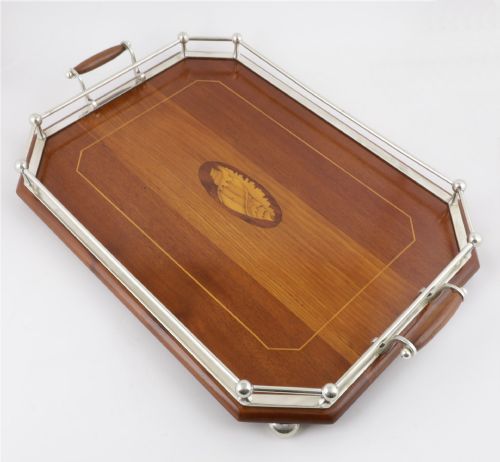
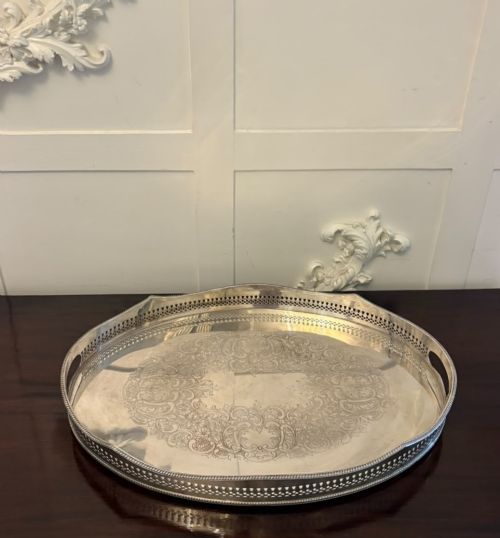
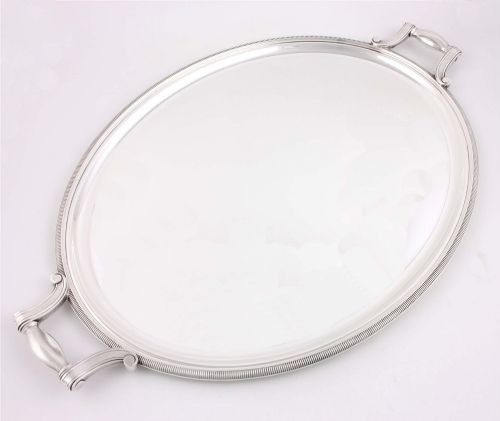
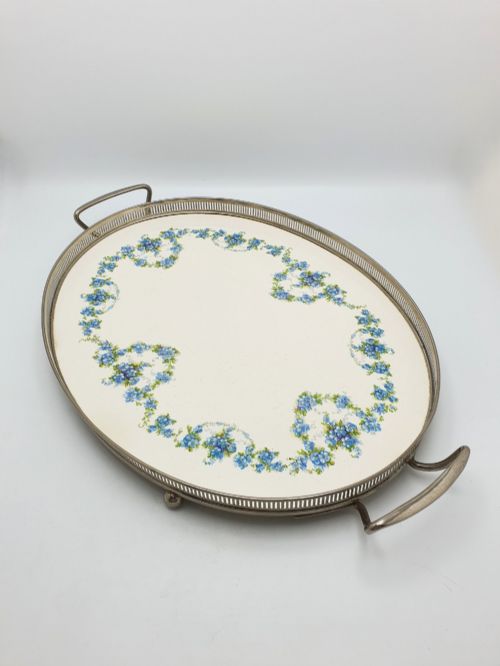
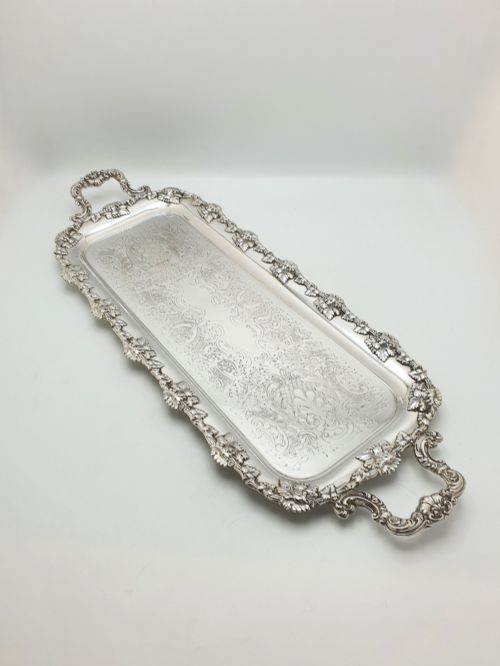
Most examples found here date from the nineteenth and twentieth centuries, produced in oval, rectangular, and circular formats. Buyers will frequently encounter Edwardian and Victorian specimens featuring engraved borders, cast handles, and raised galleries.
Beyond traditional afternoon tea use, many larger examples function as cocktail or drinks trays for decanters and glassware. The selection includes plain service platters alongside elaborate pieces decorated with floral scrolls and grapevine motifs.
How they were made
Makers formed the structural body using base metals such as copper, nickel silver, or brass before applying a layer of silver via electroplating or older Sheffield plating techniques. Handles, feet, and decorative borders were cast separately and soldered or riveted to the main body.
Surface decoration relied on hand engraving, embossing, and pierced gallery work to create intricate scrolls, floral motifs, and geometric patterns. Some models incorporated wooden bases, mahogany inserts, or inlaid shell details to contrast with the polished metal.
Some Victorian butlers exercised with heavy silver trays daily to build the arm strength required for navigating crowded drawing rooms.
What varies in quality
Quality rests in the weight of the metal blank, the crispness of the chased or engraved detailing, and the structural integrity of the handles and feet. Substantial baseline metals prevent flexing, while thick silver deposition ensures the underlying copper or nickel does not show through from wear.
Maker reputation distinguishes standard utilitarian items from exhibition pieces produced by notable silversmiths. Fine examples display balanced proportions, secure gallery railings, and cast decorative mounts that integrate cleanly with the primary tray surface.
James Deakin·Mappin & Webb·Thomas Bradbury & Sons·John Harrison·Christofle·Elkington & Co.·James Dixon and Sons
The Silver Plate Tea Tray Glossary
- Gallery tray
- A tray featuring an upright pierced or solid metal railing around its perimeter designed to keep items secure. These raised borders often include integrated carrying handles.
- EPNS
- Electroplated nickel silver, a durable metallic composition used as a base for silver plating from the mid-nineteenth century onward. It provides a strong, rigid core for large serving vessels.
- Sheffield plate
- An early fusing technique where a thin sheet of silver was melted onto a thicker copper ingot before rolling. This process creates a distinct edge where the copper base metal can sometimes be seen.
- Salver
- A flat serving tray, typically circular and raised on small feet, used for presenting drinks or calling cards. Unlike deep tea trays, salvers prioritize a clean, unblemished central disc.
- Chasing
- A metalsmithing technique where a design is hammered into the front surface of the metal using punches to displace rather than cut away material. It creates low-relief ornamentation without weakening the plate.
Silver Plate Tea Tray: Frequently Asked Questions
How do I clean a silver plate tea tray?
Use a specialised silver polish and a soft cloth to gently remove tarnish without scrubbing away the thin outer layer of precious metal. Avoid harsh abrasive cleaners that scratch the reflective surface.
Rinse the tray thoroughly with warm water and dry it completely with a clean cloth to prevent water spots from forming on the plate.
Can I use an antique tray for daily serving?
These trays are robust enough for occasional hospitality use, provided you handle heavy decanters and pots with reasonable care. Placing felt pads underneath heavy ceramic or glass items prevents surface scratching.
Be mindful that moisture left standing on the metal for long periods can accelerate tarnishing or degrade underlying base metals if the plating is thin.
What is the difference between a tray and a salver?
A tray generally includes incorporated handles and serves a functional role for carrying multiple vessels like teapots, sugar bowls, and cream jugs. They are produced in oval, rectangular, and large circular formats.
A salver is typically a circular flat platter supported by small feet, traditionally used for handing round drinks or letters rather than heavy table service.
How do I date an Edwardian silver plate tray?
Edwardian pieces often display registration numbers, manufacturer hallmarks, and specific Gothic or cursive script styles stamped into the reverse or rim. The decorative vocabulary leans toward Sheraton Revival motifs, ribbon bows, and neoclassical urns.
Compare the weight, handle construction, and edge piercing against documented manufacturing styles from the early twentieth century to confirm the era.