




Silver Plate Taper Holders
Silver plate taper holders bring a warm, reflective glow to desks and mantelpieces, offering the elegance of solid silver through inventive metalwork.
Silver Plate Taper Holders
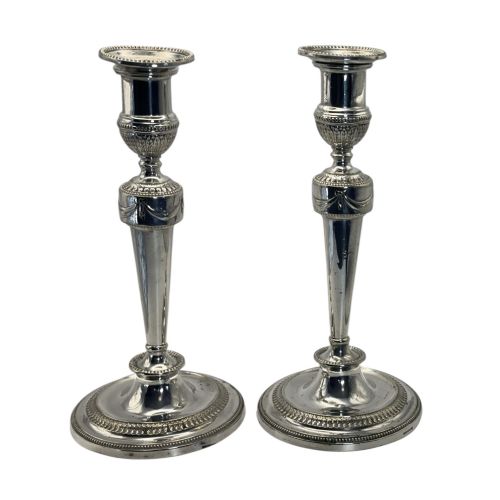
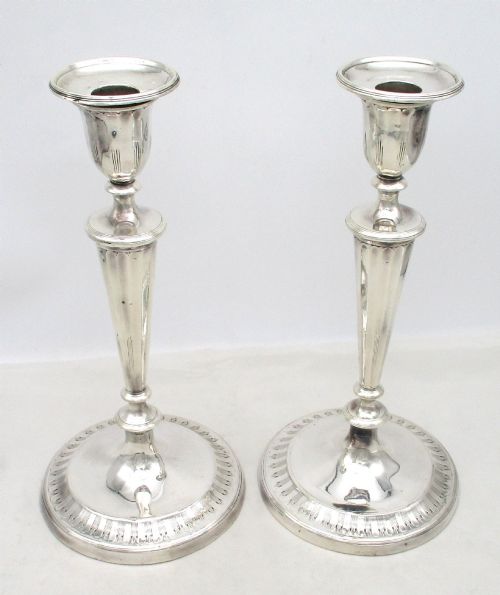
When you search for silver plate taper holders, you encounter a variety of tabletop lighting forms spanning the Georgian, Victorian, and Edwardian eras. The selection on this page centres primarily on candlesticks, chambersticks, and multi-light candelabra produced in base metals with applied silver surfaces.
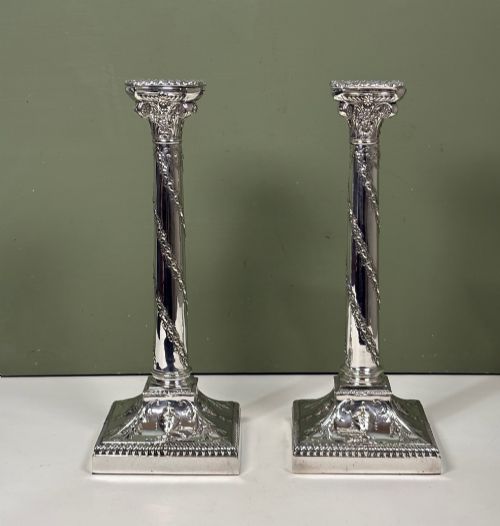
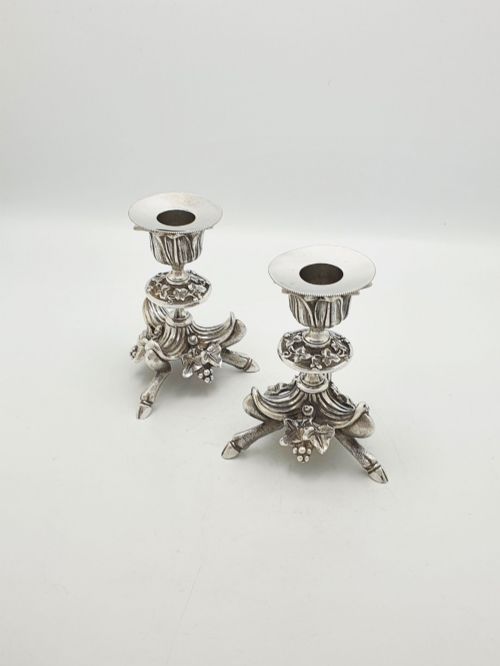
Most examples date from the nineteenth and early twentieth centuries, reflecting the period's demand for formal domestic lighting. These pieces range from simple domestic desk accessories to elaborate figural and column designs suited for formal reception rooms.
Materials and Construction Methods
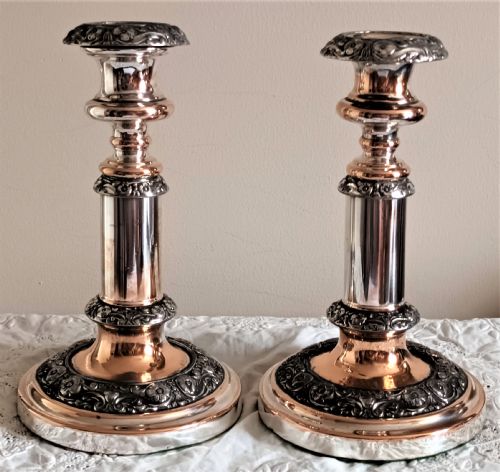
The construction relies heavily on silver plate, electroplated nickel silver, and Old Sheffield Plate over copper or base metal substrates. Early methods involved fusing a thin sheet of silver to a copper ingot, while later pieces utilised electroplating to deposit silver onto base metals.
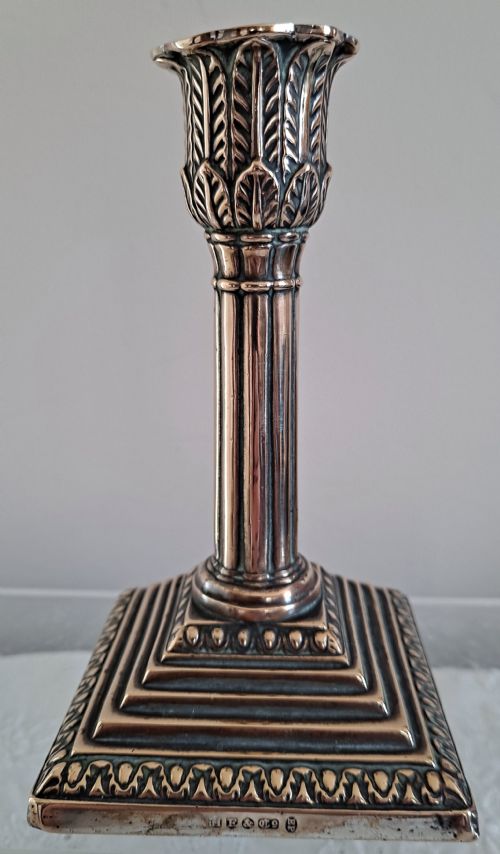
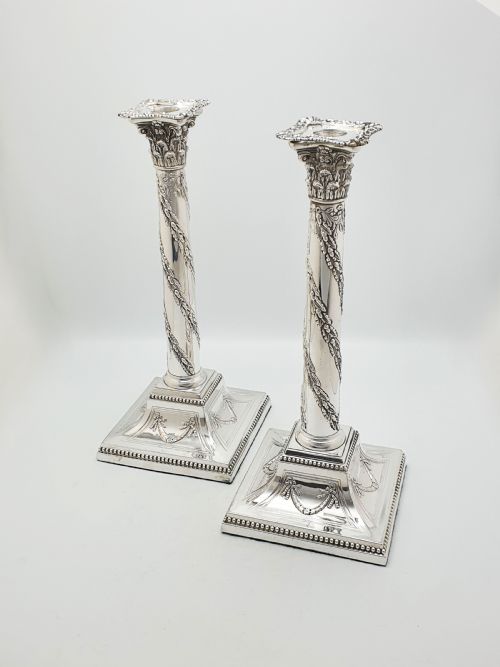
Makers often weighted the bases with lead or resin to provide stability for taller forms such as Corinthian columns and candelabra. Removable sconces, also known as nozzle inserts, frequently accompanied these pieces to catch melting wax during use.
Wandering candleholders sometimes retain faint scorch marks from hurried late-night journeys across draughty Victorian landings.
Judging Quality in Plated Lighting
Quality rests upon the preservation of the silver layer over the base metal, particularly where handling causes wear on prominent mouldings and edges. Crisp casting detail in styles such as Rococo Revival, Neoclassical, and Art Nouveau indicates careful execution by the original maker.
The integrity of the construction, including the secure joining of columns, bases, and candle sockets, distinguishes superior examples. Weight, balance, and the presence of original detachable components like bobeches also determine the standard of a piece.
Mappin & Webb·WMF·John Pound & Co·Barker Ellis
The Silver Plate Taper Holders Glossary
- Old Sheffield Plate
- An early form of plate created by fusing silver to a copper core before rolling them into sheets. This technique produces a distinctive edge where the copper base metal becomes visible.
- Electroplated Nickel Silver
- A modern plating process introduced in the nineteenth century where silver is electrically bonded to a nickel brass alloy. It provides a durable and uniform silver surface.
- Chamberstick
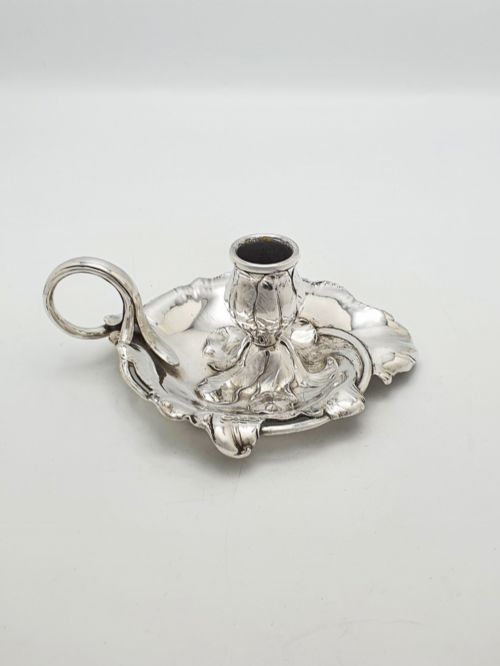
- A low-profile candle holder fitted with a handle and a small saucer base designed to catch dripping wax. People carried these through dark hallways before the advent of electric lighting.
- Sconce
- The detachable top pan or nozzle fitted into the candle socket to catch melted wax. These components are easily lost or separated from the main stick over time.
- Bobeche
- A small collar or disc placed just below the candle nozzle to prevent wax from running down the stem. They appear frequently on formal nineteenth-century candelabra.
Silver Plate Taper Holders: Frequently Asked Questions
What is Old Sheffield Plate?
Old Sheffield Plate is an early composite material made by fusing a sheet of silver onto a copper ingot and rolling them together. This method creates a rich depth that differs from later electroplated wares.
Under magnification or along exposed rims, you may spot the reddish hue of the underlying copper peeking through the silver.
How were chambersticks used?
Chambersticks served as portable lighting devices in large homes before electric illumination. The saucer caught dripping wax while the loop handle allowed safe transport between rooms.
They often included a small conical snuffer resting in the tray to extinguish the flame safely.
How do I date these pieces?
Stylistic cues provide the clearest indication of age, moving from Georgian restraint through Victorian ornamentation to Edwardian and Art Deco geometries. Manufacturing marks and maker stamps on the base also help narrow down the production decade.
Examining the construction methods, such as the transition from fused plate to electroplating around the mid-nineteenth century, confirms the period.