





Silver Plate Shaker
A silver plate shaker brings the polished geometry of the twentieth-century bar and the heavy elegance of the dining table into domestic spaces.
Silver Plate Shaker
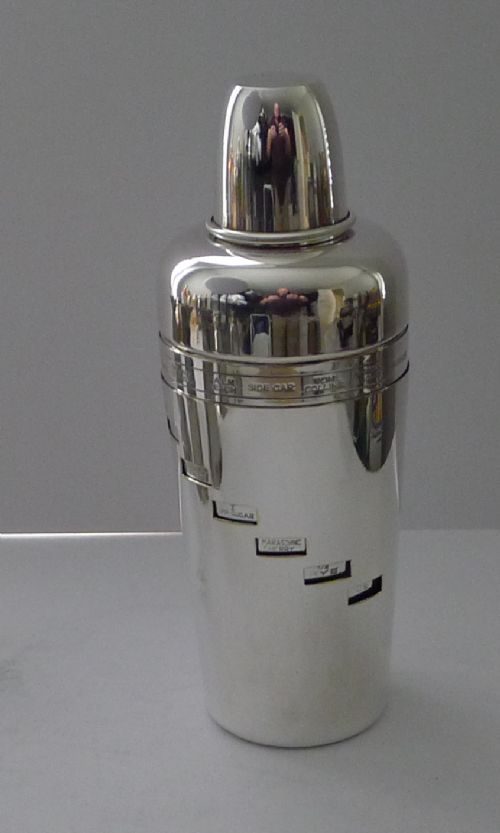
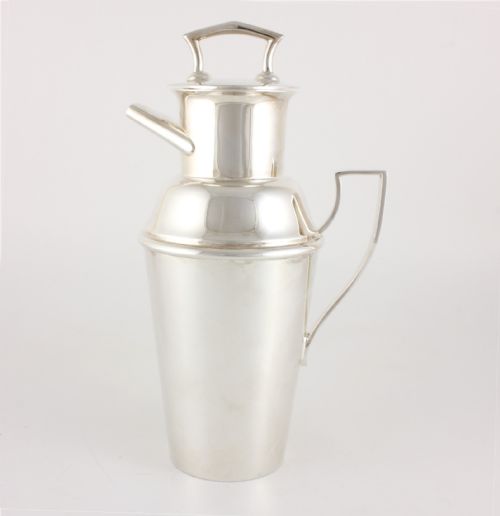
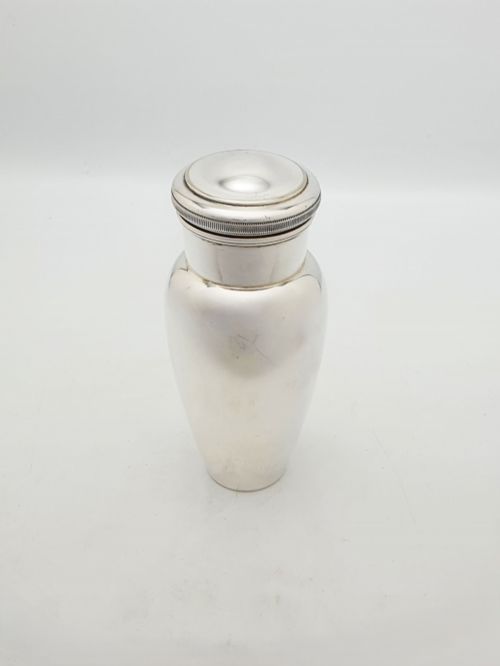
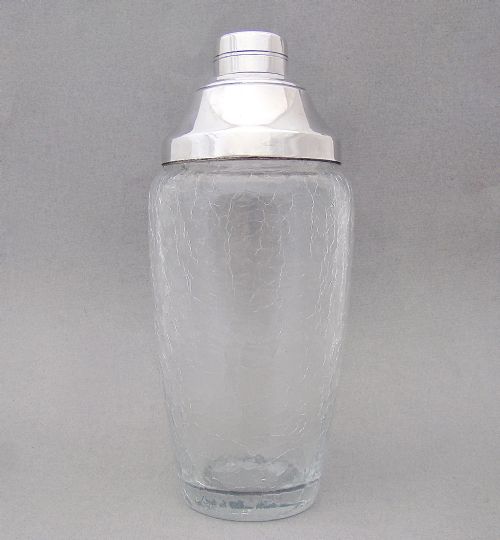
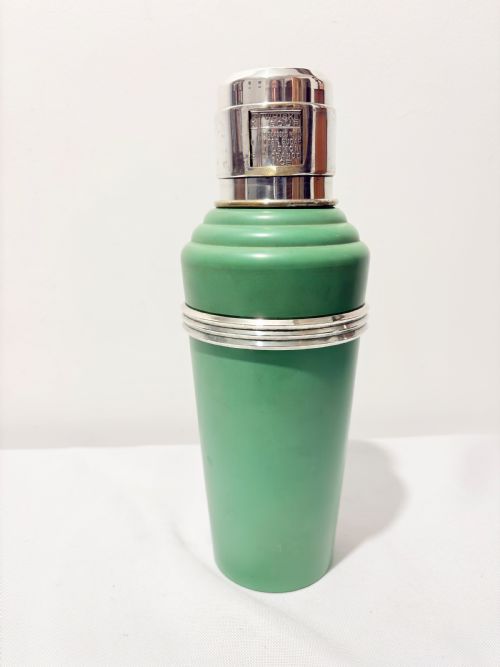
A silver plate shaker encompasses both cocktail vessels and dining table condiments, uniting barware with formal table settings. When exploring this selection, buyers encounter everything from streamlined twentieth-century drink mixers to nineteenth-century cruet sets.
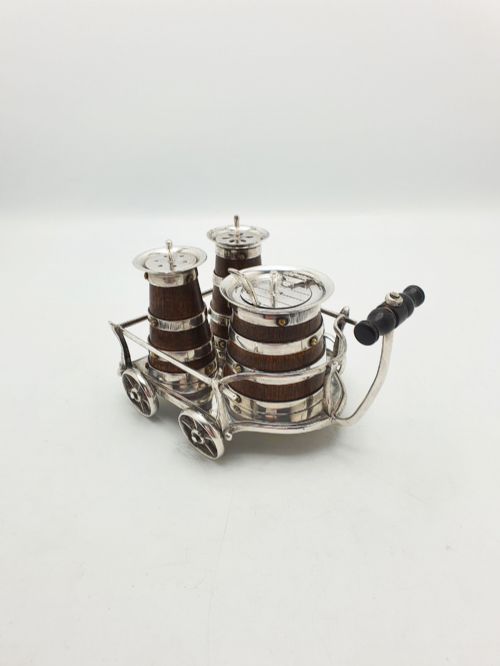
The cocktail vessels predominantly date from the Art Deco period, taking forms such as milk churns, zeppelins, and cylindrical cylinders with built-in ice breakers or recipe dials. Alongside these stand multi-bottle cruet frames and sugar casters designed for Victorian and Edwardian dining.
Origins span English workshops, French studios, and Italian modernism, reflecting a broad international appetite for plated hospitality wares through the decades.
Distinctions in quality
The standard of a silver plate shaker is often determined by the weight of the metal base and the smoothness of its mechanical elements. Pieces produced by recognised makers demonstrate a heavier gauge of metal and tighter tolerances in fitting lids and internal strainers.
Design ambition separates standard commercial production from inventive novelty forms, such as mechanical recipe dials or figural farmyard frames. The survival of original glass liners, integrated squeezers, and distinct maker marks elevates the standing of an individual object.
Farmyard cruets and hunting novelty sets ensured that nineteenth-century dining tables came equipped with condiments served from miniature silver-plated animals.
Asprey & Co·Keith Murray·J. B. Chatterley & Sons·James Dixon & Sons·William Suckling·Hukin & Heath·C S Green & Co·Lino Sabattini·Christofle·Gaskell & Chambers·Mappin & Webb·Gregory & Sheehan·Oliver & Bensley·Herbert Jenkins·WMF
The Silver Plate Shaker Glossary
- Electroplated Nickel Silver
- A base metal alloy of copper, nickel, and zinc coated with a layer of pure silver through an electrolytic process. This material formed the durable foundation for the vast majority of twentieth-century barware.
- Cruet Set
- A matched collection of glass bottles or jars held within a portable metal frame for serving condiments at the table. Victorian and Edwardian examples often feature elaborate silver-plated stands with carrying handles.
- Engine Turned
- A surface decoration technique involving precise geometric patterns cut mechanically into metal by a lathe. This finish provides both visual texture and a secure grip on cylindrical cocktail containers.
- EPNS
- An abbreviation commonly stamped onto silver-plated objects to denote electroplated nickel silver. It serves as a standard industry mark identifying the underlying metallic composition.
- Sugar Caster
- A perforated vessel used for sprinkling castor sugar over food, typically featuring a pierce-decorated screw-on top. These items appear in both cut glass bodies with silver tops and fully plated metal forms.
Silver Plate Shaker: Frequently Asked Questions
How do you use a cruet set?
A cruet set holds various liquid and dry condiments, such as oil, vinegar, mustard, and pepper, in dedicated glass bottles.
Placed at the centre of the dining table, the frame allowed guests to season their food individually during formal meals.
Are these shakers waterproof?
Most vintage cocktail shakers rely on tight metal-on-metal friction fits or cork seals rather than modern rubber gaskets.
While suitable for mixing drinks, older vessels can sometimes seep liquid past the collar if inverted too vigorously.
How do I clean silver plate?
Silver plate requires gentle cleaning with a specialised silver polish and a soft cloth to preserve the thin metallic coating.
Harsh abrasives or chemical dips should be avoided, as they can strip away the silver layer over time.