





Silver Plate Meat Cover
These silver plate meat cover pieces keep joints warm at grand dining tables, bringing substantial presence and historical gravitas to any sideboard.
Silver Plate Meat Cover
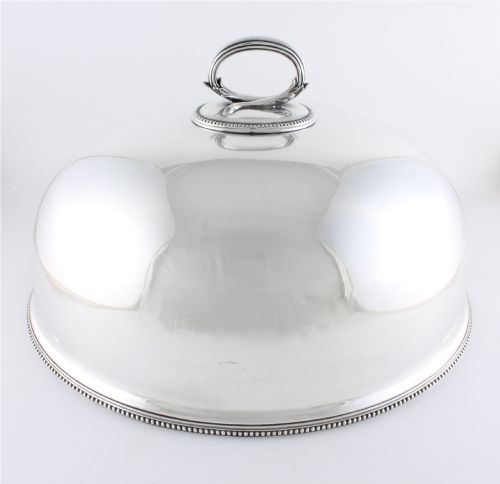
When hunting for a silver plate meat cover, buyers encounter heavy domed serveware designed to trap heat over large roasts, game, and turkeys. These pieces range from compact game covers to vast domes meant for festive joints.
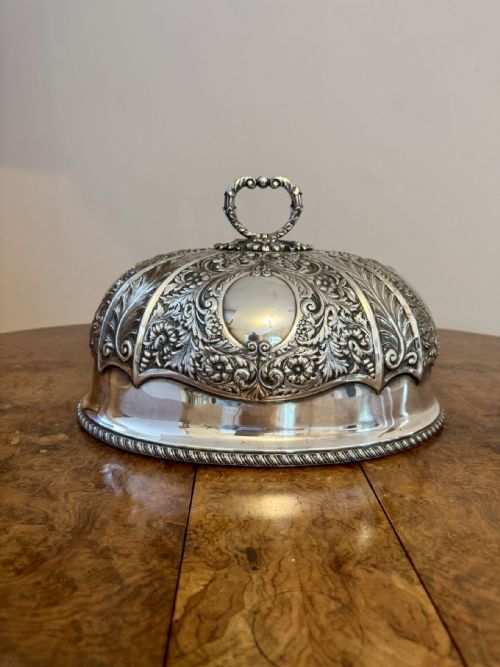
The selections span periods from the Georgian and Regency eras through the Victorian and Edwardian decades. Victorian and 19th century examples appear frequently, often styled as grand meat domes or warming dishes.
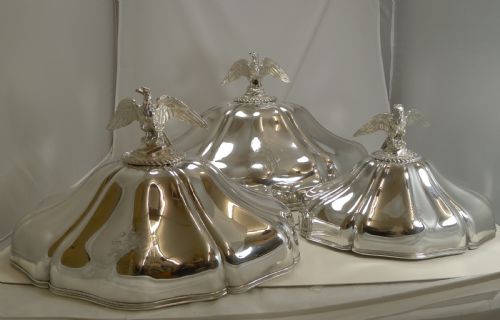
Origins vary between British workshops and continental makers such as those in Paris. Formats include single lidded serving tureens, matched pairs, and graduated sets of multiple covers.
Materials and construction methods
Makers utilised copper as a base metal, particularly in Old Sheffield Plate pieces where a thin sheet of silver was fused to a copper core. This technique often reveals subtle hints of the reddish metal where handling or time has worn the surface.
Later production shifted towards electroplated nickel silver, commonly known as EPNS, providing a durable and uniform metallic coating over base metal alloys. Silversmiths formed these massive domes by shaping and soldering heavy sheets to withstand heavy kitchen and dining room use.
Silver Plate Meat Cover Retail Price Guide 2026
Typical asking prices for silver plate meat cover among the pieces listed under this phrase on Sellingantiques today, from the lower quarter to the upper quarter. They describe what is for sale here now, not the wider market.
Listings feature items from the Georgian, Victorian, and Edwardian periods, constructed in Old Sheffield Plate, copper, and EPNS.
Distinguishing quality across examples
Weight and structural thickness separate substantial items from lighter utilitarian versions. Superior pieces maintain rigid domes that do not flex under pressure, reflecting heavier gauge metals in their construction.
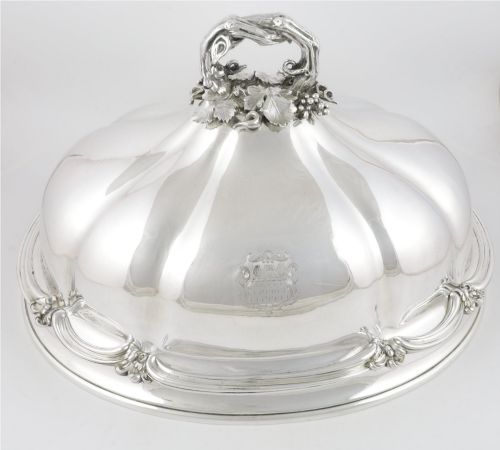
Engraved crests, armorial bearings, and cast handles demonstrate higher workshops standards. Maker attribution, such as pieces stamped by established makers like Mappin and Webb or Boulton, elevates the standing of an individual dome.
Mappin and Webb·Roberts Cadman·Henry Wilkinson·Boulton·Dan Holy·Durand
The Silver Plate Meat Cover Glossary
- Old Sheffield Plate
- An early method of fusing silver to a copper base before electroplating became common. This technique creates a distinctive appearance with subtle copper undertones.
- EPNS
- Electroplated nickel silver, a material standard used widely from the mid-nineteenth century onwards. It provides a bright metallic finish over a durable base alloy.
- Cloche
- A bell-shaped cover used for keeping individual portions or small dishes warm at the table. These items mirror the larger forms of meat domes.
- Warming dish
- A specialised serveware vessel designed to hold hot water beneath the food chamber. These items maintain serving temperatures throughout extended dining.
Silver Plate Meat Cover: Frequently Asked Questions
How were silver plate meat covers used?
These domes sat directly over large joints of meat, poultry, or game on platters to preserve heat and moisture between the kitchen and the dining table.
Servants lifted the heavy covers just before carving, ensuring the food remained piping hot for guests in grand dining rooms.
How do I date an antique meat dome?
Dating relies on stylistic clues like Regency or Victorian decorative motifs, alongside manufacturing methods such as Old Sheffield Plate versus later electroplating.
Maker marks and engraved crests also help pinpoint the specific decade of production during the eighteenth and nineteenth centuries.
What is Old Sheffield Plate?
Old Sheffield Plate is an early composite material made by thermally fusing a thin layer of silver onto a thick copper ingot. Items made this way show fine craftsmanship predating the widespread adoption of chemical electroplating.
Experts identify these pieces by inspecting edges where the underlying copper peeks through the silver layer.
How should I display a meat cover?
Meat covers make striking focal points when positioned on large sideboards, buffets, or open dining room shelving. Their reflective surfaces and substantial domes add historical texture to both traditional and eclectic interiors.
Displaying them alongside antique platters or warming dishes recreates the authentic atmosphere of a historic dining hall.