


Silver Plate Flask
When you search for silver plate flask, you discover pocket companions and field sets shaped for travel, shooting and field sports.
Silver Plate Flask
A silver plate flask is a portable container designed for carrying spirits or scent during travel, hunting and outdoor pursuits. The pieces you encounter on this page span the Georgian, Victorian, Edwardian and Art Deco periods, stretching from the nineteenth century into the twentieth.
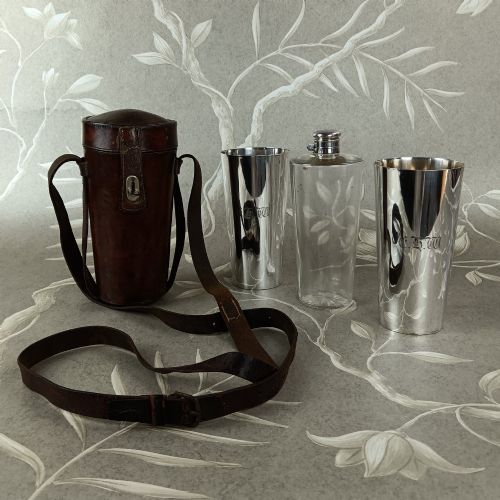
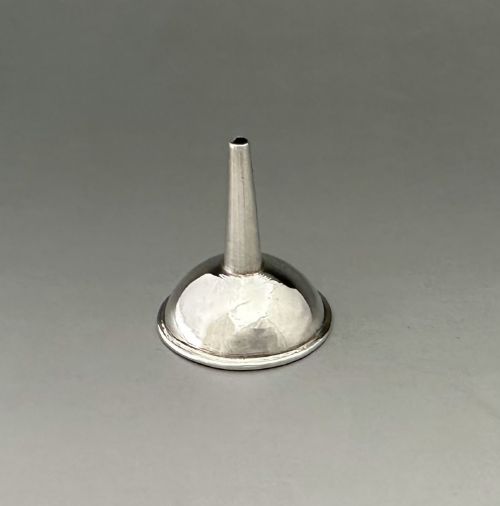
Hip flasks dominate the selection, often accompanied by detachable cups, leather bindings and crocodile skin casing. Alongside these pocket forms, the evidence records larger spirit flasks, barware, decanters, perfume funnels and campaign sets.
Materials and construction
Makers fused silver to a base metal or employed Old Sheffield Plate techniques, combining durability with the lustre of solid silver. Glass bodies appear frequently, secured inside leather or crocodile skin cases alongside nickel silver and copper elements.
Hinged caps, captive screw tops and bayonet closures prevent leaks during movement. Many examples incorporate fitted drinking cups that slide over the base of the flask for field use.
Certain nineteenth-century specimens double as combination cases, housing both a spirit flask and a secret compartment for cigarettes.
Craftsmanship and preservation
Quality rests in the precision of the metalwork, the tightness of the cap seal and the integrity of the leather or skin binding. Thicker plating resists wear from pockets and pouches over decades of handling.
Maker attribution elevates certain pieces, particularly those bearing the marks of established Sheffield silversmiths. The weight of the metal and the snug fit of any detachable cup distinguish superior workshop output.
James Dixon & Sons·Walker & Hall·Mappin & Webb
The Silver Plate Flask Glossary
- Old Sheffield Plate
- A fused bilayer metal made by bonding a sheet of silver to a copper ingot before rolling. This early technique produces a warm tone where the underlying copper occasionally shows through at high points.
- Bayonet cap
- A closure mechanism secured with a push and a short twist rather than a screw thread. It offers a rapid seal for field use.
- Captive top
- A cap attached to the flask by a hinged arm or bracket so it cannot be dropped or lost outdoors. This detail proves especially practical on field sports equipment.
- Nickel silver
- A copper alloy containing nickel and zinc, possessing a silvery appearance without containing actual silver. It provides a robust, corrosion-resistant body for utilitarian wares.
Silver Plate Flask: Frequently Asked Questions
What fits inside a pocket flask?
These vessels are designed to carry spirits such as whisky, brandy or gin for consumption during outdoor activities. Smaller versions slip easily into a coat pocket, while giant and Goliath formats hold larger volumes for sharing.
Campaign sets and field flasks often include integrated beakers or cups, providing a complete drinking vessel alongside the stored liquid.
How do I identify the period of a flask?
Stylistic cues and materials point towards specific eras, from Georgian Old Sheffield Plate to Victorian crocodile leather bindings and geometric Art Deco lines. Maker marks stamped into the base metal also help narrow down the decade of production.
Victorian and Edwardian examples frequently combine glass bodies with stitched leather sleeves, whereas later Art Deco pieces lean towards clean, unadorned metal surfaces.
Why do some flasks have cups?
Detachable cups slide over the lower portion of the flask body, held in place by friction or a slight spring. This arrangement ensured the owner had a clean vessel to drink from during hunting, shooting or travelling.
Caps were often secured with hinges or chains so they remained attached to the neck while pouring into the cup.
How should I care for leather bound metal?
Leather and crocodile skin casings benefit from gentle cleaning and occasional conditioning to prevent drying out. Metal components require soft cloths to preserve the silver plate without abrasive polishes.
Keeping the interior dry when not in use helps maintain the condition of both glass and metal reservoirs over time.