




Edwardian Hunting Flask
An Edwardian hunting flask is a portable receptacle designed for the field, combining glass and precious metal to survive the ride.
Edwardian Hunting Flask
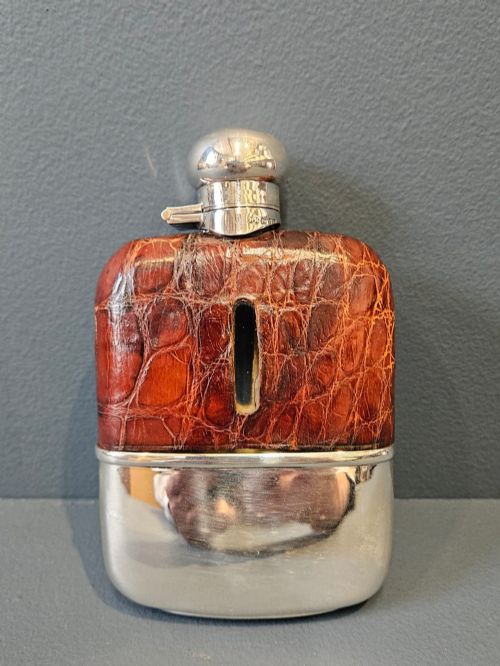
An edwardian hunting flask takes the form of a pocketable vessel or a saddle-mounted bottle designed for spirits during a hunt. These pieces combine rigid protective casings in leather or crocodile with robust glass or crystal bodies.
The materials and styles seen on this page span sterling silver, silver plate, and nickel silver alongside cut crystal and plain glass. While the predominant aesthetic is Edwardian, examples range from Victorian and George V periods to earlier Georgian forms.
How they were made
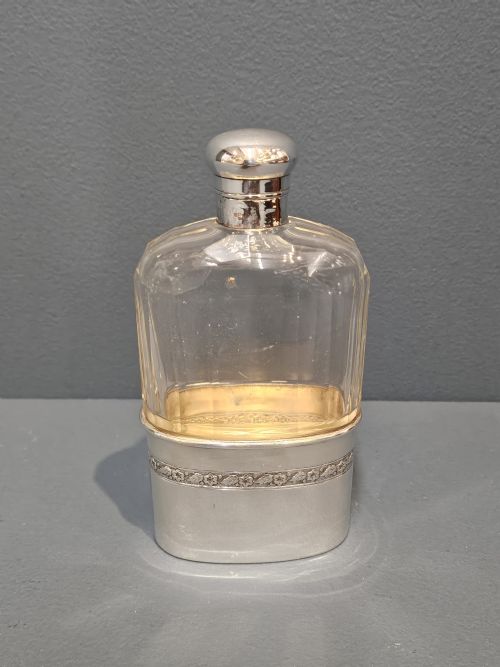
Makers fashioned the core vessels from heavy cut crystal or plain glass, often shaped with a gentle curve to sit comfortably against the body or inside a saddle case. These bottles were paired with captive screw caps to prevent loss in the field.
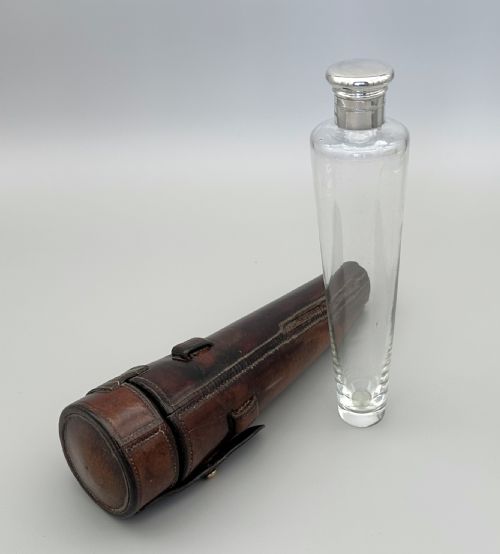
Protective elements included hand-stitched leather cases, crocodile leather wraps, and hammered sterling silver or silver plate housings. Some advanced examples incorporated collapsible cups fitted neatly to the base of the flask.
Materials recorded across the archive and current listings include crocodile leather, nickel silver, and cut crystal.
What varies in quality
The distinction between standard utility items and finer pieces lies in the integration of metalwork and leather. Superior examples feature hallmarked sterling silver mounts, substantial glass walls, and finely fitted cases rather than basic nickel silver and plate.
Design complexity also drives distinction, with specialty items such as locking mechanisms, fitted leather travel cases, and collapsable silver cups marking out the top tier of production from simpler hip flasks.
Hukin and Heath·J Dixon·Asprey London·W A Ellwick Ltd·J C Vickery London
The Edwardian Hunting Flask Glossary
- Sterling silver
- A silver alloy containing 92.5 percent pure silver by mass, widely utilised for high-end flask caps and cups. It bears official assay office hallmarks.
- Silver plate
- A layer of silver fused to a base metal core such as copper or nickel, offering the appearance of solid silver at a lower production cost.
- Cut crystal
- High-clarity glass containing lead oxide, faceted with deep geometric cuts that catch the light and add considerable weight to the bottle.
- Saddle flask
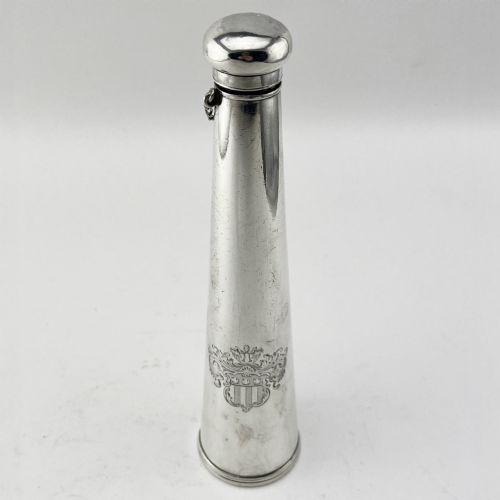
- A specialised flask shaped to slide securely into a leather case fastened directly to a horse's saddle during equestrian pursuits.
- Vesta
- A small pocket box designed for holding wax matches, occasionally produced in novelty formats mimicking the shape of a hunting flask.
Edwardian Hunting Flask: Frequently Asked Questions
What is a saddle flask?
A saddle flask is a specific type of drinking vessel designed to slide into a dedicated leather case that attaches directly to a horse's saddle. These bottles often feature captive caps and heavy glass bodies built to withstand the rigours of riding.
Unlike pocket flasks, they prioritise capacity and secure housing over slim profiles. They represent a distinct subcategory within equestrian accessories.
Were these flasks used only for hunting?
While originally designed for mounted field sports, these portable spirit containers were also carried by travellers, explorers, and hikers. Their robust construction made them suitable for any outdoor pursuit requiring a tot of liquor.
Leather cases and locking mechanisms protected the glass during rough transit. Consequently, they appeared in varied contexts far beyond the hunting field.
How do I clean an old flask?
Cleaning depends largely on the materials involved, keeping glass bodies separate from sterling silver mounts and leather cases. Mild warm water and a soft bottle brush generally suffice for clearing the interior glass without disturbing historic residues.
Harsh chemical immersion should be avoided to protect delicate leather and silver plate finishes. Silver components respond best to gentle polishing with a dedicated cloth.
Are these flasks waterproof?
Many retain functional screw caps with cork or rubber seals designed to retain liquids securely during transit. However, age can degrade these internal washers, meaning older vessels may leak if filled today.
Collectors generally treat them as display objects or dry cabinet pieces rather than functional field gear. Testing requires caution to preserve the original internal fittings.