



Silver Plate Drink Mixer
A silver plate drink mixer brings absolute style to the home bar, combining heavy metal construction with ingenious mechanical features from the 1920s to the 1960s.
Silver Plate Drink Mixer
A silver plate drink mixer encompasses sophisticated cocktail shakers and barware designed for vigorous mixing and chilling of spirits. These vessels span multiple decades, drawing heavily on Art Deco, Mid-Century Modern, and Italian Modernism design movements.
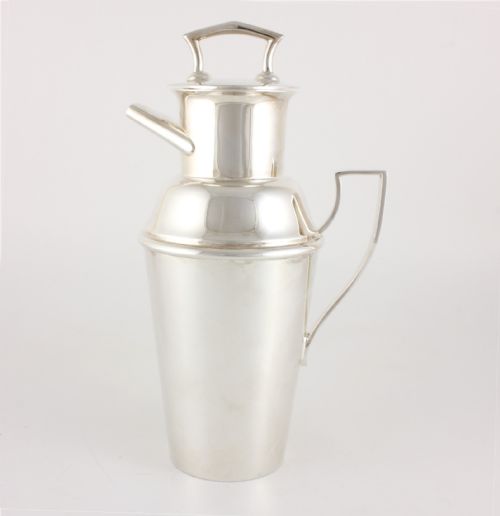
The version most commonly encountered on this page is the Art Deco cocktail shaker, often fashioned in England, France, or Italy during the 1930s and 1940s. These pieces frequently incorporate functional innovations such as built-in ice breakers, internal lemon squeezers, or rotating recipe bands.
How they were made
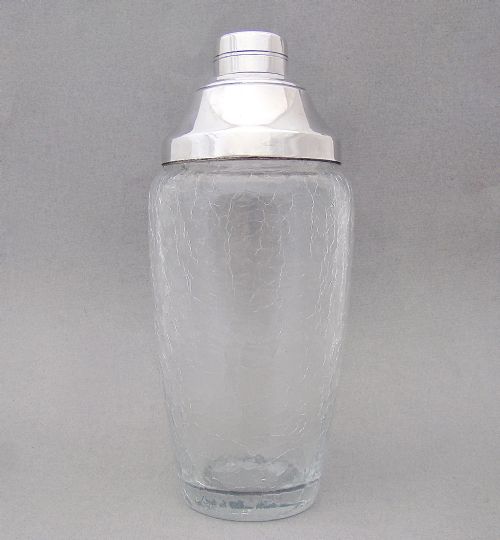
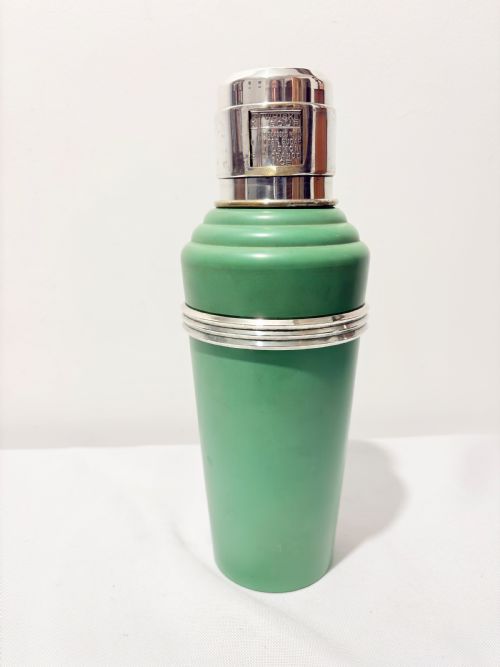
Manufacturers utilised silver plate, electroplated nickel silver, and EPNS over base metal foundations to achieve a bright, durable metallic lustre. Many examples also incorporate contrasting elements of glass, crackle glass, brass, cork, and green Bakelite.
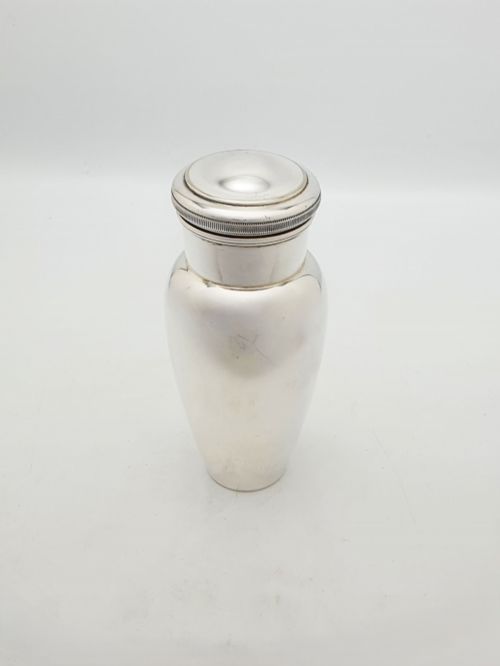
Surface decoration relied on specialist metalworking techniques including engine turning, geometric engraving, and sleek modernist moulding. Makers shaped the metal into cylindrical forms, milk churn silhouettes, and bullet profiles to reflect contemporary aesthetic trends.
Listings feature silver plate drink mixer forms spanning the 1920s to the 1960s, incorporating glass, brass, and Bakelite.
What varies in quality
The distinction between standard commercial output and superior craftsmanship rests in the weight of the metal and the precision of mechanical components. Heavier gauge silver plate and substantial electroplated nickel silver provide a more satisfying heft in the hand.
Asprey & Co·Keith Murray·J. B. Chatterley & Sons·James Dixon & Sons·William Suckling·Hukin & Heath·C S Green & Co·Adie Brothers·Carl Deffner·William Hutton·Mappin & Webb·Christofle
The Silver Plate Drink Mixer Glossary
- Electroplated Nickel Silver
- A base metal alloy of copper, nickel, and zinc coated with a layer of pure silver through an electrolytic process. This material formed the durable foundation for many twentieth-century barware pieces.
- EPNS
- An abbreviation for electroplated nickel silver, commonly stamped as a mark on silver plated items. It indicates the underlying metal composition beneath the silver coating.
- Engine Turned
- A precise mechanical decoration technique that cuts intricate geometric patterns into metal surfaces using a lathe. This process creates tactile, light-catching textures across the body of a shaker.
- Bakelite
- An early form of synthetic phenol formaldehyde resin used for heat-resistant handles and decorative accents. In barware, it often appears in contrasting colours like green on lids and knobs.
- Crackle Glass
- Glass that has been deliberately plunged into cold water while hot to produce an internal network of fine fractures. It provides a striking textural contrast against polished silver plate.
Silver Plate Drink Mixer: Frequently Asked Questions
What is a silver plate drink mixer?
A silver plate drink mixer is a dedicated vessel for combining cocktail ingredients, most commonly taking the form of a lidded shaker equipped with a strainer. These pieces date primarily from the twentieth century and combine utility with decorative metalwork.
Most examples rely on a multi-part construction that allows the user to measure, mix, and pour drinks cleanly. They stand as signature accessories of twentieth-century entertaining.
How do you use a recipe cocktail shaker?
Recipe shakers feature either a rotating outer band or engraved text on the body that displays proportions for classic cocktails. You align the movable rings or read the stationary text to determine ingredient measures while mixing.
These mechanical additions turned standard barware into interactive conversation pieces during social gatherings. They provide a direct window into the drinking culture of the interwar period.
How do you clean silver plate barware?
Silver plate requires gentle cleaning with specialised silver polish and a soft cloth to preserve the metallic finish. Avoid abrasive pads or harsh chemical dips that can strip the thin layer of silver.
Components made with glass, cork, or Bakelite should be washed separately by hand to prevent water damage or staining. Proper drying immediately after cleaning prevents water spots on the polished metal.
How do you date an Art Deco shaker?
Dating relies on stylistic markers such as geometric engine turning, streamlined forms, and the presence of specific manufacturer stamps or registration numbers. Many pieces from this era reflect the architectural trends of the 1920s and 1930s.
The materials used, including early plastics like Bakelite and crackle glass, also help narrow down the period of manufacture. Hallmarks and maker marks stamped into the base provide the most reliable chronological evidence.