








Silver Plate Dessert Set
A silver plate dessert set brings nineteenth and twentieth-century elegance to the table through cased fruit knives, forks, bowls, and serving dishes.
Silver Plate Dessert Set
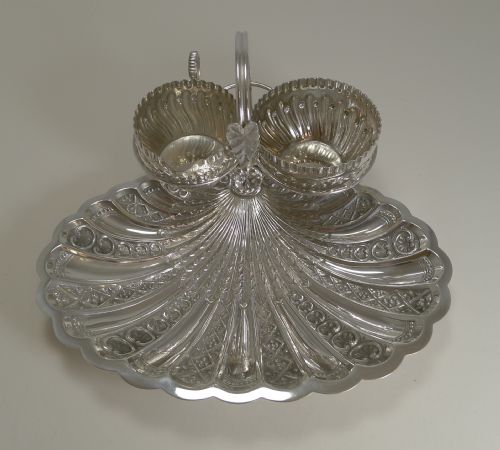
A silver plate dessert set encompasses cased cutlery, serving dishes, bowls, and specialised fruit knives and forks designed for the conclusion of a meal. These collections appear across Victorian, Edwardian, Art Deco, and mid-century periods, reflecting shifting dining habits over a century or more.
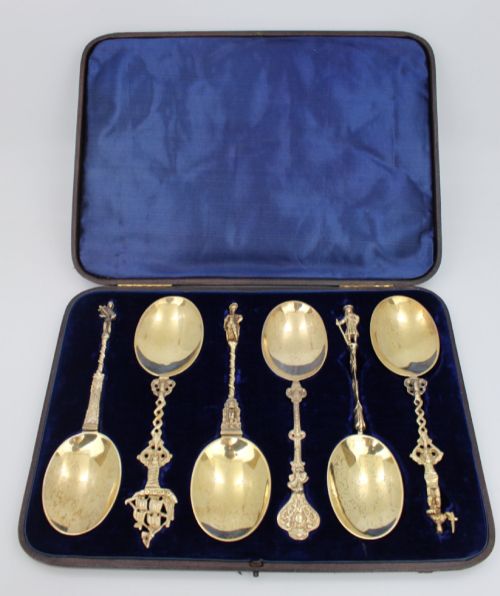
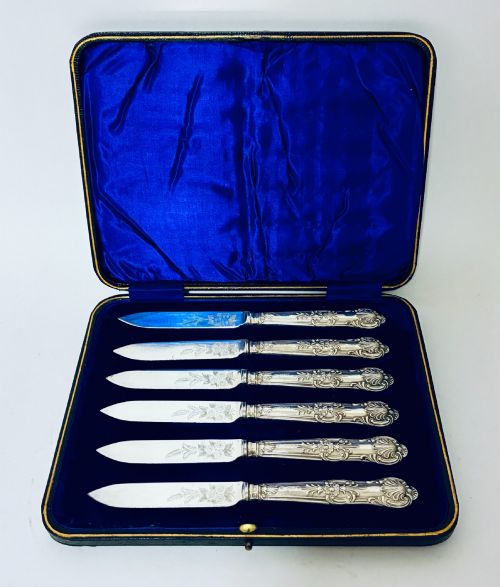
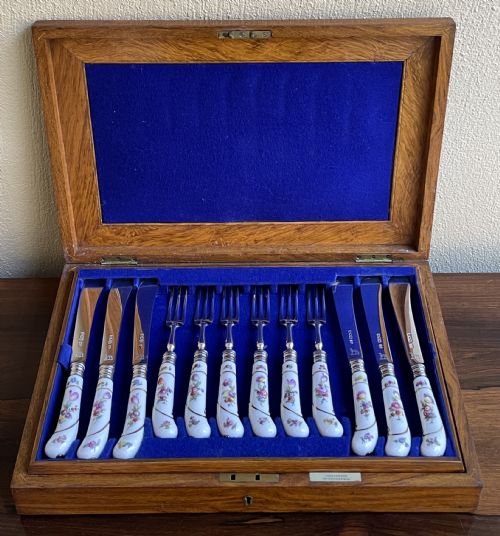
The most common formations on this page are boxed fruit and nut sets featuring mother-of-pearl or silver-plated handles alongside dedicated spoons, knife and fork pairs, and serving cutlery. Many groupings arrive in fitted oak or velvet-lined boxes, preserving the contents as complete parlour services.
How they were made
Makers utilised silver plate over base metals, combining steel blades with plated ferrules and handles formed from mother-of-pearl, agate, porcelain, or silver. Cabinetmakers housed these utensils in fitted wooden canteens, frequently lined with velvet to secure individual spoons, knives, and forks.
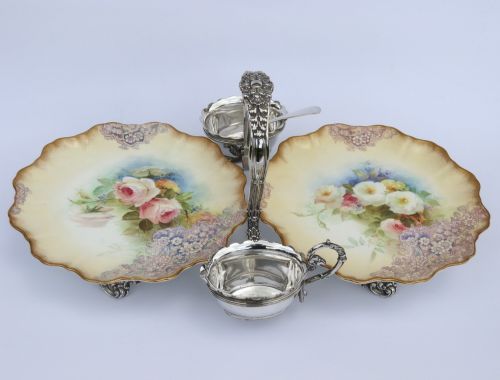
Production techniques involved electroplating silver onto base metals, alongside hand-painted ceramic additions such as Doulton Burslem plates paired with serving cutlery. Metal components were often gilded, engraved, or cast with decorative patterns suited to Victorian and Art Deco tastes.
Silver Plate Dessert Set Retail Price Guide 2026
Typical asking prices for silver plate dessert set among the pieces listed under this phrase on Sellingantiques today, from the lower quarter to the upper quarter. They describe what is for sale here now, not the wider market.
Several sets include dedicated grape scissors, proving that Victorian dessert courses took fruit disassembly very seriously indeed.
What varies in quality
The distinction between standard sets and finer examples lies in the integrity of the original fitted case, the matching of complete place settings, and the quality of handle materials like mother-of-pearl or carved agate. Sets incorporating hand-painted porcelain plates or comprehensive tools such as nutcrackers and grape scissors demonstrate higher ambition.
Preservation of the silver plating and the crispness of engraved decoration on blades and bowls separate utilitarian survivals from exhibition-grade presentation sets. Maker attribution to notable silversmiths further elevates the standing of an assembly.
Daniel Arter·Walker and Hall·Carrington·Christofle·Hukin and Heath·Roberts and Belk·Potosi Silver Co·Elkington
The Silver Plate Dessert Set Glossary
- Silver Plate
- A base metal coated with a thin layer of silver through electroplating or older Sheffield plating methods. This technique allowed manufacturers to produce durable dining wares at a lower cost than solid silver.
- Mother-of-Pearl
- The iridescent internal layer of mollusc shells, frequently sliced and shaped into smooth handle scales for fruit knives and forks. Its natural shimmer made it a preferred material for nineteenth-century dining accessories.
- Canteen
- A fitted wooden box or case designed to store a specific set of cutlery and serving pieces securely. These boxes often feature velvet or satin linings with individual slots for each utensil.
- Agate
- A fine-grained quartz variety used for decorative knife and fork handles in Victorian sets. Its natural banding patterns provided a colourful contrast to polished metal blades.
Silver Plate Dessert Set: Frequently Asked Questions
What is included in a dessert set?
A dessert set typically comprises specialised fruit knives and forks, dessert spoons, bowls, serving dishes, or larger utensils like grape scissors and nutcrackers. Many are arranged for specific numbers of diners, ranging from pairs up to twenty-four pieces.
These collections focus on post-meal service, particularly fruit courses, nuts, and sweet dishes, often presented together in a dedicated wooden box.
How do I date a silver plate set?
Dating relies on stylistic clues, case construction, handle materials, and maker marks stamped onto the metal components. Victorian sets often feature elaborate engraving and mother-of-pearl or agate handles, while Art Deco examples display geometric lines and simpler forms.
Assessing the typography of maker stamps and the interior lining of the fitted box also helps narrow the production decade.
Are these sets meant for daily use?
Many buyers choose to use these pieces for hosting formal dinners or seasonal gatherings, treating fruit knives and dessert spoons as functional tableware. Hand washing helps preserve the delicate plating and natural handle materials.
Storing the items back in their fitted wooden canteens protects the silver plate and prevents scratching between uses.
Why do some sets include porcelain plates?
Certain specialised strawberry sets pair silver-plated serving cutlery and fruit dishes with hand-painted ceramic plates, such as those from Doulton Burslem. This combination allowed for the elegant presentation of fresh fruit and cream.
The inclusion of ceramics turned a simple cutlery grouping into a complete tablescape service for intimate dining.