

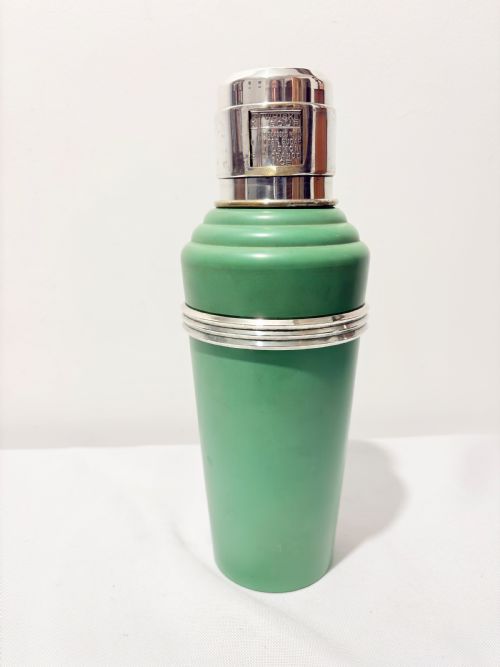


Silver Plate Cocktail Shaker
A silver plate cocktail shaker brings period glamour to a home bar, offering classic twentieth-century form and function for mixing drinks.
Silver Plate Cocktail Shaker
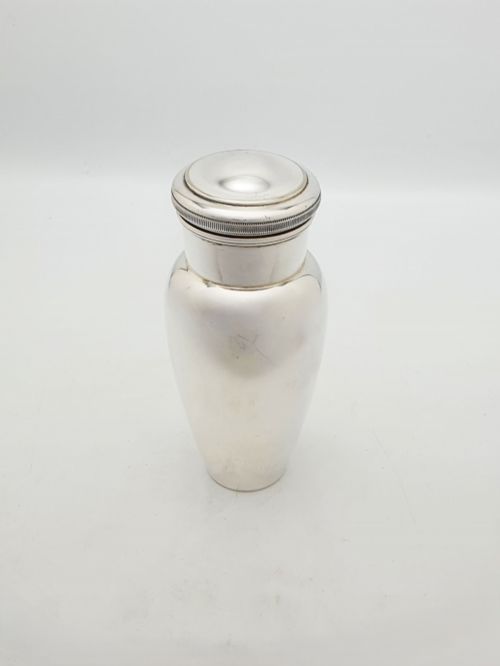
A silver plate cocktail shaker is a metal barware vessel designed for combining spirits, ice, and mixers, with the majority of examples on this page originating from the Art Deco period of the 1920s and 1930s.
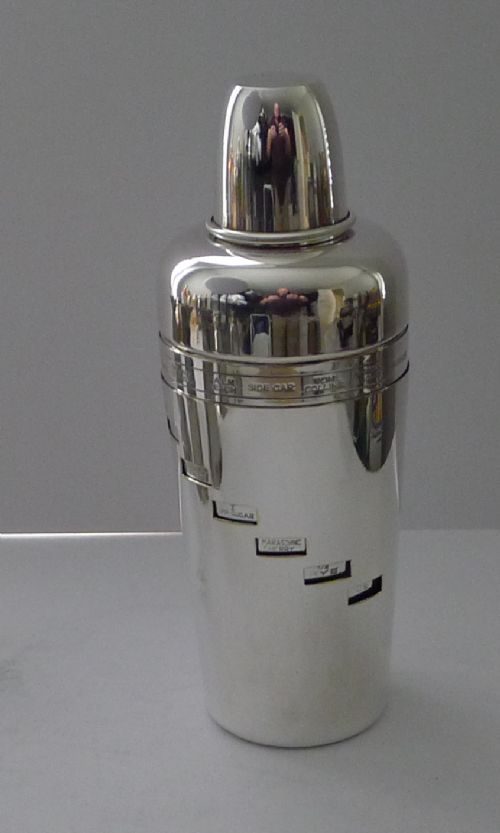
Beyond standard three-piece designs, collectors encounter specialised variants including recipe shakers with rotating outer bands or dials, novelty forms shaped like milk churns or zeppelins, and models fitted with internal lemon squeezers or ice breakers.
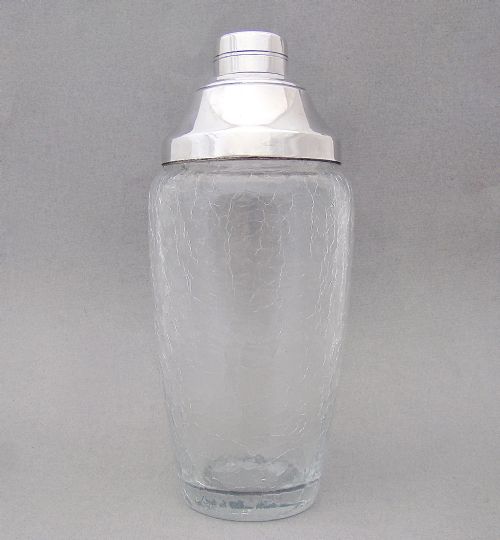
Materials extend beyond plain metal to incorporate combinations of silver plate with crackle glass, green Bakelite, cork, brass, and glass liners, reflecting varied international designs from English, French, Italian, and German makers.
How They Were Made
Makers utilised electroplated nickel silver (EPNS) as a durable base for applying a layer of silver, often enhancing the metal body through machine-turned geometric patterns, engine turning, or hammered textures.
Complex vessels combined spun and cast metal components alongside specialised elements like fitted cork stoppers, internal glass cylinders, and interlocking rotating recipe rings.
Silver Plate Cocktail Shaker Retail Price Guide 2026
Typical asking prices for silver plate cocktail shaker among the pieces listed under this phrase on Sellingantiques today, from the lower quarter to the upper quarter. They describe what is for sale here now, not the wider market.
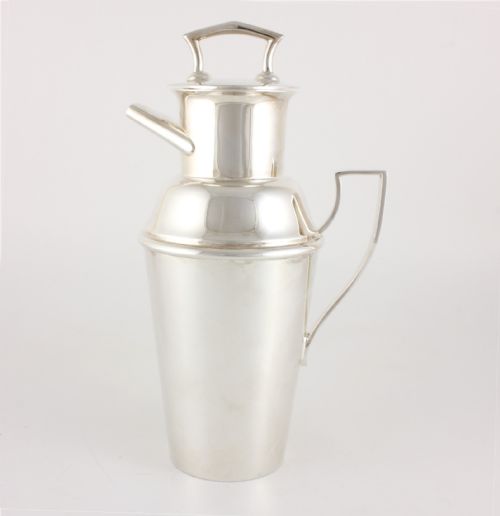
Several shakers resemble miniature milk churns.
What Varies in Quality
Quality rests in the weight and balance of the metal, the crispness of engine-turned or engraved details, and the precision with which mechanical elements like rotating recipe dials or built-in lemon squeezers operate.
Makers known for exceptional design and execution, such as Asprey, James Dixon & Sons, or Keith Murray, command greater interest than anonymous factory output due to their superior proportions and finish.
Asprey and Co·James Dixon and Sons·William Suckling·Hukin and Heath·Adie Brothers·Carl Deffner·Lino Sabattini·Mappin and Webb
The Silver Plate Cocktail Shaker Glossary
- EPNS
- Electroplated Nickel Silver. A base metal alloy of copper, nickel, and zinc coated with a layer of silver.
- Cobbler shaker
- A three-piece cocktail shaker consisting of a base, a built-in strainer lid, and a small cap.
- Engine turning
- A mechanical engraving technique that produces intricate, precise geometric patterns across the metal surface.
- Crackle glass
- Glass deliberately fractured during manufacturing to create an internal web of fine lines, frequently paired with metal mounts.
- Bachelor shaker
- A smaller-capacity cocktail shaker designed for single servings or intimate gatherings.
Silver Plate Cocktail Shaker: Frequently Asked Questions
How do recipe cocktail shakers work?
Recipe shakers feature outer sleeves or rotating dials inscribed with drink proportions and ingredients. Users turn the bands to align specific cocktail formulas with viewing windows on the body.
This mechanism allowed bartenders and hosts to consult classic measurements directly on the vessel while mixing drinks.
What is a bachelor cocktail shaker?
A bachelor shaker is a compact version of the standard barware vessel, built with a reduced capacity for individual servings. These smaller examples were popular for home entertaining during the early twentieth century.
They share the same Art Deco styling and metal construction as their larger counterparts but scale down the volume.
Are these shakers suitable for daily use?
These vessels are functional metal barware, though care must be taken to preserve the historic silver plate and internal cork seals. Hand washing prevents damage to delicate components like glass inserts and rotating dials.
Using them requires gentle handling to protect the vintage surfaces from harsh detergents and abrasive scrubbers.
How do I identify an Art Deco shaker?
Art Deco shakers typically display geometric motifs, streamlined silhouettes, engine-turned patterns, and materials like green Bakelite or crackle glass. European workshops in England, France, and Italy favored these sharp, symmetrical forms.
Maker marks stamped to the base often confirm production dates from the 1920s and 1930s.