
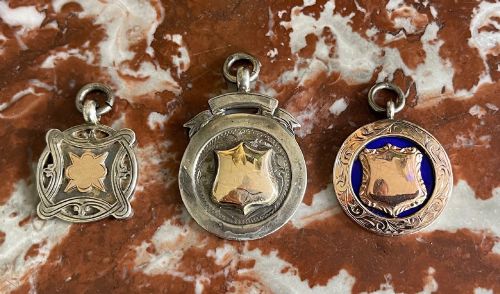


Silver Pendant Medal
A silver pendant medal is a wearable piece of history, combining athletic achievement and fine metalwork to offer tangible links to past competitions.
Silver Pendant Medal
When you search for a silver pendant medal, you enter a field dominated by commemorative items that once marked sporting victories and club memberships. These objects span from the late Victorian and Edwardian eras through to the 1920s, 1930s, and 1940s, originating as pocket watch chains, watch fobs, or dedicated pendants. You are most likely to encounter pieces connected to sports such as golf, football, cricket, cycling, and curling, often shaped as medallions.
Many of these medals were originally worn suspended from watch chains, functioning as personal badges of honour for competitive sports participants. The designs frequently incorporate specific dates, club names, or engraved recipients, giving each piece a distinct narrative. Over time, many find new life converted for wear as standalone pendants on modern or period chains.
The aesthetic of these items shifts noticeably across the decades, moving from ornate Victorian floral motifs to the geometric lines of Art Deco design. Pieces from the 1900s and Edwardian periods display meticulous scrollwork and engraving, while later examples from the 1920s and 1930s embrace bolder, stylised sports depictions. This evolution in design allows collectors to trace changing tastes in both typography and sculptural relief.
How they were made
The primary material underpinning these medals is silver, often specified as sterling silver or supported by gold accents and colourful enamel work. Silversmiths utilised stamping and casting techniques to form the base medallions, applying hand-engraving to add recipient names, dates, and decorative borders. Enamelling was introduced to highlight specific sporting elements, such as dartboards or club crests, through fired vitreous glass pastes.
Makers often incorporated hallmarking to denote the purity of the metal and the assay office of origin, such as Birmingham. These assay marks provide a reliable anchor for dating, complementing the engraved dates found on many sporting medallions. Construction methods ensured durability, as these pieces were designed to be handled and worn daily attached to watch fobs.
Some sporting fobs feature miniature working dartboards complete with tiny enameled flights, proving that Victorian and Edwardian competitors appreciated a touch of whimsy.
What varies in quality
The standard of a silver pendant medal rests heavily on the crispness of its original stamping and the depth of its hand-engraving. Finer examples retain sharp relief in figures like golfers, footballers, or cyclists, whereas lesser pieces show worn surfaces where details have softened through polishing. The presence of undamaged enamel work also elevates a piece, as vitreous enamel is prone to chipping and loss over decades of use.
Weight and structural substance distinguish substantial exhibition pieces from lighter, mass-produced awards. Heavier medals often feature more complex multi-layered construction, decorative floral borders, or integrated gold accents. Furthermore, documented provenance through clear hallmarks and legible maker inscriptions adds considerable character and historical context.
David McGregor
The Silver Pendant Medal Glossary
- Sterling silver
- A silver alloy containing 92.5 percent silver by mass and 7.5 percent other metals, usually copper. This standard composition ensures durability while maintaining a bright metallic lustre.
- Watch fob
- A short strap, ribbon, or chain attached to a pocket watch, which often displayed a pendant medal at the end. These items were widely worn by gentlemen in the nineteenth and early twentieth centuries.
- Hallmark
- An official stamp applied by an assay office to precious metal items, certifying their purity. These marks frequently include symbols for the maker, the metal standard, and the year of testing.
- Vitreous enamel
- A material made by fusing powdered glass to a substrate by firing, usually between 750 and 850 degrees Celsius. The resulting compound provides a smooth, durable, and colourful surface.
- Medallion
- A large medal-like award or ornament, frequently issued to commemorate an event or recognise a victory. In jewellery contexts, these were often adapted to hang from chains.
Silver Pendant Medal: Frequently Asked Questions
How were watch fobs used?
Watch fobs were attached to the end of a pocket watch chain, hanging outward from a waistcoat pocket as a decorative accessory. They served as visible indicators of club membership, civic pride, or athletic success.
Over the decades, many owners removed the medals from their original chains to wear them as standalone pendants on modern necklaces.
How do I date a silver medal?
Dating these medals relies on a combination of engraved presentation dates, stylistic periods, and official hallmarks. Assay office marks stamped into the silver provide precise clues regarding the year of manufacture.
Stylistic shifts, such as the transition from Victorian scrollwork to Art Deco geometry, also help narrow down the period of production.
Are enamel medals fragile?
Vitreous enamel is essentially glass fused to metal, which means it can chip or crack if subjected to sharp impacts or harsh drops. However, when treated with reasonable care, enamel decorations survive centuries in remarkably stable condition.
When storing or wearing these pieces, keeping them separate from harder metals prevents unnecessary surface scratching.