
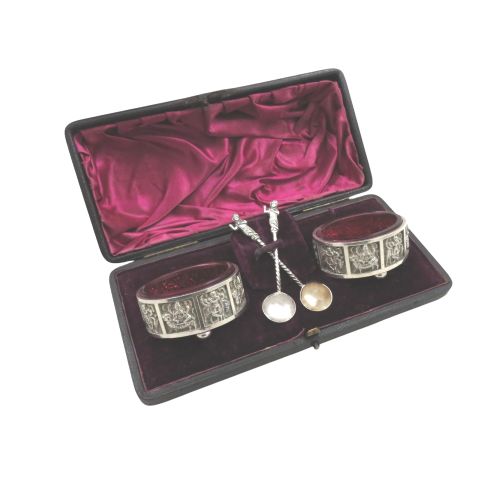


Silver Open Salt Set
A silver open salt set brings formal dining history to the table, offering small vessels designed to hold loose salt alongside matching spoons.
Silver Open Salt Set
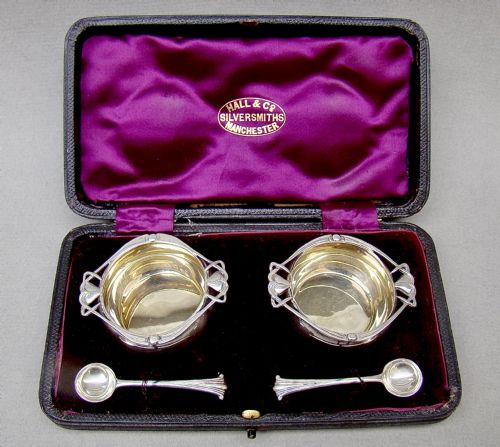
A silver open salt set provides small open vessels for table salt, which diners pinch and sprinkle onto food rather than shaking from a dispenser. These sets commonly appear as pairs, quartets, or larger boxed groupings complete with fitted spoons.
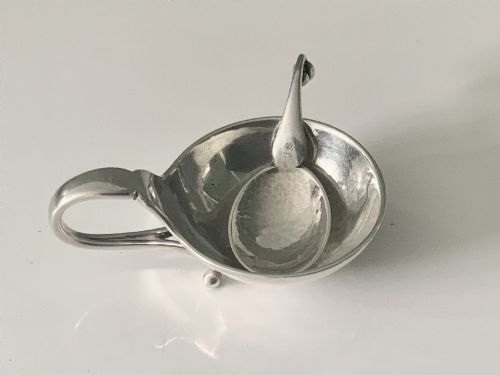
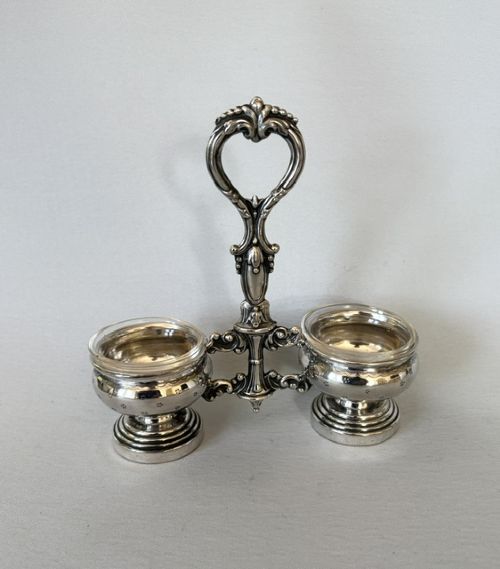
The pieces on this page span several decades, originating from Victorian, Edwardian, and Art Deco periods alongside Georgian and French Rococo designs. Forms range from boat-shaped table salts and round cauldron cellars to elaborate double condiment stands.
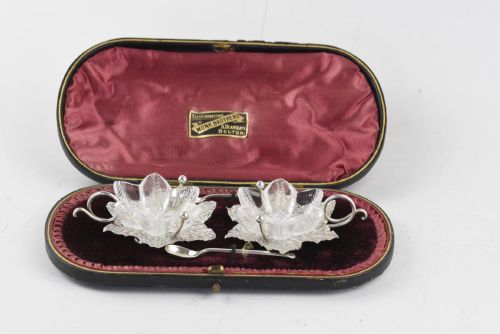
Many examples arrive complete with their original glass liners, particularly cobalt glass inserts, which protected the silver from the corrosive nature of salt. Fitted presentation cases lined with velvet, silk, or leather also accompany several of the boxed sets.
Assessing quality and craftsmanship
Quality rests in the weight of the silver, the precision of decorative chasing such as Hindu deities or bird motifs, and the presence of original components like fitted spoons and matching glass liners. Finer sets retain crisp hallmarks and intact interior gilding.
The level of design complexity further distinguishes pieces, moving from plain functional bowls to elaborate French Rococo stands or marked works by notable silversmiths. Fitted presentation cases in sound condition add further distinction to a set.
Certain Victorian sets feature detailed depictions of Hindu deities alongside feathered bird motifs, bringing unexpected wildlife to the dining table.
Georg Jensen·Bateman George III·Paul Storr·Thomas Smily·Vale Brothers and Sermon
The Silver Open Salt Set Glossary
- Salt Cellar
- A small open bowl designed to hold salt on the dining table before the invention of the shaker. These pieces rely on spoons or fingers for serving.
- Cobalt Glass
- A deep blue glass used for liners inside silver salt cellars to protect the metal from corrosion. This vibrant material provides a striking visual contrast against polished silver.
- Cruet Set
- A matched collection of bottles, jars, or open vessels for condiments such as salt, pepper, mustard, and vinegar. They often sit together on a dedicated silver stand.
- Hallmark
- An official stamp applied to silver items to guarantee the purity of the metal, the place of assay, and the year of manufacture. These marks guide dating and attribution.
- Gilt
- A thin layer of gold applied to the interior surface of silver salt cellars. This coating prevents the salt from tarnishing or corroding the underlying silver.
Silver Open Salt Set: Frequently Asked Questions
How do you use open salt cellars?
Diners use a tiny spoon or clean fingers to take salt from the open vessel and sprinkle it over their food.
Today, these pieces work well on the dining table or serve as small decorative dishes for rings and trinkets.
Why do salt cellars have blue glass?
The blue glass liners, often made of cobalt glass, protect the silver from the corrosive chemical action of salt.
These removable liners also make the vessels easier to empty and wash after dining.
Are salt spoons always included?
Many sets retain their original matched spoons, often housed together inside a fitted presentation box lined with silk or velvet.
Some surviving sets incorporate later replacement spoons or lack them entirely, which affects the composition.
How do I date a silver salt set?
Assay office marks and date letters stamped into the silver provide precise information regarding the year of manufacture and origin.
Stylistic cues such as Art Deco geometric lines or Victorian chased ornamentation also indicate the period.