


Cased Silver Salt Spoons
Cased silver salt spoons are miniature tableware items designed for dining presentation, combining precious metal work with protective fitted presentation boxes.
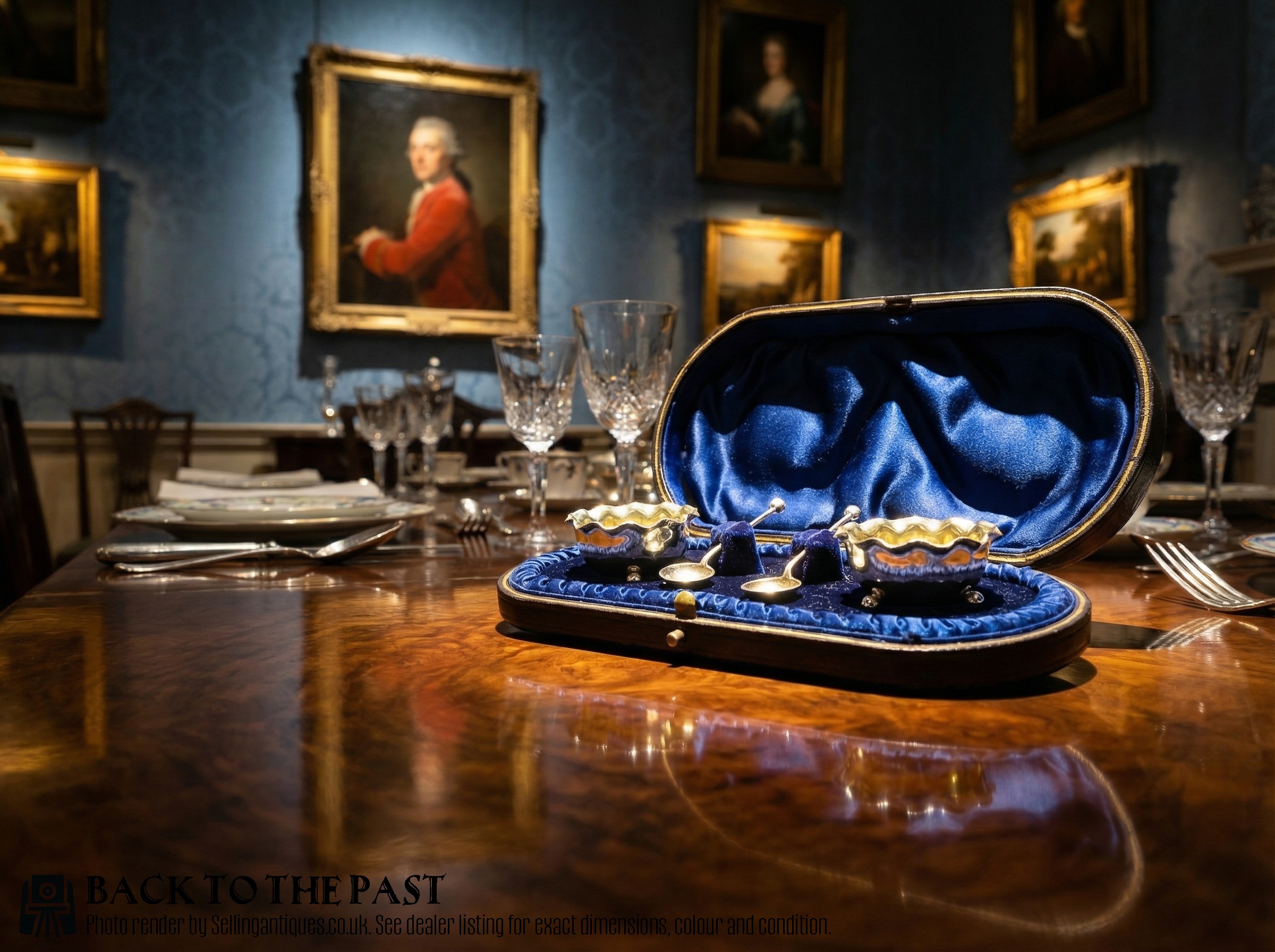
Cased Silver Salt Spoons
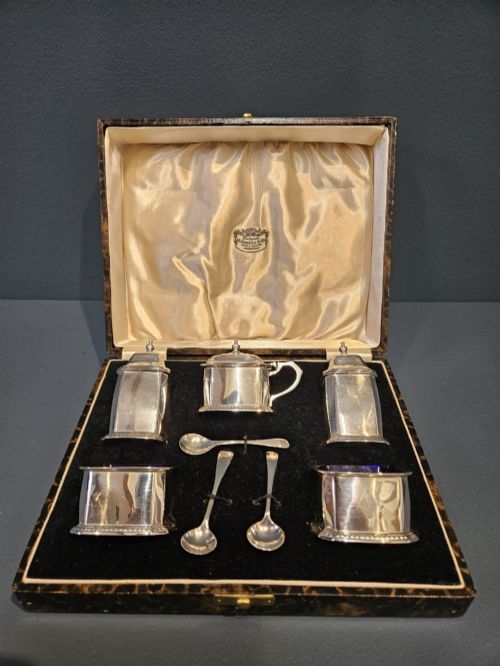
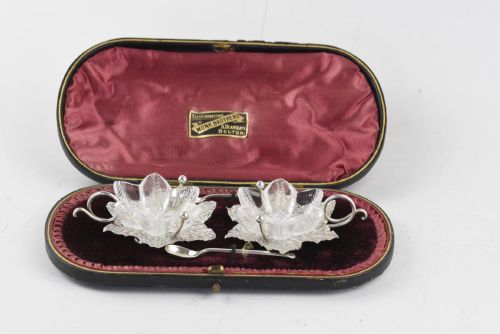
Cased silver salt spoons are small spoons traditionally used alongside open salt cellars, condiment sets, and cruet collections. When searching for cased silver salt spoons, buyers encounter complete sets housed in fitted boxes lined with silk, velvet, satin, or leather.
The selections available span multiple eras, including Victorian, Edwardian, Art Deco, and Mid-Century Modern periods. These pieces frequently appear alongside glass liners, blue glass inserts, and matching salt cellars.
Forms range from simple pairs to larger sets of four or five pieces, originating from workshops operating across the late nineteenth and twentieth centuries.
Materials and construction
The objects combine sterling silver or silver plate with fitted protective cases manufactured from leather and wood. Interiors are lined with soft textiles such as velvet, silk, and satin to secure the spoons and associated glassware.
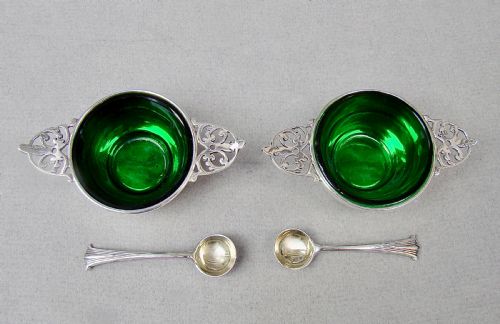
Metal components utilise traditional silversmithing techniques, encompassing hallmarks, casting, and hand-finishing. Glass liners and bowls in blue glass are frequently integrated into the sets alongside the metal spoons.
Listings feature sterling silver and silver plate materials, with presentation boxes lined in velvet, silk, satin, and leather.
Quality factors
The distinction between tiers rests upon the execution of the metalwork, the integrity of the fitted case, and the presence of matching components. Finer sets display crisp hallmarks, substantial silver weight, and undamaged interior linings.
Condition of the accompanying case and any original glass elements influences desirability. Complete sets retaining their original fitted presentation boxes demonstrate higher preservation levels.
Josiah Williams & Co·Wilmot Manufacturing Co·George Unite
The Cased Silver Salt Spoons Glossary
- Sterling silver
- A silver alloy containing 92.5 percent pure silver by mass and 7.5 percent other metals, usually copper. This standard alloy provides durability for functional tableware.
- Cruet set
- A matched collection of small containers and spoons for holding condiments at the dining table. These typically include salt cellars, mustard pots, and pepper shakers.
- Glass liner
- A small removable vessel, often in blue glass, placed inside silver salt cellars to protect the metal from corrosive salts. They allow safe containment of seasonings.
- Hallmark
- An official stamp applied by an assay office to indicate the purity of precious metal, the maker, and the year of manufacture. British pieces feature symbols denoting the town, date, and standard.
Cased Silver Salt Spoons: Frequently Asked Questions
What are cased silver salt spoons used for?
These small spoons transfer loose salt from open cellars onto individual plates during formal dining. They prevent diners from using their fingers or general cutlery in shared salt containers.
Their presence inside fitted cases indicates they were intended for gifting or careful storage within household silver chests.
How do I identify Victorian sets?
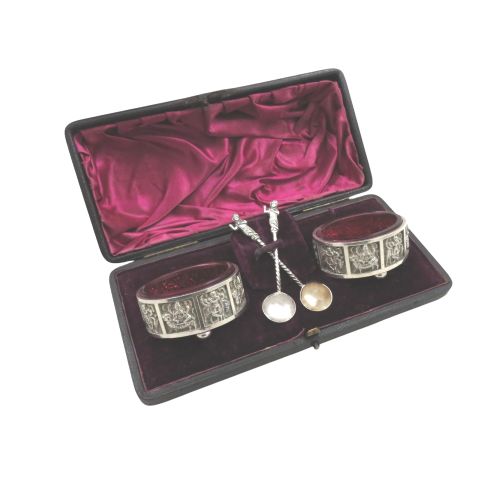
Victorian examples date between 1837 and 1901, often confirmed by hallmarks stamped on the metal. Stylistic clues include heavy ornamentation, Aesthetic Movement motifs, or naturalistic designs like birds and Hindu deities.
The fitted cases from this era typically feature leather exteriors with silk and velvet interiors.
Are the glass inserts original?
Many nineteenth and twentieth-century salt cellars incorporate removable glass liners, frequently cast in blue glass. Determining originality involves checking if the glass fits the interior dimensions of the silver mount without excess movement.
Replacements are common due to accidental breakage over decades of use.
How should I store cased sets?
Keeping the items inside their original fitted cases protects the silver from airborne pollutants that cause tarnishing. Store them in stable environmental conditions away from direct sunlight and excessive humidity to preserve the leather and silk linings.
Avoid sealing them in airtight plastic containers.