



Hallmarked Silver Salt Set
These hallmarked silver salt set pieces bring period elegance to the table, offering a glimpse into centuries of dining tradition through crafted precious metal.
Hallmarked Silver Salt Set
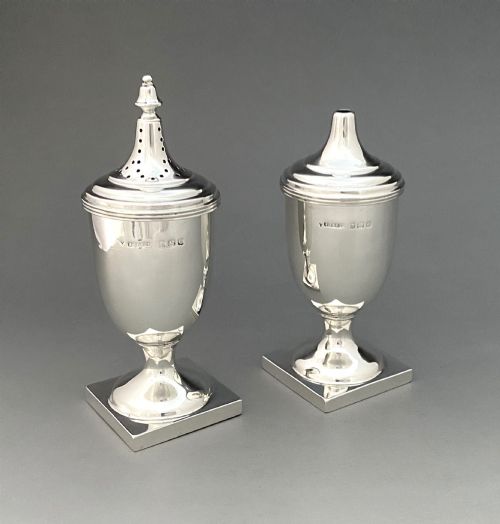
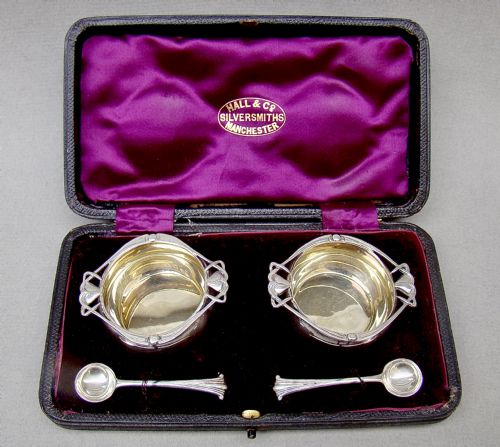
A hallmarked silver salt set comprises matched tableware vessels designed for holding salt and other seasonings at the table. You will frequently encounter cased pairs of salt cellars alongside condiment sets and pepperettes spanning various historical eras.
The pieces on this page range from Georgian egg cruets and Victorian novelty pepperettes to Edwardian Art Nouveau designs and mid-century condiment sets. Makers working in sterling silver produced these items for formal dining across the eighteenth, nineteenth, and twentieth centuries.
How they were made
Silversmiths shaped sterling silver into hollowware vessels and condiment containers, often applying silver gilt interiors to protect the metal from corrosive salt. Cases lined with velvet, silk, leatherette, or fabric housed these sets for preservation and presentation.
Makers utilised glass inserts within open salt cellars to hold the seasoning safely away from the silver body. Stamped hallmarks applied to the exterior record the assay office, standard of silver, and date of manufacture.
Hallmarked Silver Salt Set Retail Price Guide 2026
Typical asking prices for hallmarked silver salt set among the pieces listed under this phrase on Sellingantiques today, from the lower quarter to the upper quarter. They describe what is for sale here now, not the wider market.
What varies in quality
The distinction between standard production and superior craftsmanship rests in the weight of the sterling silver and the crispness of the chased or cast ornament. Pieces featuring distinct styling, such as Art Nouveau curves or novelty animal forms, demonstrate greater artistic ambition from the maker.
Survival of the original fitted case and matching spoons elevates the completeness of a set. The clarity of the hallmarks and the preservation of the silver gilt interiors further distinguish finer examples from heavily used tableware.
Josiah Williams & Co·Wilmot Manufacturing Co·Viners Sheffield
The Hallmarked Silver Salt Set Glossary
- Hallmark
- A series of official marks stamped on precious metal items to guarantee the purity of the silver, the maker, and the year of assay. These stamps provide a reliable method for dating British tableware.
- Salt cellar
- A small open bowl or vessel designed to hold salt on the dining table before the invention of the spring-loaded salt shaker. They frequently incorporate blue glass liners to prevent corrosion.
- Condiment set
- A matched grouping of tableware vessels for holding various seasonings such as salt, pepper, and mustard. These sets often share a fitted presentation case.
- Silver gilt
- Sterling silver that has been coated with a thin layer of gold on the surface. This technique protected the interior bowls of salt cellars from the corrosive properties of salt.
- Cruet set
- A collection of glass or silver bottles and pots mounted in a frame for holding condiments and sauces at meals. Georgian examples often took elaborate forms like egg cruets.
Hallmarked Silver Salt Set: Frequently Asked Questions
How were salt cellars used historically?
Before free-flowing salt was invented, salt cellars held coarse salt in the centre of the table or beside individual diners for pinch-seasoning food.
Guests used small spoons or their fingers to take salt from the open vessels, which often featured protective glass liners.
How do I date a silver salt set?
You can date a silver salt set by examining the hallmarks stamped into the metal, which include a date letter corresponding to the specific year of assay.
Stylistic indicators such as Art Nouveau whiplash lines or Georgian frame designs also help identify the manufacturing period.
How do I care for antique silver?
Antique silver requires gentle cleaning with a soft cloth and specialised silver polish to maintain the shine without wearing down the raised details or hallmarks.
Store the pieces in their fitted cases lined with velvet or silk when not in use to minimise tarnishing from atmospheric sulphur.