


Silver on Copper
Silver on copper brings together durable base metal and precious surface, yielding items from Georgian lighting to Islamic metalwork that reward close handling.
Silver on Copper
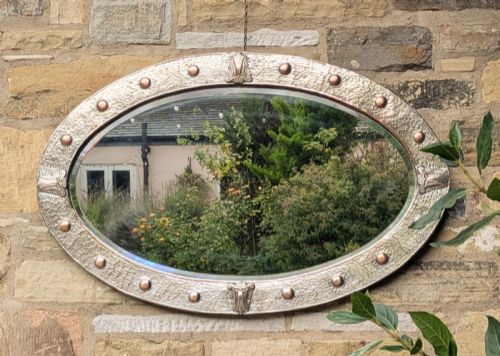
When searching for silver on copper, buyers encounter a diverse range of metalwork spanning centuries and continents, united by the combination of a copper or brass base with a finer silver or alloy surface. The selection here leans heavily towards British Old Sheffield Plate and Victorian wares, alongside significant representation from Middle Eastern and Asian traditions.
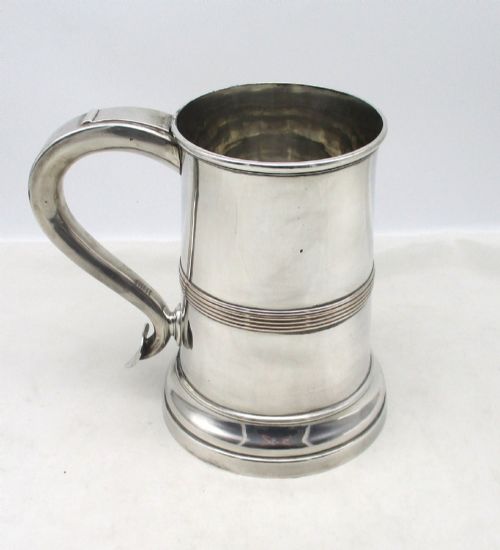
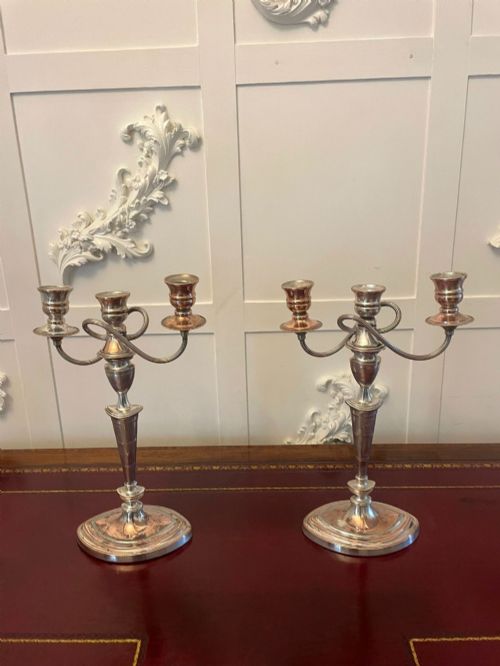
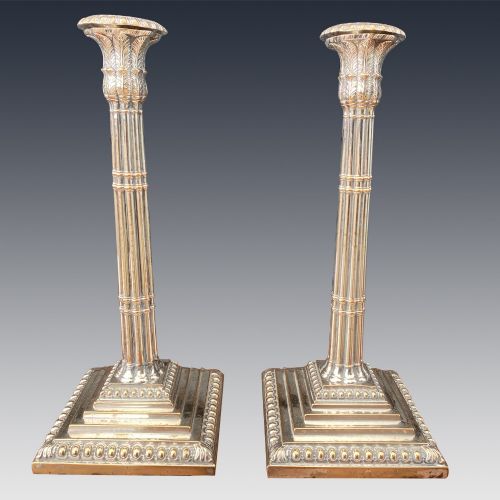
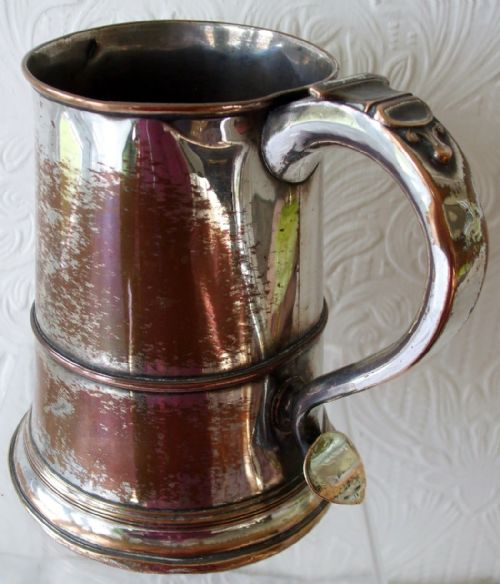
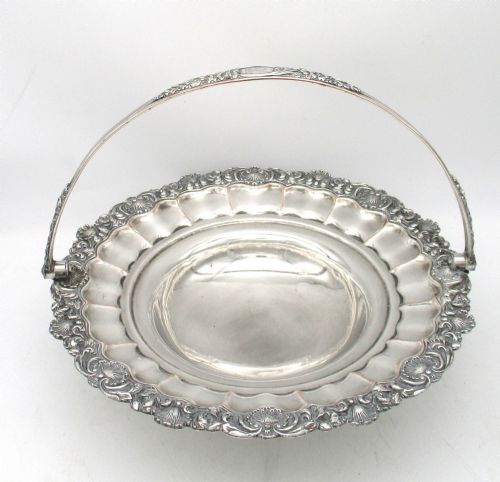
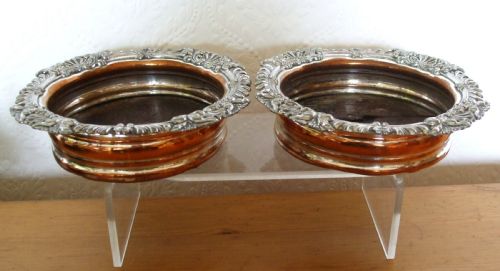
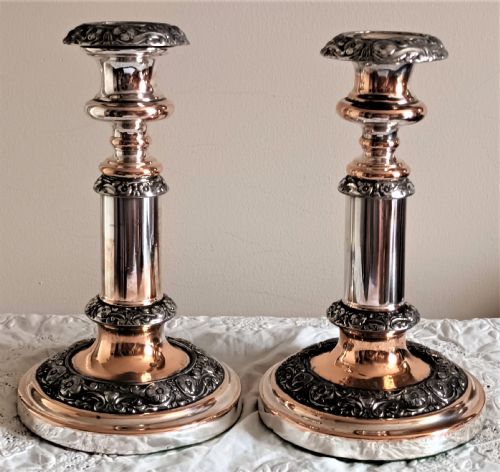
Domestic dining and entertaining items form a substantial group, featuring candlesticks, tankards, wine coolers, and trays dating from the eighteenth and nineteenth centuries. These pieces provided the visual weight and polish of solid silver at a fraction of the cost, making them staples of affluent households.
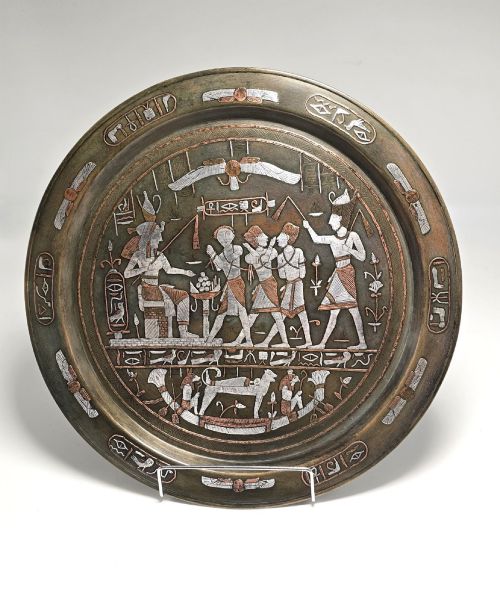
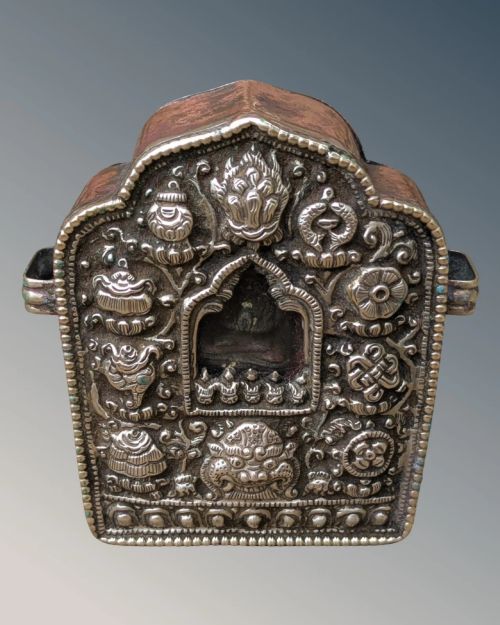
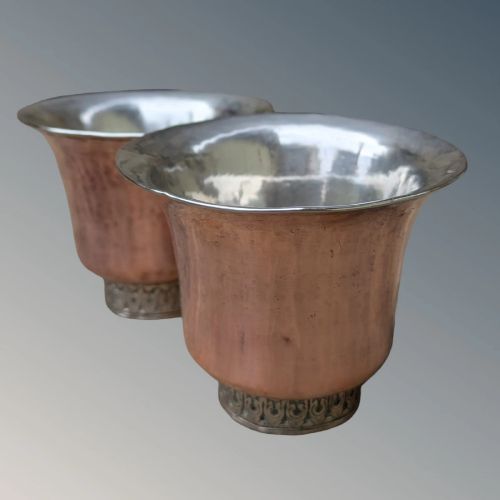
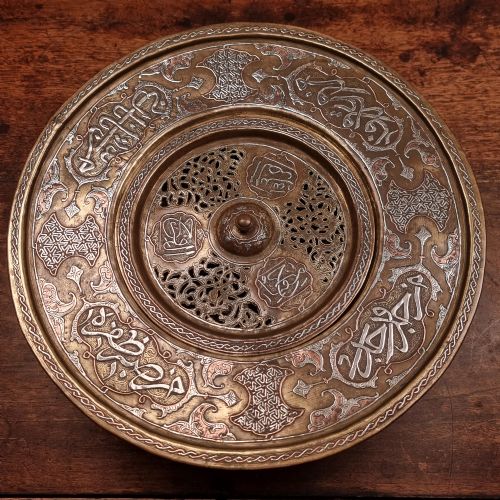
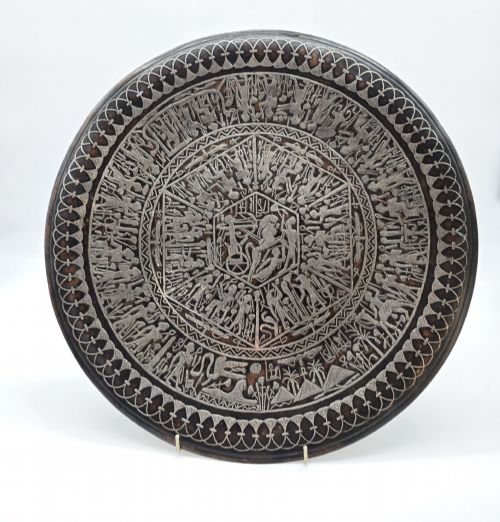
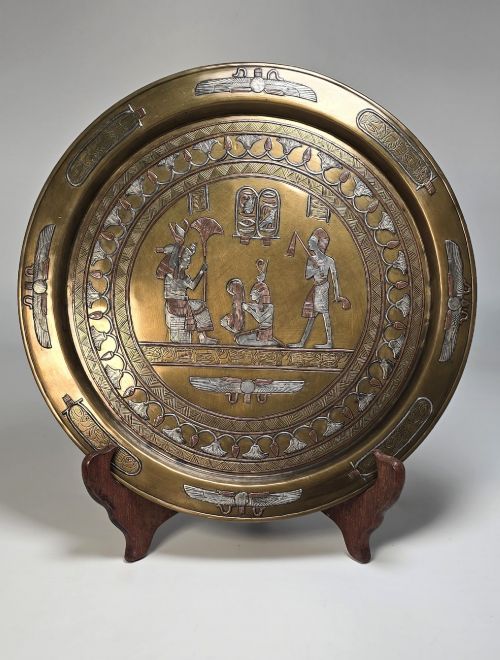
Alongside British plate, the selection includes imported and regional metalwork such as Egyptian Cairo Ware, Tibetan shrines, and Persian inlaid vessels. These items utilise copper and brass bodies enriched with silver or mixed metal inlay, demonstrating distinct regional aesthetic values.
How they were made
Old Sheffield Plate was produced by fusing a sheet of silver to a thick copper ingot, then rolling the combined metals into thin sheets before fabrication. This technique differs fundamentally from later electroplating, as the fused layer of genuine silver is physically thicker and shows characteristic copper seams on edges where the base metal is exposed.
Middle Eastern and Asian pieces rely on inlay and repoussé techniques, hammering copper and bronze forms and cutting channels to receive silver wire or sheet. The resulting contrast between the dark patinated copper ground and the bright silver inlay defines the decorative language of Cairo Ware and Persian ewers.
Silver on Copper Retail Price Guide 2026
Typical asking prices for silver on copper among the pieces listed under this phrase on Sellingantiques today, from the lower quarter to the upper quarter. They describe what is for sale here now, not the wider market.
Listings feature periods from the twelfth century through to the twentieth, spanning Georgian, Victorian, and Islamic revival aesthetics.
What varies in quality
Quality rests in the crispness of detail and the integrity of the surface metal, particularly where plating or inlay meets the base. Pieces retaining substantial original silver coverage without excessive wear through to the copper core command attention from collectors.
Handwork and proportion distinguish finer examples from standard production items, especially in candlesticks, where heavy gauge metal prevents wobbling and cast decorative mounts show sharp chasing rather than soft edges.
Richard Morton·Barker Ellis·Birmingham Guild of Handicraft
The Silver on Copper Glossary
- Old Sheffield Plate
- A material created by thermally fusing a sheet of silver onto a copper ingot, developed in the eighteenth century before the invention of electroplating. It often reveals a thin line of copper at the cut edges.
- Cairo Ware
- Late nineteenth and early twentieth-century metalwork from Egypt, typically comprising brass or copper bodies inlaid with silver and other metals in Islamic geometric or calligraphic patterns.
- Repoussé
- A metalworking technique where the metal is hammered from the reverse side to form a raised design in relief. It is frequently seen on Kashmiri and Victorian trays.
- Sconce
- The detachable nozzle fitted to the top of a candlestick to catch melting wax. In Georgian pieces, these removable components are notable survivals.
Silver on Copper: Frequently Asked Questions
How do I clean silver on copper?
Clean these items gently using a mild silver polish and a soft cloth, avoiding aggressive rubbing that wears through thin plating or damages patinated copper grounds.
Take particular care around engraved lines, inlaid sections, and edges where the underlying copper is exposed, as excessive cleaning will remove the remaining silver layer entirely.
What is Old Sheffield Plate?
Old Sheffield Plate is an early form of composite metal made by fusing silver and copper together under heat, rather than depositing silver via an electrical current.
This method produced thick, durable sheets that feel heavy in the hand and often display a subtle golden or copper tint along raw edges and high-friction points.
How can I date a piece?
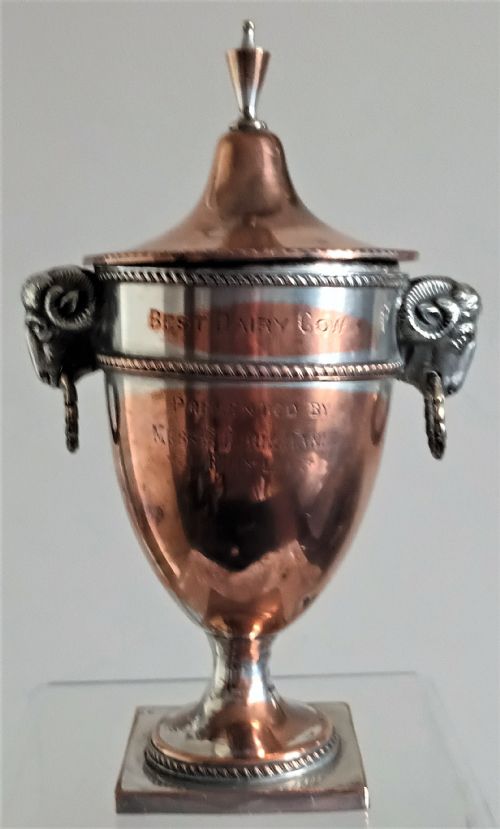
Dating relies on stylistic markers such as neoclassical vase shapes in the eighteenth century or heavier floral cast ornament in the Victorian period. Construction details like hand-beveled edges and soldered joins also help narrow the decade of manufacture.
Marks on the base, where present, can indicate maker's guilds or registry dates, though many domestic and imported items carry no official hallmarks.
Why does copper show through?
Copper shows through where decades of polishing have worn away the thin layer of surface silver, particularly on raised details, handles, and rims. This wear is normal for genuine antique plated items and is often accepted by collectors as evidence of age and use.
When the base metal is visible in a controlled manner, it highlights the dual-layer construction method characteristic of the period.