




Silver Mustard Pot Cruet
A silver mustard pot cruet brings functional elegance to the dining table, combining precious metals with utilitarian design.
Silver Mustard Pot Cruet
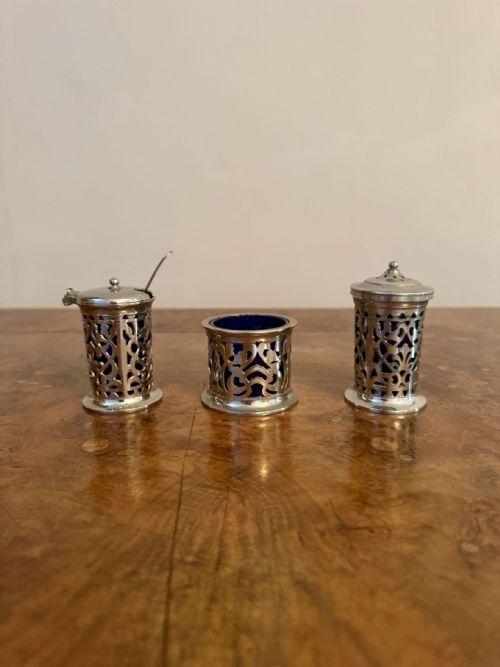
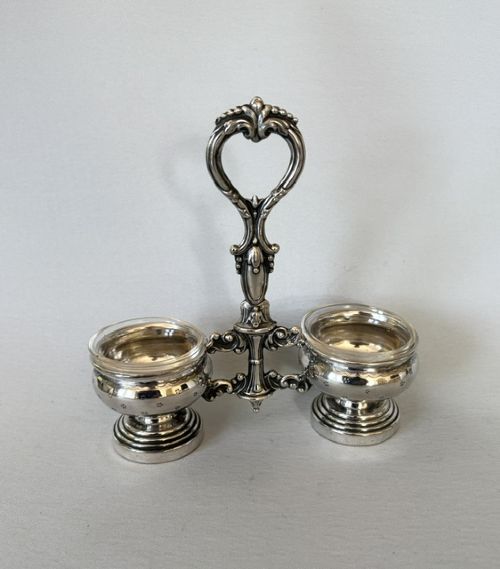
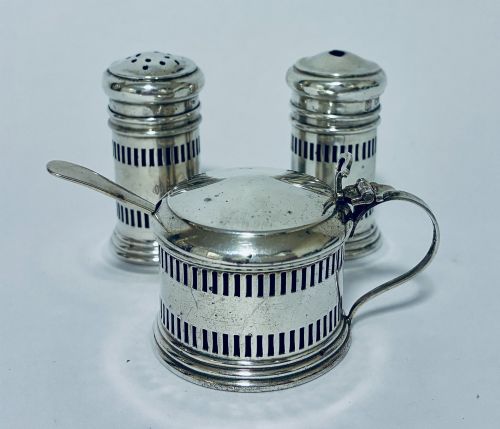
A silver mustard pot cruet is part of a larger tableware ensemble designed to hold condiments like mustard, salt, and pepper neatly together on the dining table. When searching this phrase, you encounter everything from individual condiment stands to multi-bottle sets spanning the Victorian, Edwardian, and Art Deco periods.
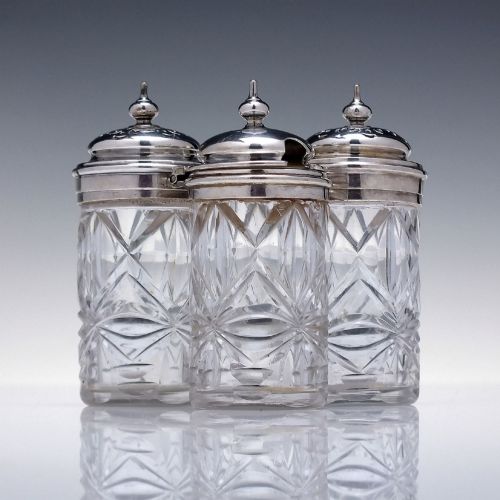
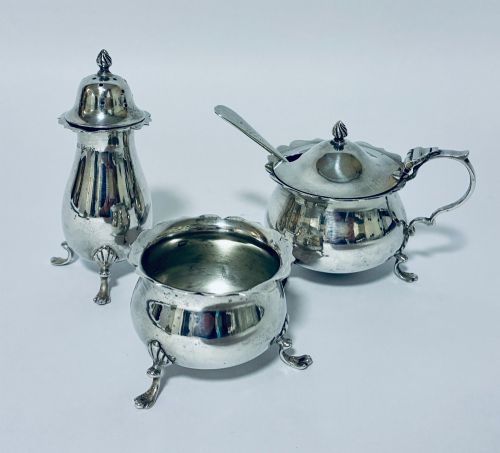
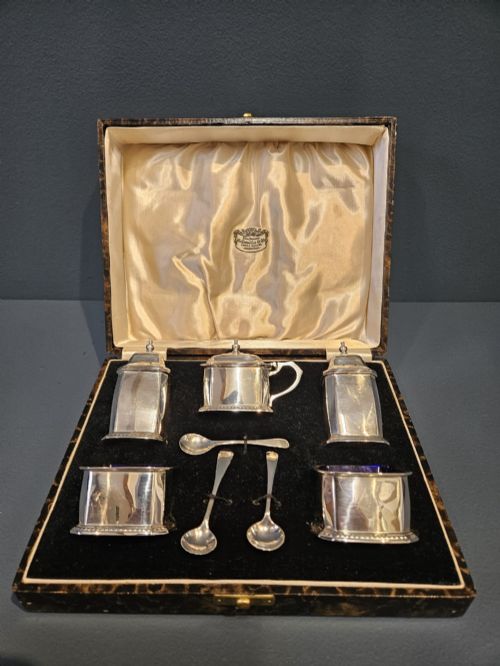
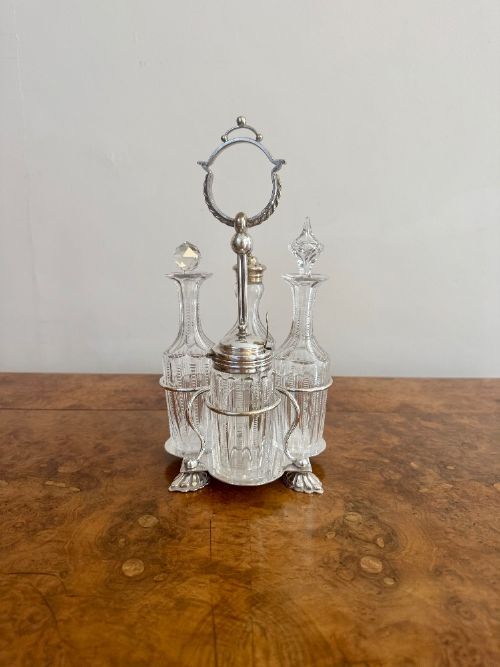
The most common examples you meet on this page are Edwardian and Victorian silver-plated or sterling silver cruet sets, often housing cut glass inserts. These pieces range from simple three-piece configurations to elaborate stands complete with handles and multiple condiment bottles.
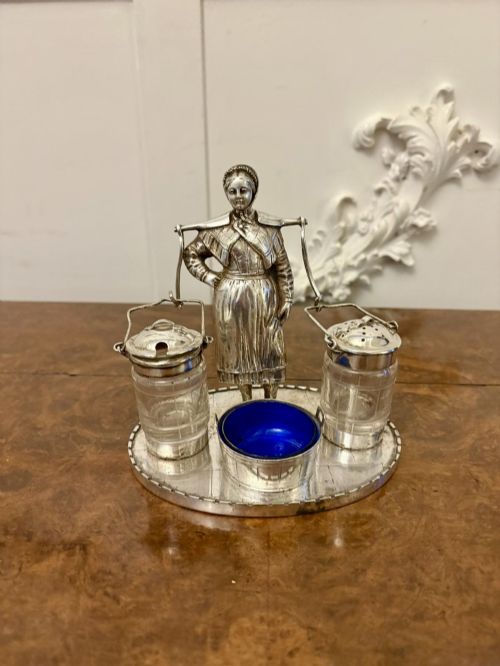
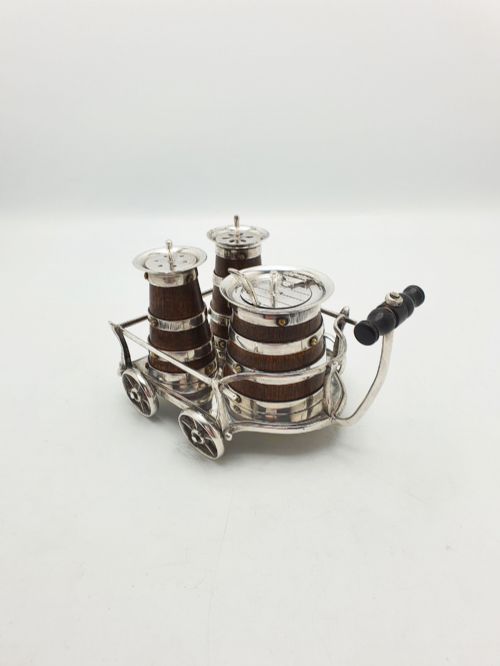
Alongside standard tableware, the evidence shows whimsical novelty forms including carriages, farmyard scenes, violins, and owls. These specialised designs demonstrate how functional dining accessories could double as decorative conversation pieces for the Victorian and Edwardian home.
Materials and technique
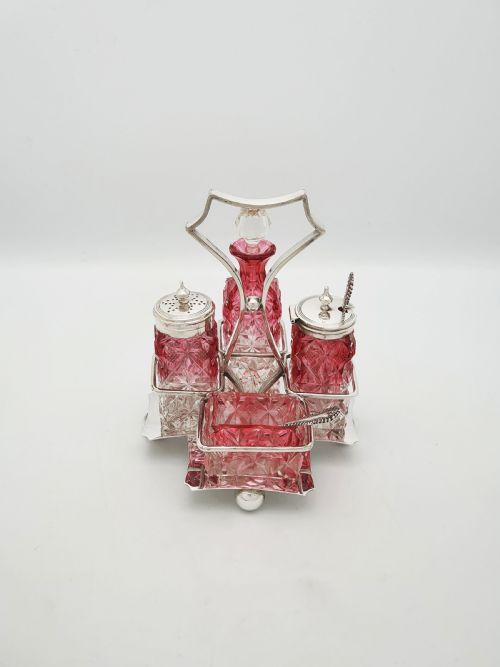
Makers utilised sterling silver and silver plate over base metals to construct the frames, stands, and pot lids. These metal structures were often combined with cut glass, cranberry flashed glass, or cobalt glass for the condiment vessels themselves.
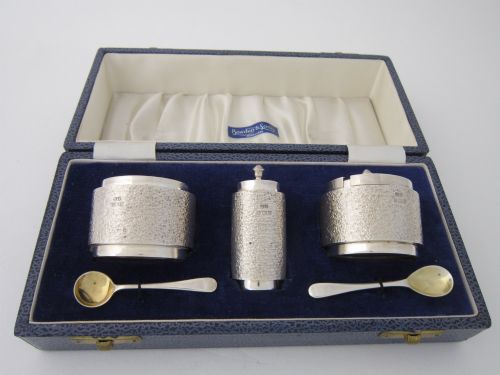
Craftsmen shaped the metal through casting, stamping, and silver-plating, frequently incorporating internal linings of velvet or satin in fitted presentation boxes. Glass components were heavily cut or moulded to catch the light on the dining table.
Silver Mustard Pot Cruet Retail Price Guide 2026
Typical asking prices for silver mustard pot cruet among the pieces listed under this phrase on Sellingantiques today, from the lower quarter to the upper quarter. They describe what is for sale here now, not the wider market.
Listings span multiple decades from the 1870s Victorian era through to the 1960s, featuring both solid sterling silver and silver plate.
What varies in quality
Quality in a silver mustard pot cruet rests upon the crispness of the metalwork, the weight of the silver or plating, and the integrity of any glass inserts. Pieces produced by recognised silversmiths display superior balance, sturdiness in the frames, and precise detailing.
The complexity of the design also dictates the tier of the piece, moving from standard utility stands to intricate novelty forms or cased matched sets. Preservation of the original silver plating and the absence of chips in the cut glass liners separate standard examples from finer items.
William Neale·Mappin Brothers·Bricks and Sons·William Hutton and Sons·Viners Sheffield·Wilmot Manufacturing Co
The Silver Mustard Pot Cruet Glossary
- Silver plate
- A layer of fine silver applied to a base metal substrate, such as nickel silver or copper. This technique allowed manufacturers to offer durable tableware at a lower cost than solid sterling silver.
- Cranberry flashed glass
- Glass that has been dipped in or coated with a thin layer of gold-rich red glass before being cut. It creates a striking ruby colour contrast against silver metalwork.
- Condiment set
- A collection of matching small vessels designed for table seasonings, typically comprising mustard pots, salt cellars, and pepper shakers.
- Novelty cruet
- A condiment set or stand shaped to resemble an everyday object, animal, or scene, such as a carriage, violin, or farmyard. These playful items were particularly popular during the Victorian era.
Silver Mustard Pot Cruet: Frequently Asked Questions
What is a silver mustard pot cruet?
A silver mustard pot cruet is a small container for mustard, often housed within a larger frame or stand alongside other condiment bottles.
These pieces served a practical purpose on formal dining tables during the nineteenth and twentieth centuries.
How were cruet sets used?
They were placed on dining tables so guests could easily season their food with mustard, salt, pepper, vinegar, or oil during a meal.
Servers or diners would lift the stand by its central handle to pass condiments around the table.
How do I care for silver plate?
Silver plate requires gentle cleaning with a specialised silver cloth or mild polish to maintain the shine without wearing through the thin metal coating.
Avoid using harsh abrasives and keep glass inserts clean by washing them separately in warm soapy water.
How can I tell the period of a cruet set?
Periods are identified through hallmarks on sterling silver, maker marks, the style of the glass cutting, and overall design characteristics like Edwardian elegance or Art Deco geometry.
Novelty shapes and oak or silver-plated combinations frequently point towards Victorian manufacturing techniques.