


Silver Mounted Dressing Jar
A silver mounted dressing jar brings refined organisation to a dressing table with fitted metal tops and heavy glass bodies.
Silver Mounted Dressing Jar
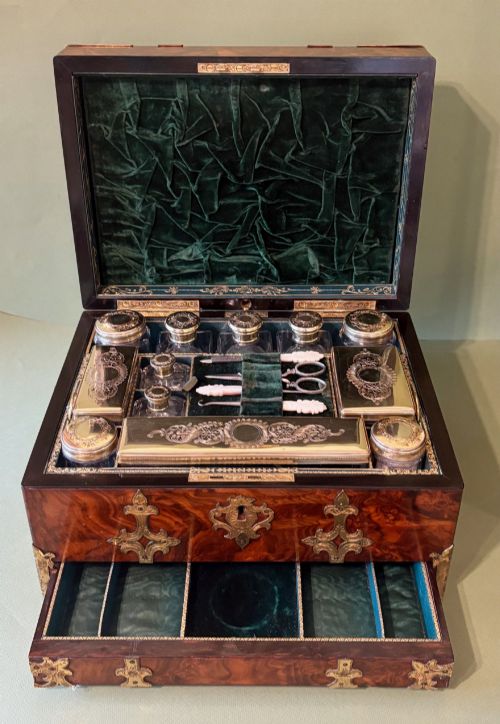
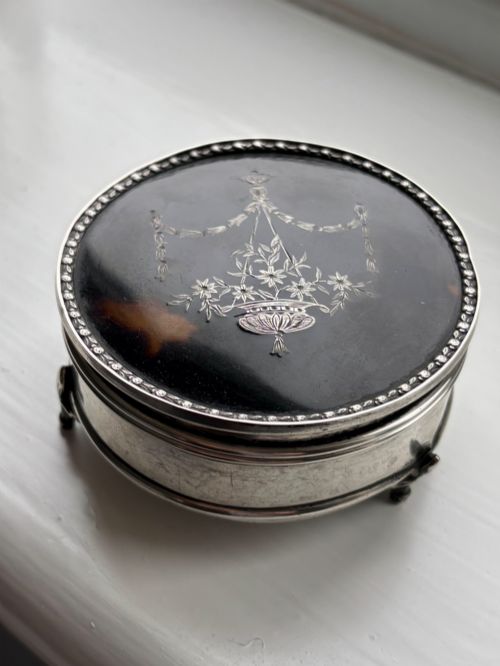
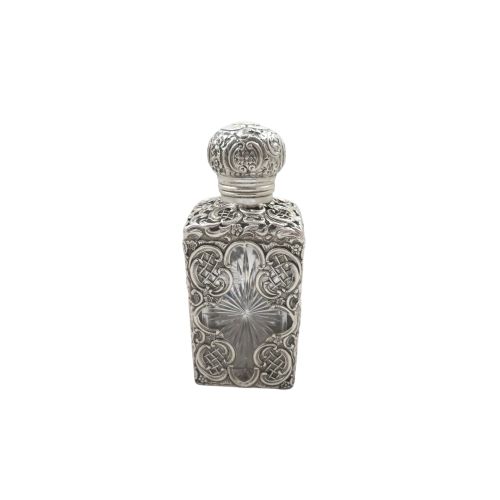
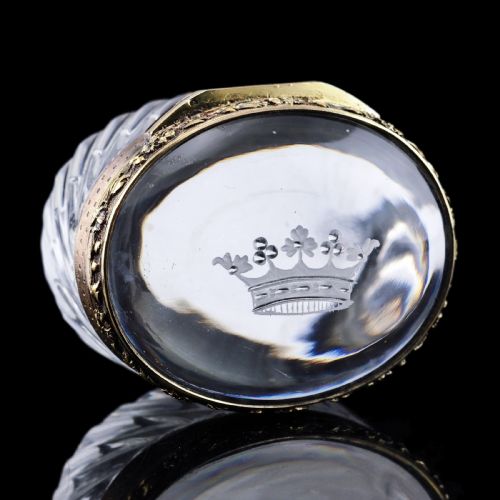
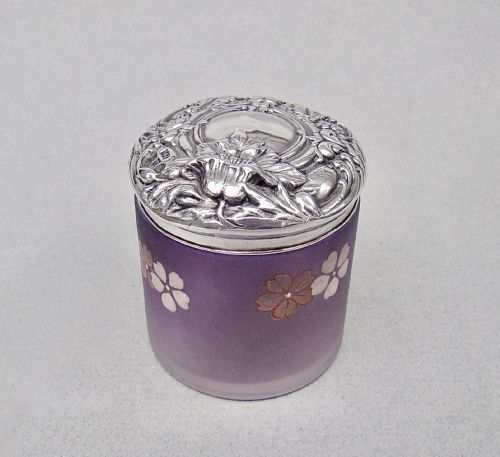
A silver mounted dressing jar combines a durable glass, crystal, or coloured vessel with a precious metal lid or collar designed for daily vanity use. These containers appear frequently in Victorian, Edwardian, and Art Deco styles, often taking the form of scent bottles, perfume bottles, or trinket boxes.
Makers housed these accessories within fitted dressing cases or displayed them on dressing tables alongside matching brushes and trays. The pieces range from straightforward cut glass cylinders to richly coloured overlay glass and tortoiseshell-topped containers.
Materials and Construction
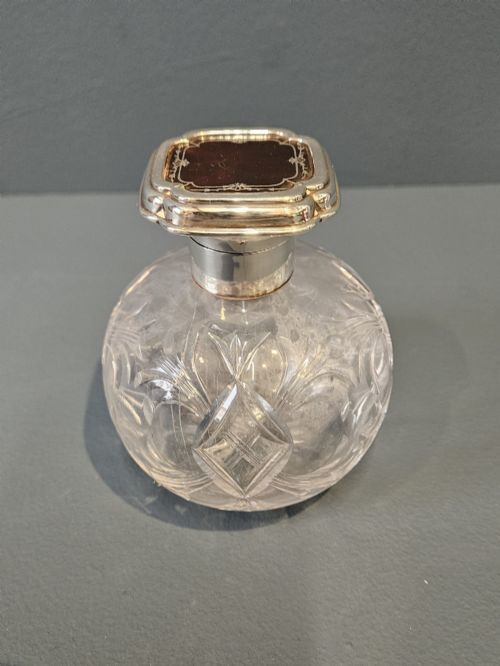
The heavy glass bodies are typically cut, moulded, or blown, utilising deep flutes, hobnail patterns, or smooth coloured glass in shades like cranberry, blue, and amethyst. Craftsmen paired these translucent bases with sterling silver tops, which frequently carry hallmarks indicating assay offices in Birmingham, Chester, and London.
Specialist materials such as tortoiseshell, brass, and enamel supplement the silver mounts on select lids, secured by inner collars or hinged mechanisms. Glass cutters and silversmiths worked in tandem to ensure exact fits between the metal rims and the ground glass necks of the bottles.
Certain gentleman's cologne bottles featured secret locks, ensuring travelling owners kept their personal fragrances secure from curious valets on long journeys.
Distinctions in Quality
Quality rests in the weight and clarity of the glass, the crispness of the cutting, and the substance of the silver lid rather than the mere presence of metal. Thicker gauge silver resists denting and holds crisp repoussé or engine-turned engraving far longer than thin sheet metal.
The integration of materials also defines the tier of a piece, where a snug, perfectly fitted silver collar on heavy cut crystal indicates superior workshop standards compared to loose or replacement lids.
Ollivant and Botsford·Hasset and Harper·Posen of Frankfurt·Barnsley and Co·Adie Brothers Ltd·Mappin and Webb·Henry Matthews·John Douglas·Levi and Salaman·Thomas Ingleton
The Silver Mounted Dressing Jar Glossary
- Hallmark
- Official stamps struck into precious metal indicating the standard of silver, the assay office, and the date letter. These marks allow collectors to trace the exact year and origin of the mount.
- Guilloche
- An intricate mechanical engraving technique producing precise geometric patterns beneath a translucent layer of enamel. This decorative method appears frequently on Art Deco vanity covers.
- Cut Glass
- Glass shaped and patterned by holding the vessel against a revolving abrasive wheel to carve deep facets. The process creates light refraction that enhances the appearance of the dressing table.
- Overlay Glass
- A technique involving layers of different coloured glass fused together, where the outer layer is partially cut away to reveal the contrasting colour underneath. This creates striking visual depth on perfume bottles and jars.
- Repoussé
- Metalworking technique where the silversmith hammers the metal from the reverse side to form a raised design in relief on the lid.
Silver Mounted Dressing Jar: Frequently Asked Questions
What is a silver mounted dressing jar used for?
These vessels held perfumes, powders, creams, and pins upon a Victorian or Edwardian dressing table. They kept daily toilette necessities sealed and protected from dust.
Over time, they evolved from practical dressing room accessories into decorative objects displayed openly on vanity trays and dressing chests.
How do I date a silver mounted dressing jar?
The easiest method is reading the hallmarks stamped onto the silver lid or collar. These tiny symbols reveal the specific assay office and the exact year of manufacture.
Stylistic cues like cut glass patterns and monogramming also help determine whether a piece belongs to the Victorian, Edwardian, or Art Deco period.
Are the glass bodies and silver lids original to each other?
Most surviving pieces retain their matched components, as the silver collar was custom-fitted directly to the ground neck of that specific glass jar. Examining the fit at the junction reveals whether the lid sits flush and turns correctly upon the thread or rim.
Replacements do occur occasionally due to breakage, so checking for uniform wear across both glass and silver provides good context.
How should I clean a silver mounted dressing jar?
Use a soft cloth and mild soapy water for the glass body, taking care to keep moisture away from any paper linings inside the lid. Polish the silver mount gently with a specialist silver cloth while avoiding abrasive pastes that might scratch adjacent glass or enamel.