


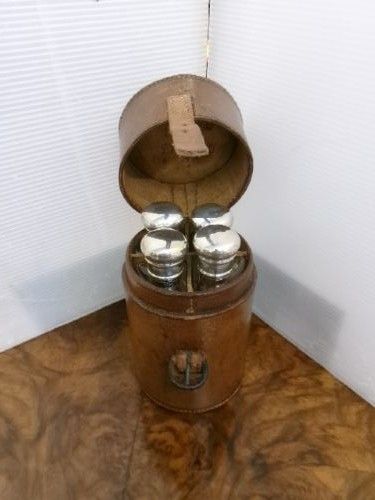


Silver Mounted Decanter Set
These silver mounted decanter set pieces combine cut glass vessels with secure metal mounts for entertaining, offering a tangible link to period dining traditions.
Silver Mounted Decanter Set
A silver mounted decanter set brings together glass or crystal containers fitted with metal collars, stoppers, or stands designed for serving spirits and oils. The listings here frequently present these items within oak frames or locking tantalus mechanisms alongside games compendiums, dating from the Victorian and Edwardian eras into the mid-twentieth century.
Buyers encounter single bottles, paired scent or cruet bottles, and multi-bottle formats housed in stands of silver plate, sterling silver, or metal. These drinking and dining accessories reflect the domestic social rituals of the nineteenth and twentieth centuries, spanning periods from the eighteen-fifties through to nineteen-thirty.
The objects take forms ranging from after-dinner tantalus cabinets to portable leather cases containing silver-topped flasks. Oak and blonde oak predominate in the structural housings, while the glassware itself varies from ruby and Bristol blue to clear cut crystal.
Materials and construction
Makers combined heavy glass bodies with metalwork, utilising cut crystal, cut glass, and hand-blown glass in shades such as green, blue, brown, and ruby. These vessels were paired with sterling silver, silver plate, or general metal mounts, collars, and hinged locking mechanisms.
Wooden housings were constructed primarily from oak, blonde oak, and exotic woods like coromandel, often incorporating fitted interiors for games compendiums and dry bars. Metal components were shaped, chased, and fitted to the glass contours, with hallmarked silver elements indicating assay office origins and dates.
Listings feature oak cabinetry, cut crystal, and sterling silver mounts spanning the Victorian, Edwardian, and Art Deco periods.
Distinctions in construction and material
The standard of a silver mounted decanter set rests upon the clarity and depth of the glass cutting, the weight of the silver or silver plate, and the integrity of the wooden housing. Finer examples feature hand-blown crystal with crisp facets, substantial metal mounts bearing clear hallmarks, and robust cabinetry with functioning locks.
Execution of secondary details, such as the precision of the fit between glass and metal, influences the overall character of the piece. Sets that integrate complex functions like games compendiums or secure tantalus frames demonstrate a higher degree of Victorian and Edwardian joinery and metalworking skill.
Betjemann’s·Hukin and Heath·Mappin & Webb
The Silver Mounted Decanter Set Glossary
- Tantalus
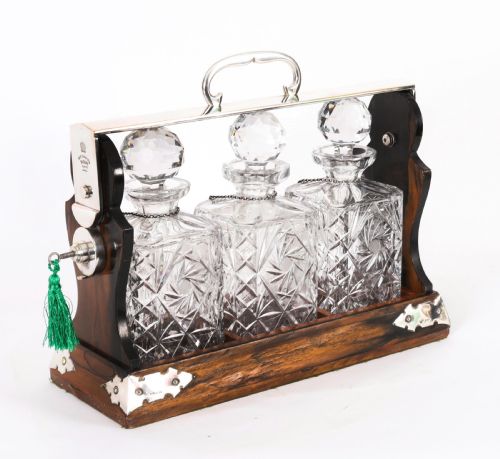
- A locking beverage cabinet that secures decanters within a frame while leaving their contents visible, preventing unauthorized access. The mechanism typically requires a key to release the top bar before any bottle can be removed.
- Cruet bottle
- A small glass vessel designed to hold table condiments such as oil and vinegar, frequently found in matched pairs with silver mounts. These bottles are often used alongside dining sets or fitted into specialised portable frames.
- Scent bottle
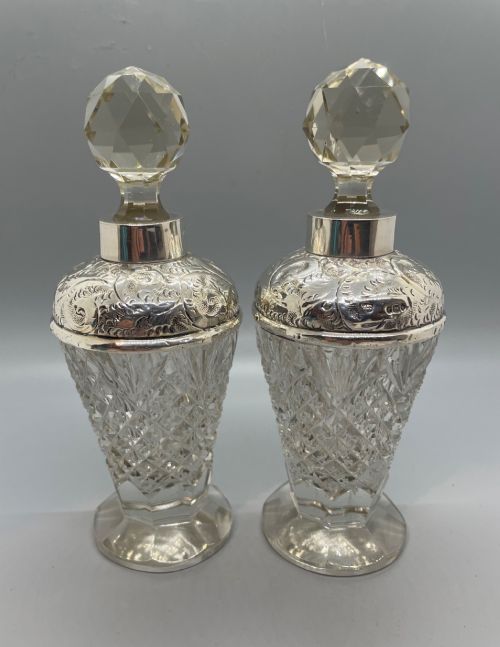
- A small container fitted with a hinged silver cap or screw top, intended for perfumes or volatile salts. Victorian and Edwardian examples often appear in matched pairs with decorative metal collars.
- Games compendium
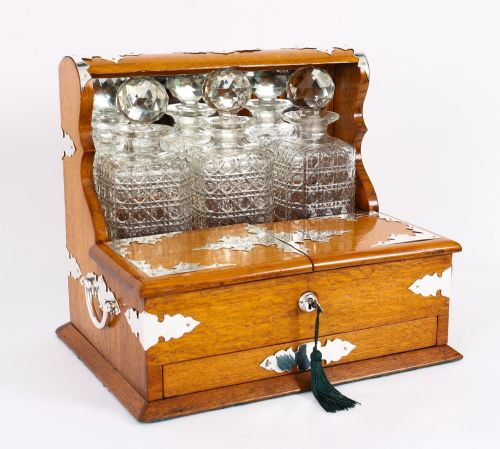
- A multi-game box housing boards, cards, and pieces, frequently incorporated into the wooden base of a tantalus or dry bar. This combination reflects Victorian and Edwardian home entertainment habits.
- Silver plate
- A base metal coated with a thin layer of silver through electroplating or older techniques, utilised extensively for the frames and mounts of late nineteenth and early twentieth-century barware.
Silver Mounted Decanter Set: Frequently Asked Questions
What is a tantalus?
A tantalus is a locking wooden or metal frame designed to hold decanters securely while displaying the spirits inside. The locking mechanism prevents guests or servants from accessing the contents without the key.
First patented during the Victorian period, these units became popular additions to dining rooms, studies, and drawing rooms for after-dinner entertaining.
How do I date a silver mounted decanter set?
Dating relies primarily on silver hallmarks stamped onto the metal mounts, which indicate the assay office, maker, and exact year of production. Stylistic clues in the woodwork, such as blonde oak or coromandel veneers, and the cut of the glass also help narrow down the period.
Most surviving pieces originate from the Victorian and Edwardian eras, with some extending into the nineteen-thirties and mid-century decades.
Are the decanters removable?
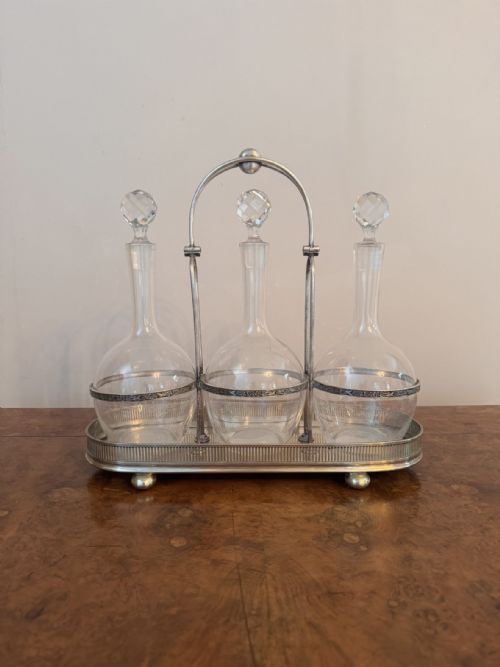
In a standard decanter set or open stand, the bottles lift out freely for pouring. In a tantalus, the bottles remain locked in place until a key is turned to release the retaining bar.
Once unlocked, the bottles slide or tilt out of the frame for serving.
What are games compendiums doing in these sets?
Victorian and Edwardian manufacturers frequently combined social drinking accessories with entertainment by housing card decks, game boards, and counters beneath the decanter section. This multi-functional design suited the drawing room and smoking room culture of the late nineteenth century.
The resulting oak cabinets served as both a dry bar and a self-contained entertainment centre for guests.