



Silver Miniature Clock
These small timepieces offer intricate mechanical precision housed in precious metal casings, making a silver miniature clock a charming addition to any desk or mantel.
Silver Miniature Clock
A silver miniature clock brings together pocket-sized horology and portable luxury across several centuries of design. You will frequently encounter carriage clocks and boudoir timepieces produced during the Edwardian era and around nineteen hundred.
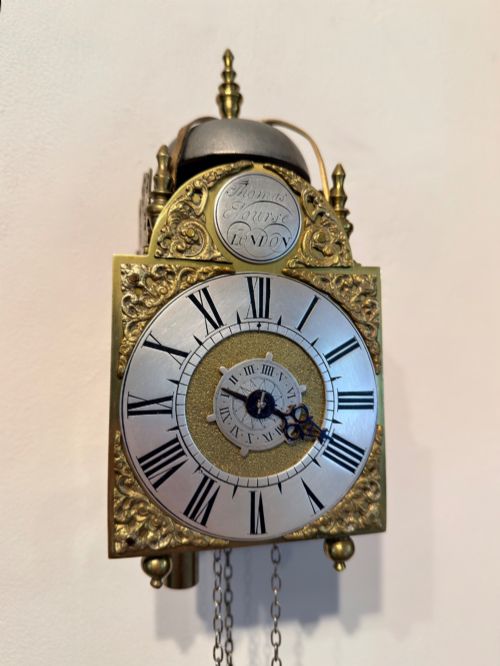
The selection ranges from simple travelling clocks housed in leather cases to ornate portico desk clocks and wall-mounted lantern styles. Makers from London, Vienna, and France supplied these compact items for domestic and travel use.
Materials and construction
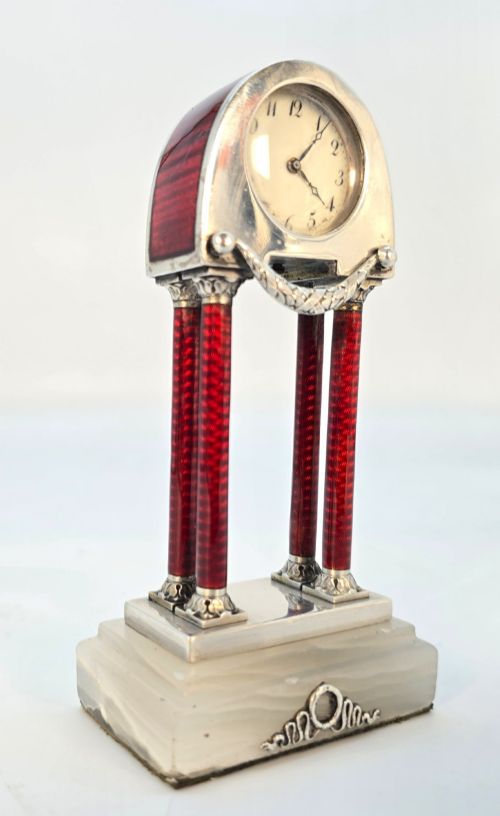
Silversmiths formed the outer housings from solid silver, sterling silver, or silver gilt, often adding chased, hammered, or repoussé decoration. Enamel work, particularly blue guilloche or floral panels, frequently embellishes the cases alongside glass viewing panels.
Internal movements combine steel, brass, and glass components to achieve reliable timekeeping on a small scale. Leather travel cases sometimes accompany the pieces to protect the delicate metalwork during transit.
Listings feature examples spanning the Georgian period, the Victorian era, Edwardian times, and Art Deco designs.
Judging the execution
Quality rests in the crispness of the silversmith's handwork on the outer case, from deep chasing to precise enamel application. Finer examples display balanced proportions and crisp hallmarks rather than flat, machine-stamped surfaces.
The sophistication of the internal movement further distinguishes the pieces, separating standard timepieces from eight-day striking mechanisms or specialised bracket clock designs.
Mappin & Webb·Georg Adam Scheid·J Batson & Son·Henry Matthews·Liberty's London·Bayard·Rotary·William Comyns·Abel Panchaud·Thornhill London
The Silver Miniature Clock Glossary
- Carriage clock
- A portable spring-driven timepiece originally designed for travelling. These usually feature a rectangular brass or silver frame inset with glass panels.
- Guilloche
- An ornamental pattern engraved into metal by an engine-turning machine. Translucent enamel is frequently layered over this work to create a shimmering depth of colour.
- Repoussé
- A metalworking technique where the silversmith hammers the design from the reverse side to form a raised relief on the front.
- Portico clock
- A timepiece built in the architectural style of a classical portico with supporting columns. These items sit on desks or mantelpieces as decorative focal points.
- Timepiece
- A clock that indicates the time without including a striking or chiming mechanism. Most smaller boudoir and travel clocks fall into this category.
Silver Miniature Clock: Frequently Asked Questions
How do I wind a vintage clock?
Use the appropriate key gently on the winding square at the back of the movement, turning it slowly until you feel resistance.
Avoid overwinding the mainspring, as this can damage the internal mechanism and stop the clock from running correctly.
Were these clocks meant for travel?
Many examples were specifically designed for journeys, often supplied with fitted leather outer cases to protect the silver and glass during transit.
Others served as static boudoir or desk timepieces meant to remain stationary in a bedroom or study.
How do I clean the silver case?
Dust the exterior gently with a soft microfiber cloth to remove surface particles without scratching the metal or enamel.
Keep silver polish away from glass panels, enamel work, and the internal movement to prevent chemical damage.
Why do some clocks have eight-day movements?
An eight-day movement requires winding much less frequently than standard daily timepieces, offering greater convenience for the owner.
This extended duration involved more complex gearing inside the compact metal housing.