






Eight Day Desk Clock
An eight day desk clock delivers dependable timekeeping through sustained mechanical power, bringing traditional craftsmanship directly to your workspace.
Eight Day Desk Clock
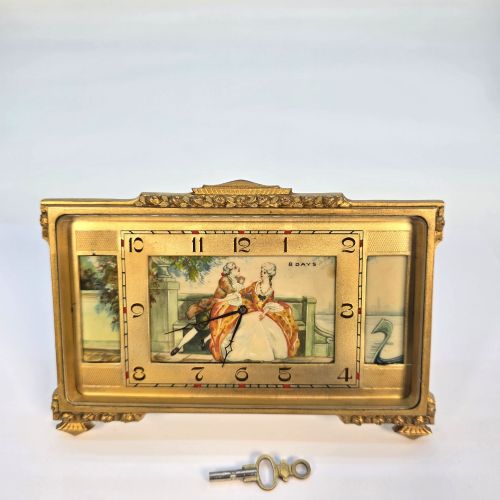
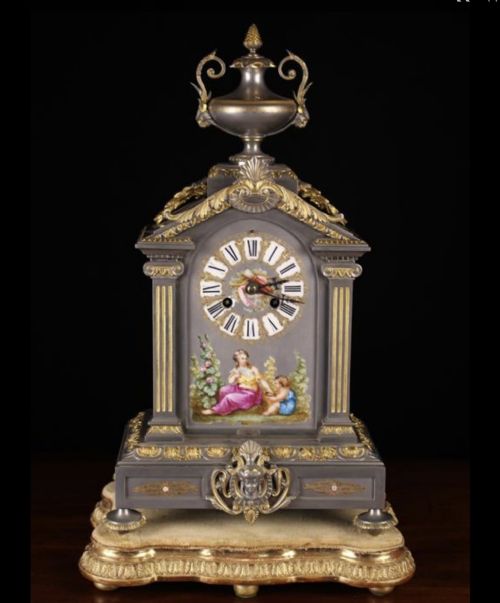
When you search for an eight day desk clock, you encounter timepieces designed for surfaces ranging from heavy marble mantelpieces to compact wooden desks. The selection spans periods from the Georgian era through to the early twentieth century, showing diverse regional origins.
Materials and construction methods
These timepieces rely on substantial cases built from dense stones like black slate and marble, or rich timbers such as mahogany and rosewood. Metal elements include cast brass, ormolu, and gilt bronze, often shaped into classical revival motifs or decorative mounts.
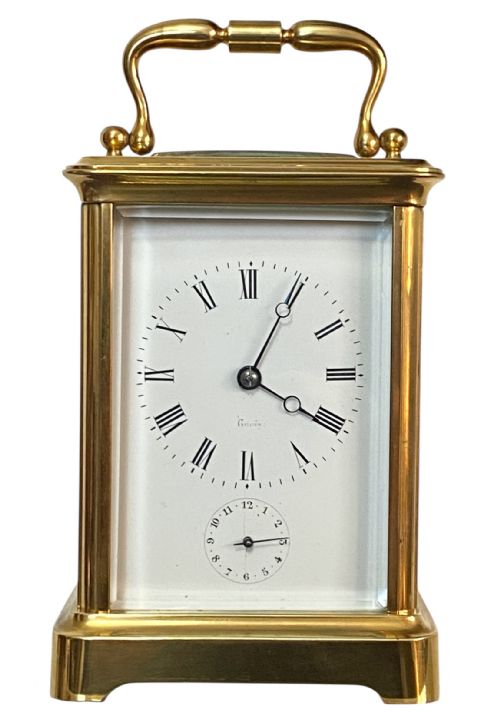
The mechanical movements depend on precision brass gear trains and coiled springs to maintain an eight-day power reserve. Enamel dials, sometimes protected by bevelled glass bezels, display the hours while housing delicate escapements.
The listings span the nineteenth and early twentieth centuries, featuring materials such as marble, brass, and mahogany.
Distinguishing quality across examples
Quality rests in the crispness of the case carving and the integration of decorative mounts, where hand-chased ormolu far surpasses simpler cast brass. The weight and finish of materials like solid marble or figured mahogany dictate the initial visual impact of the piece.
Internal mechanical refinement separates standard production from superior workshop output, evident in the precision of the gear train and the clarity of the enamel dial. Original cases, matching keys, and intact leather travelling cases for portable models further elevate the standing of a timepiece.
Hampson & Son·R Stewart of Glasgow
The Eight Day Desk Clock Glossary
- Bracket clock
- A portable household clock originally designed to sit on a wall bracket or desk. These frequently feature wooden cases with carrying handles.
- Ormolu
- Gilded bronze produced by applying a mercury and gold amalgam to a bronze base. This technique creates a distinctive matte and bright gold finish seen on French decorative pieces.
- Black slate
- A fine-grained metamorphic rock utilised extensively for Victorian clock cases. It provides a heavy, smooth surface that mimics more expensive black marble.
- Timepiece
- A clock that indicates the time but does not strike the hours or sound alarms. Simpler movements of this type focus entirely on visual elegance and steady operation.
Eight Day Desk Clock: Frequently Asked Questions
Where should I place a heavy marble clock?
Position your clock on a sturdy, level surface that can comfortably support significant weight. Desks, heavy sideboards, and strong mantelpieces provide ideal foundations.
A stable surface ensures the pendulum or balance wheel maintains an even beat. Avoid locations subject to severe temperature fluctuations or direct vibrations.
How do I distinguish a Victorian clock from a Georgian one?
Georgian pieces often feature restrained wooden cases, such as mahogany bracket clocks with understated brass fittings. Victorian examples frequently employ heavier materials like black slate, marble, or elaborate gilt bronze.
Stylistic revivals also guide attribution, with Victorian makers drawing heavily on classical and French empire motifs. Examining the dial construction and internal movement layout provides further chronological clues.
Can I travel with a carriage clock?
Certain models, particularly Swiss carriage clocks, were built specifically for travel and often include protective leather cases. These designs feature sturdy frames and secure escapements suited to movement.
Desk clocks intended primarily for stationary use lack these protective housings and should remain in one place. Moving heavy stone clocks requires careful handling to prevent case damage.