


Sterling Silver Carriage Clock
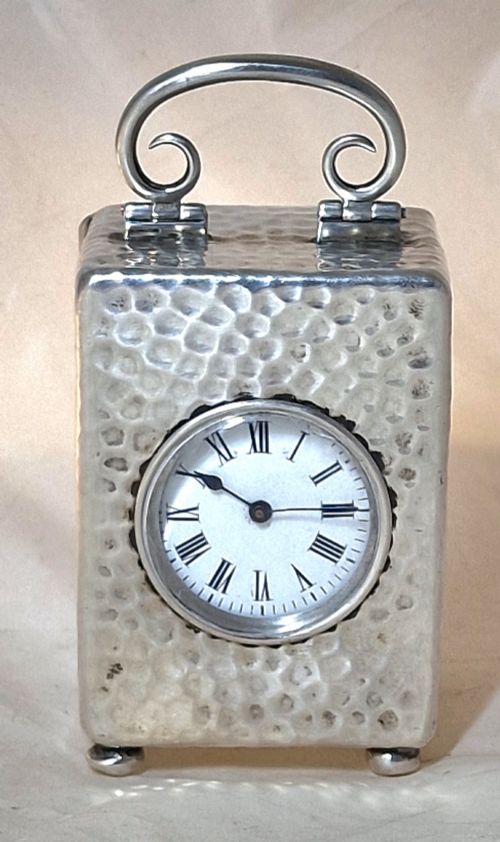
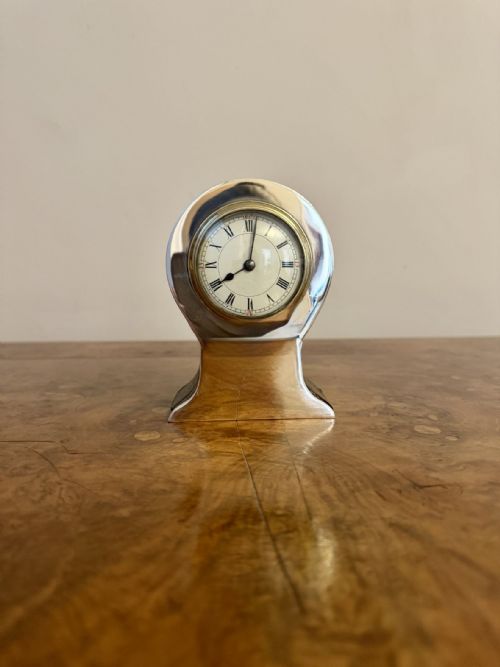
These sterling silver carriage clock examples combine precision timekeeping with solid silver cases spanning Edwardian, Victorian, and Art Deco periods.
Sterling Silver Carriage Clock
A sterling silver carriage clock represents a portable timepiece designed for travel or boudoir use, typically housed within a heavy silver case featuring glass panels. Buyers searching this phrase will find a variety of forms ranging from miniature boudoir timepieces to large carriage clock styles.
The pieces listed on this page encompass Edwardian, Victorian, and Art Deco periods, with many items originating from London and Birmingham hallmarks. The smaller miniature versions and travel clocks with leather cases appear frequently alongside traditional handle-mounted designs.
Makers such as William Comyns, Henry Matthews, and Liberty's London are represented in the metalwork, bringing distinct Arts and Crafts or Tudric influences to the silver casings. Enamelled decoration and guilloche patterns frequently augment the standard sterling silver framework.
How They Were Made
Cases rely on heavy sterling silver or silver over brass foundations, shaped through hammering, casting, and hallmarking processes. Artisans integrated bevelled glass windows into the silver frames to display the mechanical movements within.
Decorative enhancements include blue guilloche enamel, floral enamelling, and tortoiseshell inserts set directly into the silver panels. Miniature travel versions often integrated leather protective outer cases alongside the metal body.
One miniature silver timepiece even brings a Tudric feel to the boudoir.
What Varies in Quality
Quality differentiates by the weight and thickness of the sterling silver casework, alongside the complexity of the hand-applied enamel or hammered texture. Simpler smooth silver frames contrast with pieces featuring elaborate floral enamel work or guilloche detail.
The presence of registered maker marks from silversmiths like William Comyns or Liberty's indicates superior workshop origin compared to unmarked examples. Movement sophistication, such as eight-day duration mechanisms, elevates certain pieces above standard timepieces.
William Comyns·Henry Matthews·Liberty's London
The Sterling Silver Carriage Clock Glossary
- Guilloche Enamel
- Enamel applied over a machine-turned metal background. This technique creates geometric patterns visible beneath a translucent coloured coating.
- Hallmark
- An official stamp applied to precious metals indicating purity, maker, and assay office year. British silver pieces carry these marks to confirm sterling standard.
- Boudoir Timepiece
- A smaller clock designed for bedroom use rather than heavy travel. These items often display more delicate ornamentation than standard carriage clocks.
- Tudric
- A trade name associated with specific metalwork designs from the early twentieth century. It often denotes Arts and Crafts influences on decorative objects.
Sterling Silver Carriage Clock: Frequently Asked Questions
What is a sterling silver carriage clock?
A portable mechanical timepiece housed in a protective metal frame with glass viewing panels. These objects were originally designed for travel by horse-drawn carriage or train.
Over time they transitioned into decorative boudoir and desk accessories found in Edwardian and Art Deco interiors.
How do I identify an Edwardian carriage clock?
Look for hallmarks corresponding to the early twentieth century alongside stylistic traits like delicate floral enamelling or hammered silver surfaces.
Many examples from this era incorporate miniature proportions and French or English movements housed in London or Birmingham silver cases.
Were these clocks meant for travel?
Many examples were built with folding top handles and heavy cases specifically for transportation during journeys. Some versions included fitted leather outer cases to protect the silver and glass during transit.
Smaller boudoir pieces were conversely intended to remain stationary upon a bedside table or mantelpiece.
What materials are used besides silver?
Glass panels form the windows that reveal the internal mechanical movement from multiple angles. Enamel, guilloche enamel, and tortoiseshell frequently decorate the exterior silver surfaces.
Leather often appears as the material for protective travel cases accompanying the main metal clock body.