




Silver Handled Serving Tray
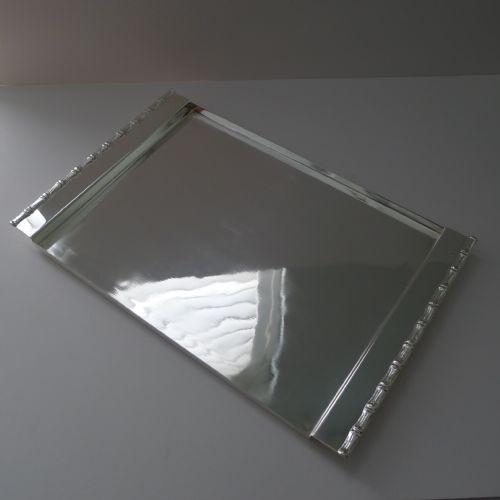
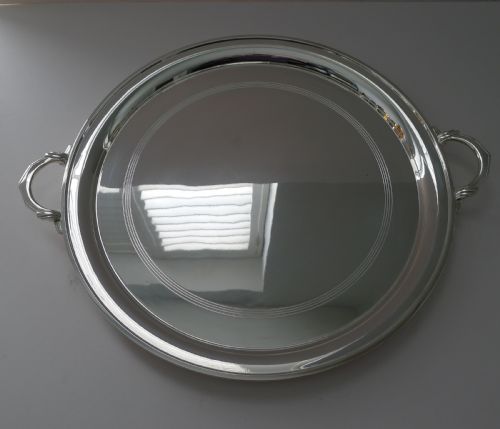
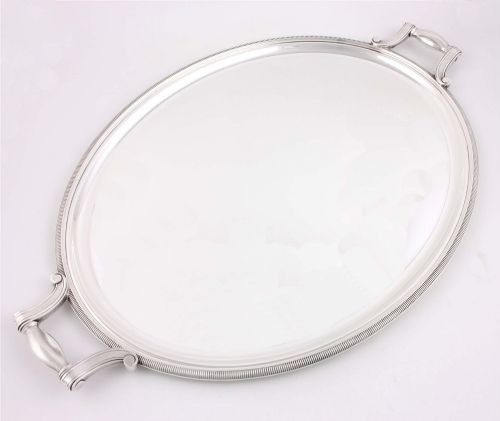
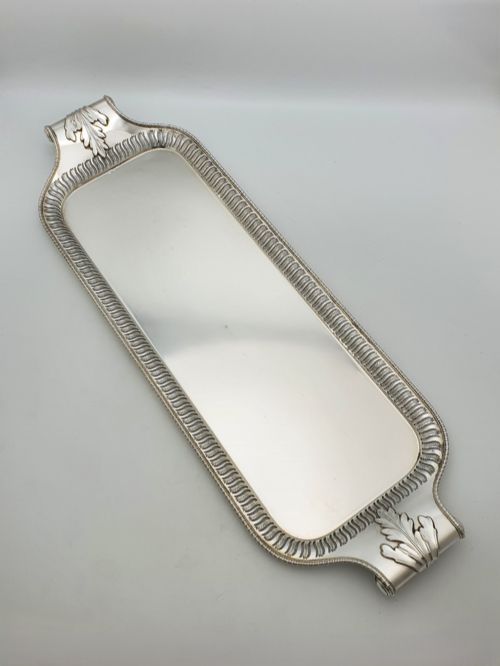
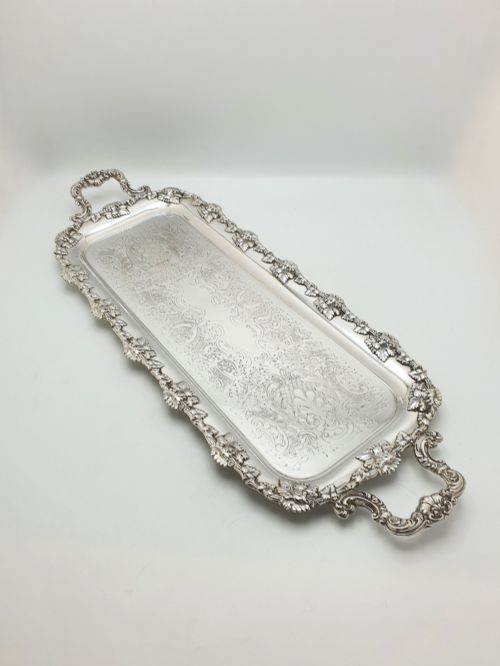
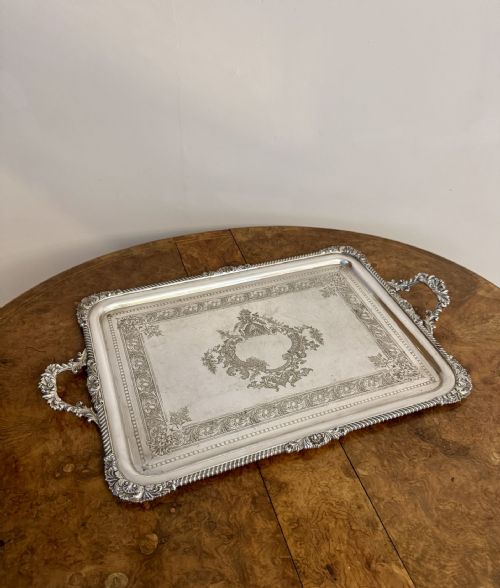
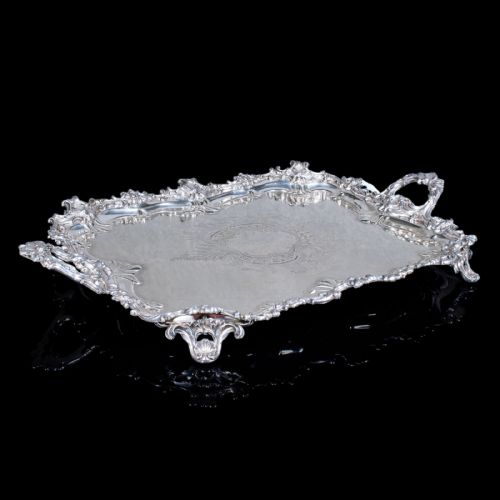
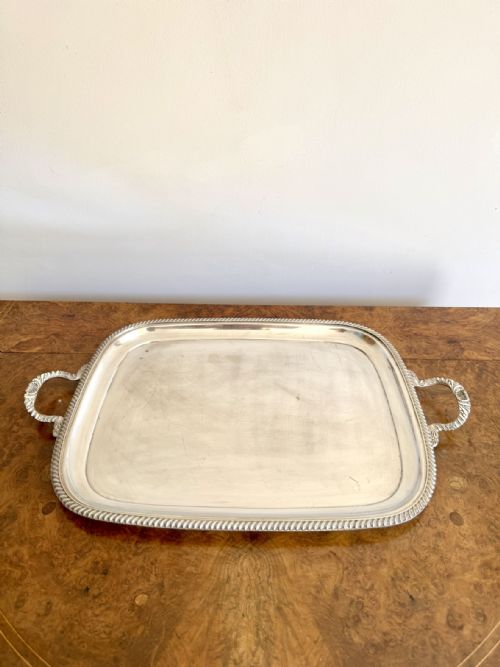
These pieces are silver handled serving tray options, designed for carrying drinks and afternoon tea while adding distinct period character to a room.
Silver Handled Serving Tray
When searching for a silver handled serving tray, a buyer encounters forms ranging from grand Victorian and Edwardian tea platters to sleek Art Deco cocktail pieces. The listings here span the nineteenth century through to the mid-twentieth century, capturing shifts in domestic entertaining.
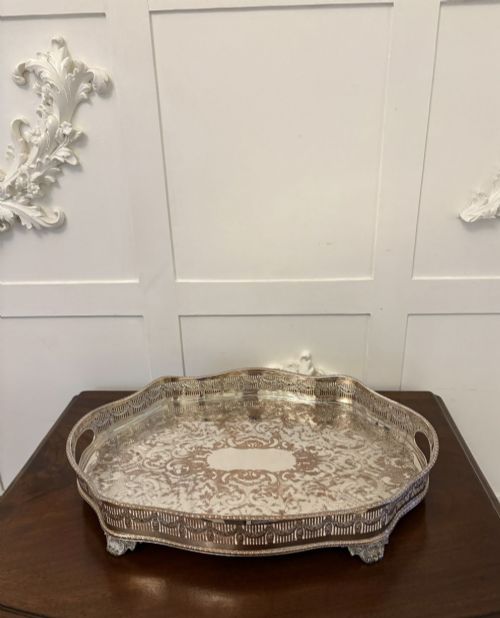
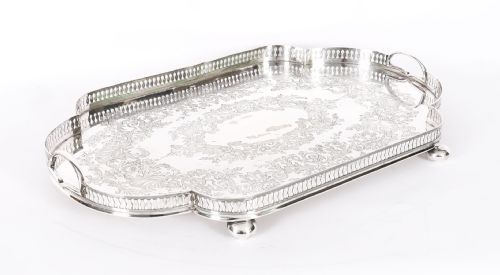
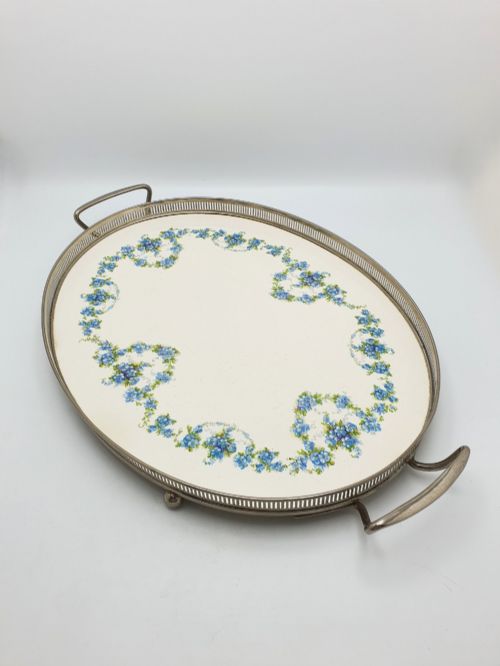
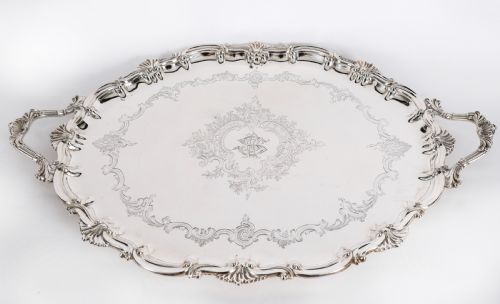
The most common examples on this page are silver plated rectangular, oval, and round trays dating from the Edwardian era and the Victorian period. These often feature pierced galleries, engraved centres, and sturdy handles designed for practical service.
Beyond traditional tea trays, the selection includes specialised forms such as gallery trays, cocktail trays, warming dishes, and presentation pieces. Makers and workshops from Sheffield, London, and international houses produced these in substantial proportions for formal hospitality.
Materials and Construction
The majority of pieces utilise silver plate, electroplated nickel silver, or EPNS over a base metal foundation, providing the visual weight and lustre of solid silver at scale. Sheffield plate and standard silver plate techniques involve fusing or depositing a silver layer onto copper or nickel alloys.
Sterling silver items appear across Victorian and twentieth-century examples, marked by traditional town assays and maker stamps. Structural elements often incorporate applied borders, cast handles, and wooden bases where oak or ebonised wood provides rigidity for larger serving surfaces.
Listings span from the Victorian period through to the 1960s, incorporating materials from standard EPNS to solid sterling silver.
Assessing Craftsmanship and Distinction
Quality in a silver handled serving tray rests upon the crispness of the chased or engraved detail and the structural integrity of the handles and feet. Finer examples display deep, hand-engraved scrollwork and heavily pierced galleries rather than shallow, stamped ornamentation.
The weight of the base metal and the thickness of the silver layer determine the longevity of the piece through generations of use. Substantial gauge metal prevents flexing across large proportions, ensuring that handles remain securely mounted to the tray body.
Mappin & Webb·James Deakin·Thomas Bradbury & Sons·John Hunt·Harrison Bros·Christofle·Elkington & Co·Hukin & Heath·J B Chatterley & Sons·Keith Murray
The Silver Handled Serving Tray Glossary
- Silver Plate
- A thin layer of silver bonded to a base metal such as copper or nickel. This technique allowed manufacturers to produce robust household wares with a precious metal finish.
- Gallery Tray
- A tray featuring an upright, pierced or pierced-metal railing around its perimeter. This decorative border prevented decanters and glasses from sliding off during service.
- EPNS
- Electroplated Nickel Silver. A common industrial standard where a coating of silver is electrically deposited onto a nickel alloy base.
- Sheffield Plate
- An early method of fusing a sheet of silver to a copper core before rolling them together. It represents a precursor to modern electroplating.
- Salver
- A flat serving tray, typically circular and raised on feet, historically used for presenting letters, glasses, or visiting cards.
Silver Handled Serving Tray: Frequently Asked Questions
How were silver handled serving trays used?
These trays served primarily for carrying tea services, decanters, and cocktail glasses from the kitchen or pantry to the drawing room. They also functioned as permanent display surfaces on side tables.
In grand houses, butlers used large gallery trays to transport heavy silver teapots and porcelain cups safely. Smaller versions were dedicated to holding after-dinner drinks and glassware for guests.
How do I care for a silver plated tray?
Maintenance requires regular cleaning with a mild silver polish and a soft cloth to remove tarnish while protecting the underlying plating. Harsh abrasives must be avoided to prevent wearing away the silver layer.
Storing the tray in a dry environment away from direct sunlight helps preserve the finish. Using felt pads underneath prevents scratching both the metal surface and the furniture it rests upon.
How do I identify the period of a tray?
Dating relies on stylistic clues, such as the geometric lines of Art Deco pieces versus the elaborate floral scrolls of Victorian design. Maker marks and registration numbers stamped on the underside also point to specific decades of production.
Heavier gallery styles and deep engraving frequently indicate Edwardian or late nineteenth-century manufacturing. Simpler, streamlined profiles often point towards mid-century or 1930s modernist output.