




Silver Guilloche Enamel Brooch
A silver guilloche enamel brooch combines engine-turned metalwork with translucent vitreous glass, offering collectors vibrant miniature art from the Edwardian era to the mid-twentieth century.
Silver Guilloche Enamel Brooch
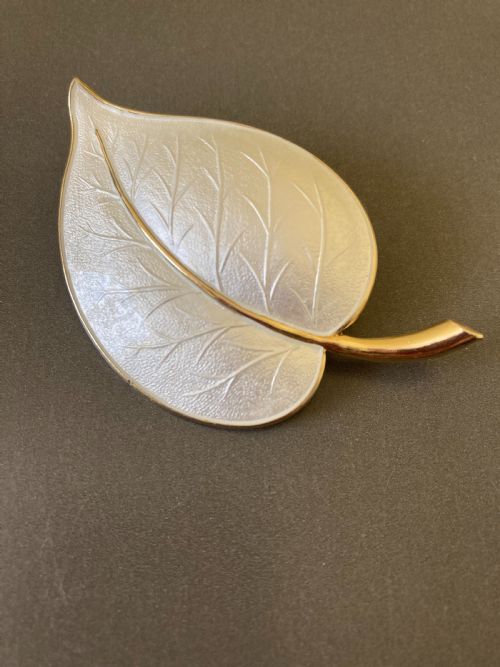
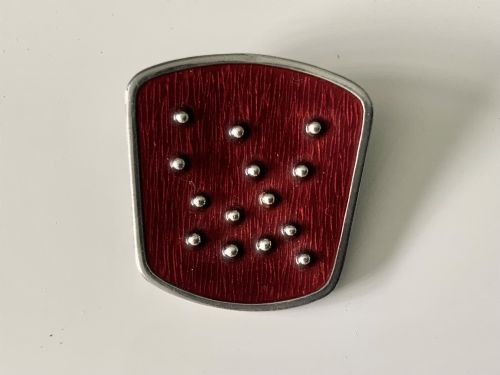
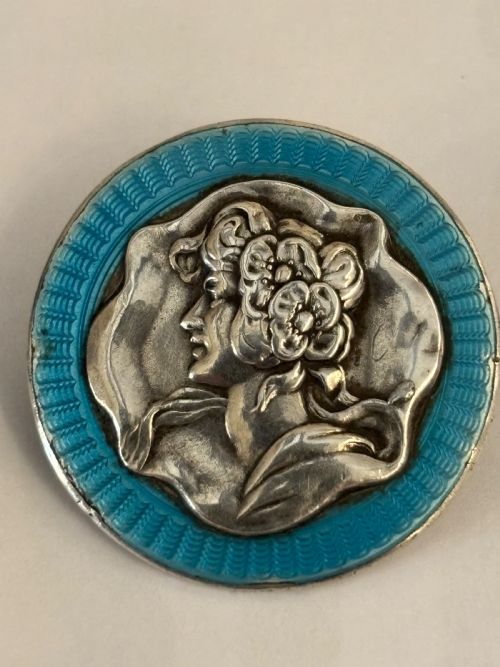
A silver guilloche enamel brooch is a pinned ornament featuring a metallic base engraved with precise geometric patterns beneath a layer of coloured glass. These pieces span multiple decades, appearing in Edwardian, Art Nouveau, and Art Deco designs alongside mid-century Scandinavian modernist forms.
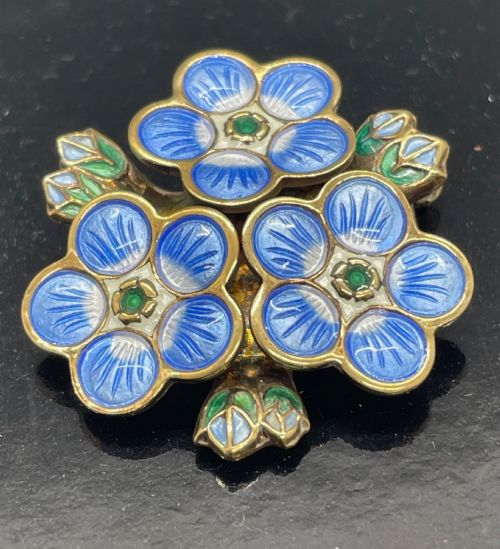
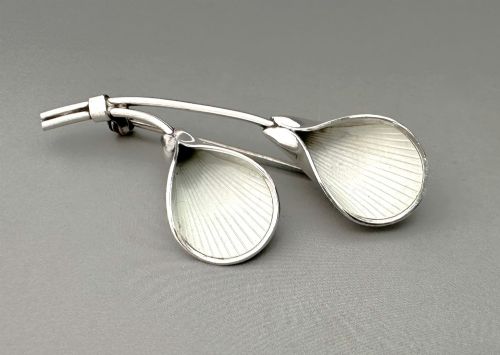
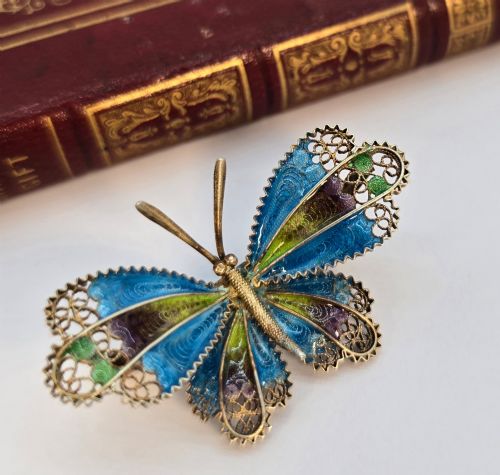
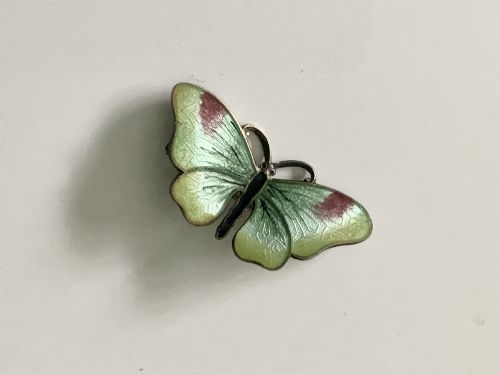
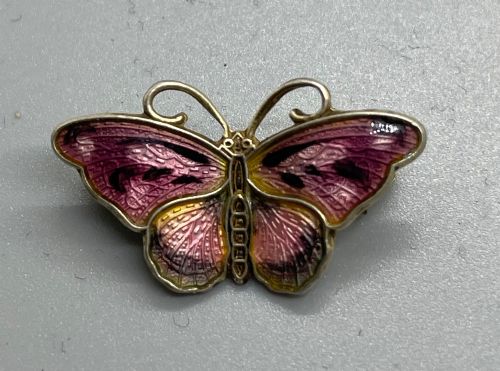
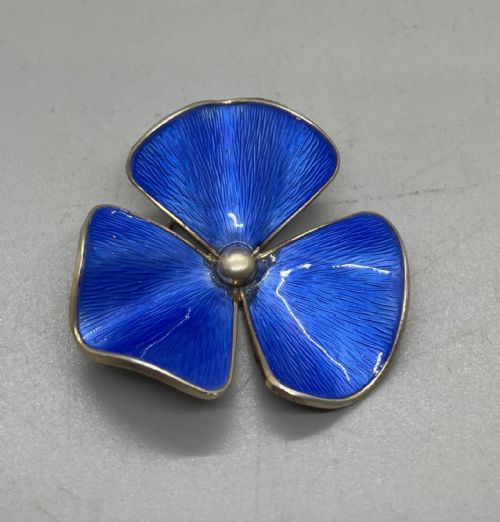
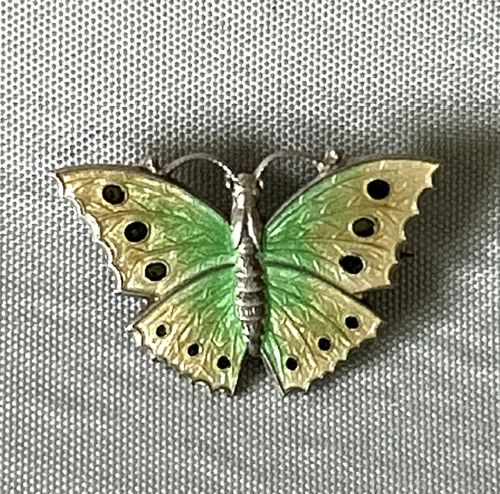
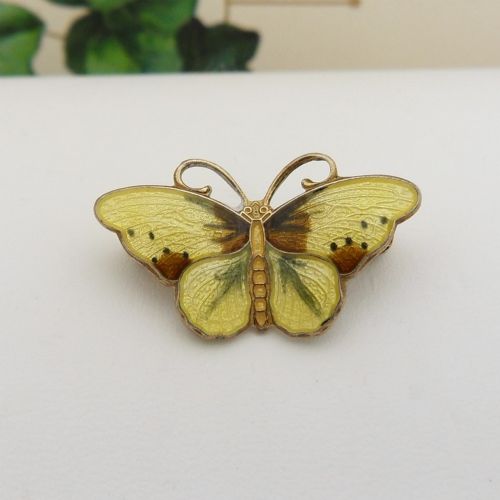
Buyers frequently encounter butterfly motifs, floral subjects, and abstract shapes executed in sterling silver, silver gilt, or gold vermeil. The inventory includes smaller bar brooches, circular pins, and occasional belt buckles created by British and continental workshops.
Examples from Norwegian makers such as Aksel Holmsen, Hroar Prydz, and Ivar T Holth dominate the regional styles, while British firms like Thomas Lyster Mott and John Atkin contributed distinct Birmingham hallmarks to the archival record.
Materials and technique
Craftsmen utilised mechanical rose engines or straight-line machines to engrave intricate, repeating patterns into a silver base. This mechanical etching created light-reflecting textures that showed through subsequent layers of coloured glaze.
Vitreous enamel, composed of powdered glass fused to the metal through high-temperature firing, provided the translucent colour overlay. Many workshops applied gold gilt or vermeil coatings over the sterling silver framework to enhance contrast against the enamel hues.
Butterflies dominate this category, proving that collectors have spent over a century letting tiny metal insects permanently land on their lapels.
Assessing quality and execution
The precision of the underlying engine-turned engraving dictates much of the visual depth, where sharper geometric regularity produces a more luminous refraction through the glass. Uneven enamel thickness or cloudiness in the vitreous layer detracts from the clarity of the underlying pattern.
Maker attribution and original gilding preservation heavily influence the standing of individual pieces. Fully legible hallmarks or distinct workshop signatures confirm the provenance of British and Scandinavian designers, separating unmarked production from documented studio output.
Aksel Holmsen·Hroar Prydz·Thomas Lyster Mott·John Atkin·Gustav Gaudernack·Ivar T Holth·Albert Scharning
The Silver Guilloche Enamel Brooch Glossary
- Guilloche
- An ornamental engraving technique that etches precise, repetitive geometric patterns into a metal substrate using a mechanical lathe. This method provides the foundational texture visible beneath translucent enamel glazes.
- Vitreous Enamel
- A material made by fusing powdered glass to a metal surface at high temperatures, creating a durable and glossy coloured coating. It resists fading and maintains its hue across decades of wear.
- Silver Gilt
- Sterling silver that has been coated with a thin layer of gold, combining the structural properties of silver with a warm golden surface finish. This treatment was common in Scandinavian and British decorative pins.
- Vermeil
- Sterling silver plated specifically with a heavy layer of gold, offering a rich coloration that mimics solid gold construction. It provides a durable golden setting for detailed enamel work.
- Marcasite
- Small, faceted pyrite stones set into silver mountings to resemble diamonds, frequently used as sparkling accents surrounding central enamel panels. These stones add contrasting texture to the borders of vintage brooches.
Silver Guilloche Enamel Brooch: Frequently Asked Questions
How do I date a silver guilloche enamel brooch?
Dating relies on a combination of stylistic markers, such as Art Nouveau curves or mid-century Scandinavian minimalism, alongside any accompanying maker marks. British pieces often feature assay office hallmarks and date letters stamped directly onto the silver reverse.
Scandinavian designs frequently rely on designer ciphers and regional standard silver stamps rather than traditional date letters. Comparing the mounting style and pin mechanism further helps narrow the decade of production.
Were these brooches used as pendants too?
Certain examples were manufactured with integrated loops or folding bails that allowed the ornament to function as both a brooch and a pendant. These convertible pieces offered versatility for different necklines and clothing weights.
Examining the reverse reveals whether a small suspension loop accompanies the standard pin stem and safety clasp. This dual functionality is particularly common in mid-century Scandinavian wildlife and butterfly motifs.
How should I clean antique enamel jewelry?
Enamel requires gentle maintenance using a soft cloth and lukewarm water without harsh chemical detergents or abrasive dips. Immersion in silver cleaning solutions can seep beneath the enamel edges or damage gold gilt surfaces.
Store these brooches individually in soft pouches to prevent scratching the glass surface against other metal items. Professional ultrasonic cleaning should be avoided due to the risk of stressing the vitreous layer.
What subjects are most common in these designs?
Natural motifs dominate the production, with butterflies, floral sprays, and birds appearing frequently across multiple decades. Butterflies showcase the symmetry of guilloche engraving particularly well through their patterned wings.
Geometric abstracts and pansy flowers are also prevalent, especially within Edwardian and Art Deco collections. Animal subjects like pheasants and swift birds represent rarer variations within the standard inventory.