



Silver Glass Open Salt
These silver glass open salt vessels bring colour and polish to a dining table.
Silver Glass Open Salt
A silver glass open salt combines a precious metal frame with a coloured glass liner, forming a miniature dish for condiments. These table salt accessories appear in Victorian and Edwardian forms, alongside Georgian and mid-century examples.
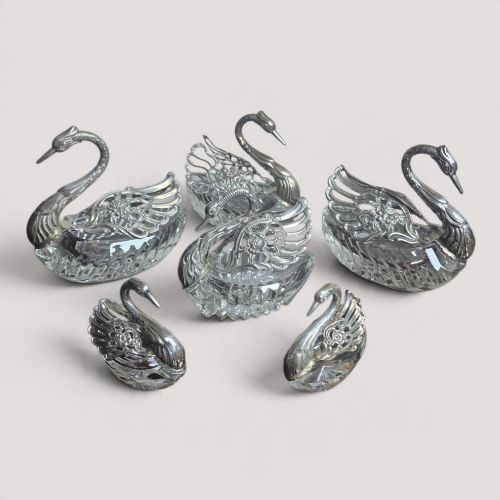
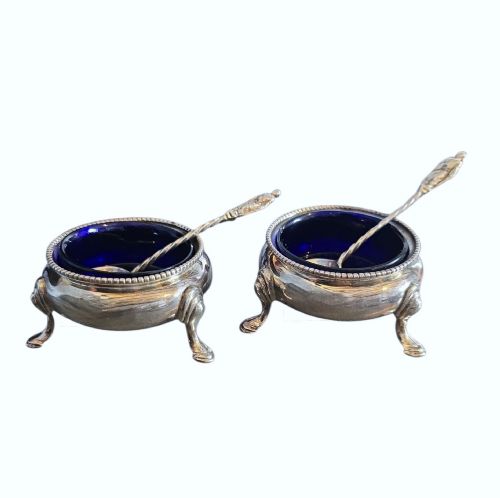
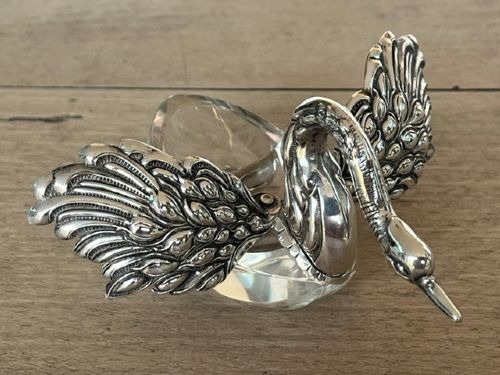
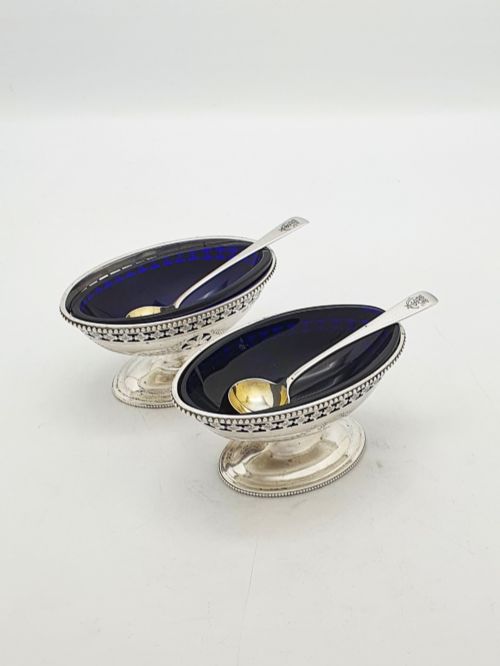
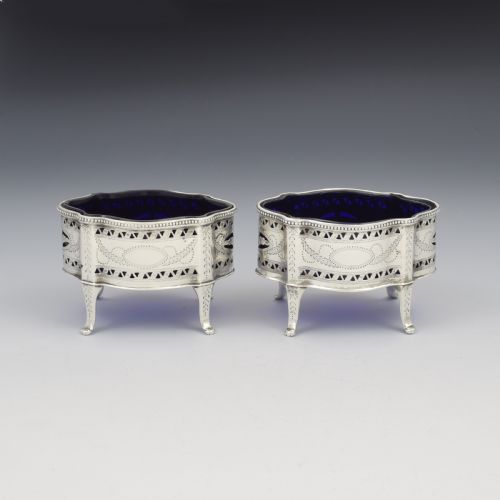
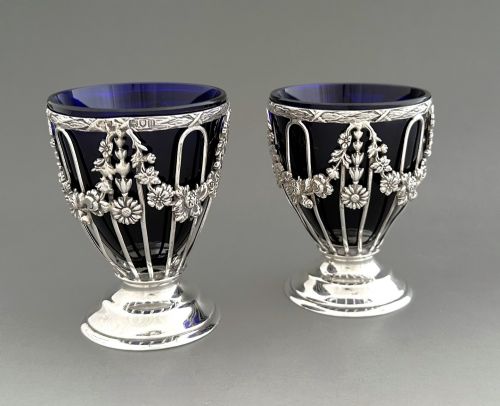
The most common formats on this page include pairs of open cellars with cobalt glass liners, pierced silver frames, and novelty shapes such as birds and boats. They function primarily as tableware and condiment stands.
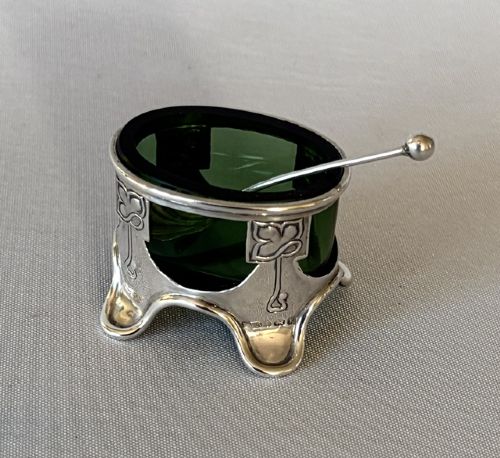
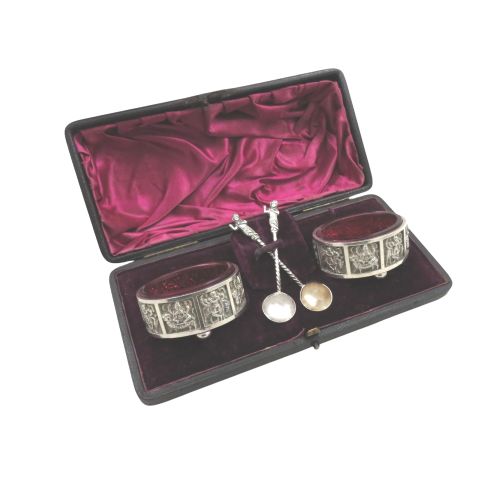
Makers utilised various styles ranging from traditional European and French Rococo to Art Nouveau. Many pieces retain original salt spoons and fitted presentation cases.
Materials and construction methods
The metal components comprise sterling silver, silver plate, and continental silver, formed through piercing, wirework, and casting. Smithing techniques produce boat shapes, serpentine bodies, and intricate novelty frames.
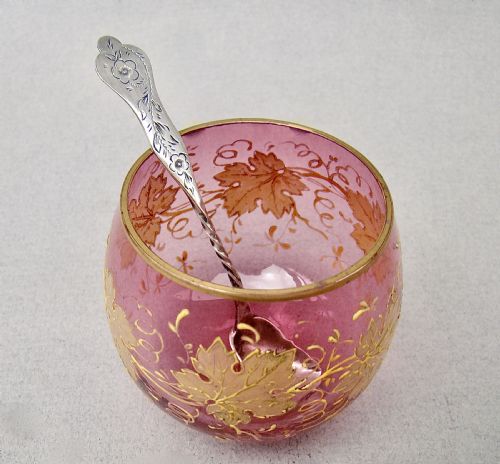
Liners consist of blown or cut glass in shades of blue, green, and cranberry. Factories such as Moser supplied specialist glassware to fit silver mounts.
Silver Glass Open Salt Retail Price Guide 2026
Typical asking prices for silver glass open salt among the pieces listed under this phrase on Sellingantiques today, from the lower quarter to the upper quarter. They describe what is for sale here now, not the wider market.
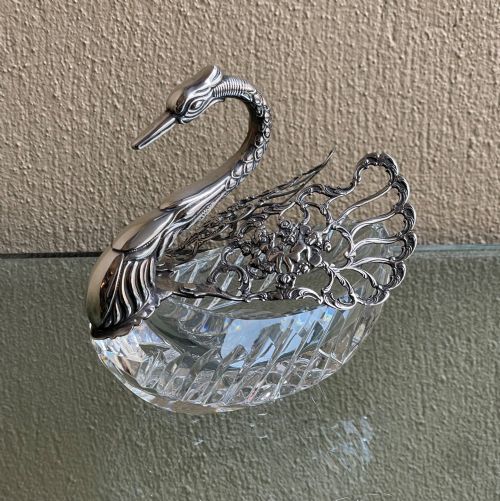
A tiny silver swan spreads its cut glass wings to hold your table salt.
Distinctions in craftsmanship and survival
Quality rests upon the weight of the metalwork and the precision of the silver frame against the glass insert. Hand-pierced detail and crisp hallmarks indicate higher production standards.
The presence of matching original spoons, undamaged coloured glass liners, and fitted boxes distinguishes complete sets from assembled items.
Beare Falcke·Josiah Williams and Co
The Silver Glass Open Salt Glossary
- Open salt
- A small vessel designed to hold loose salt on the dining table before shaker bottles became common. Diners used a tiny spoon or pinched the salt directly.
- Glass liner
- A removable insert of cobalt, green, or cranberry glass placed inside a metal salt cellar to protect the silver from corrosion. These liners lift out for cleaning.
- Sterling silver
- An alloy containing ninety-two point five percent silver by mass, with the remainder being copper or other metals. British pieces typically carry hallmark stamps verifying this standard.
- Wirework
- A decorative technique using thin strands of silver soldered together into open geometric or floral patterns. Condiment tubs often employ this method for a lighter frame.
- Quaich
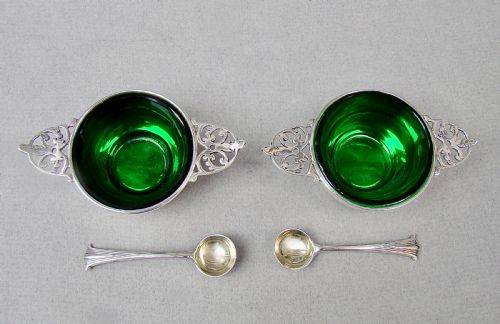
- A traditional shallow two-handled drinking vessel adapted in silver as a novelty salt cellar. Victorian silversmiths utilised Scottish forms for tabletop presentation.
Silver Glass Open Salt: Frequently Asked Questions
How were silver glass open salts used?
Diners placed these small open vessels on the dining table to hold salt. Guests used miniature spoons or pinches of fingers to take salt from the dish.
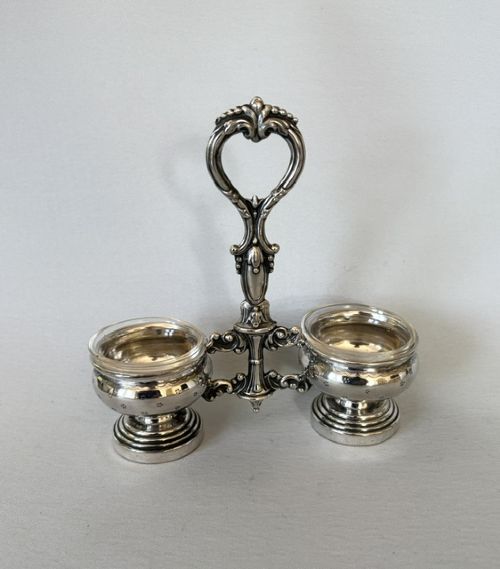
The glass liners protected the silver metal from the corrosive properties of salt. Condiment stands often held multiple open salts for various seasonings.
How do I care for silver glass open salts?
Lift the glass liners out of the silver frames before cleaning the metal and glass separately. Wash the glass liners in warm soapy water and dry them thoroughly.
Polish the sterling silver or silver plate gently with a suitable cloth. Avoid submerging cased sets or glued components in water.
How can I tell Victorian salts from Edwardian ones?
Victorian examples often feature heavier cast ornamentation, French Rococo influence, and pierced serpentine bodies. Hallmarks stamped inside the metal provide precise assay office dates.
Edwardian pieces frequently display lighter silver wirework and simpler boat shapes. Stylistic cues like Art Nouveau curves also help distinguish the eras.
Why do some salts have coloured glass liners?
Coloured glass added vibrant contrast to bright silver frames on formal dining tables. Cobalt blue, green, and cranberry glass liners became popular choices during the nineteenth century.
Maker glasshouses such as Moser produced specialised vessels to fit custom silver mounts. These liners also concealed any residue left by damp table salt.