
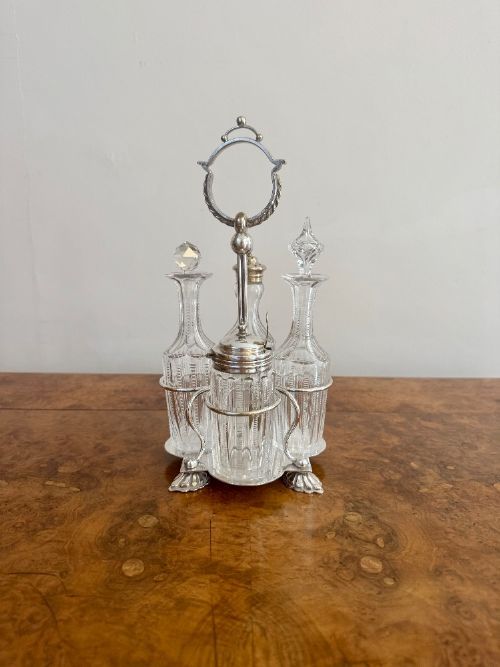
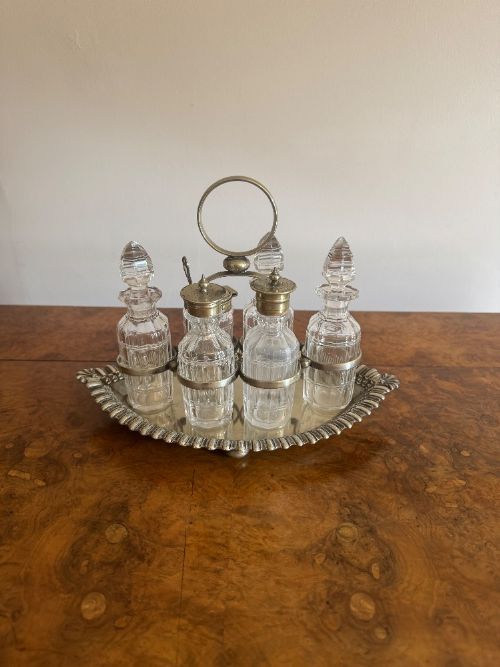
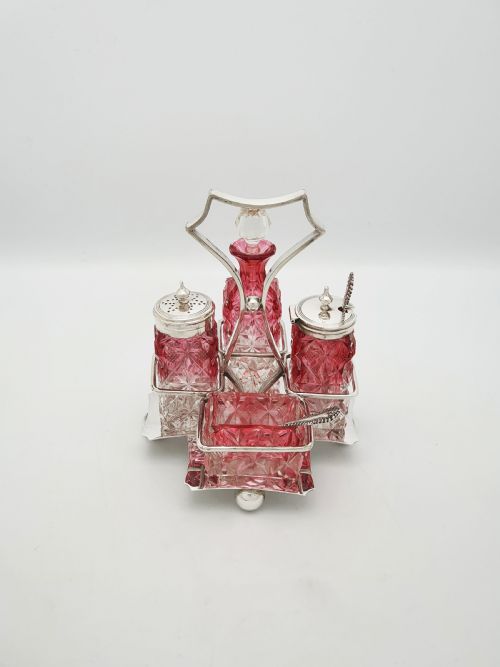
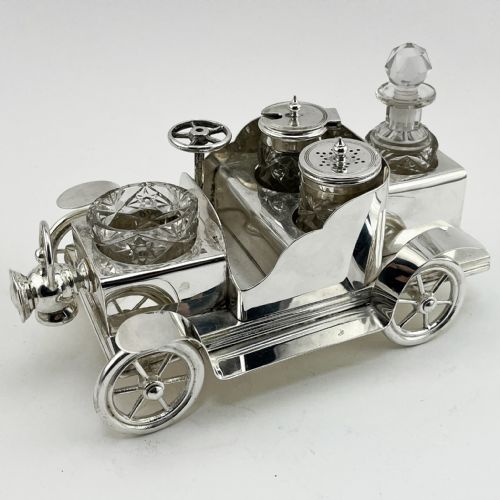


Silver Glass Oil Bottle
A silver glass oil bottle brings refined function to the table, pairing clear glass vessels with gleaming silver mounts for daily use.
Silver Glass Oil Bottle
When searching for a silver glass oil bottle, buyers encounter table vessels primarily formed as part of larger cruet sets or paired as dedicated oil and vinegar bottles. These pieces appear frequently in Edwardian, Victorian, and Georgian styles, reflecting the formal dining habits of past centuries.
The most common forms on this page include cut glass bottles fitted with sterling silver or silver plate mounts, often resting in stands or shaped as double vessels. Makers produced these for domestic dining, utilising clear, cranberry flashed, or plain glass bodies.
Originating across the eighteenth, nineteenth, and early twentieth centuries, these items demonstrate how dining wares evolved from grand multi-bottle frames to simpler pairs. Each piece combines functional liquid storage with decorative metalwork suited to period tables.
Materials and construction methods
Glass bodies were formed using cut glass and cranberry glass techniques, shaping transparent or flashed vessels designed to display culinary oils and vinegars clearly. Artisans shaped these vessels with spouts and necks to fit specific metal caps.
Mounts, stands, and caps utilised sterling silver and silver plate, often worked alongside ebonised wood frames in George III period pieces. Silversmiths applied hallmarks, chasing, and mounts directly to the glass rims to secure pouring mechanisms.
Victorian motorists required specialised cruet sets designed to rattle safely inside early motor cars.
Factors determining quality
Quality rests in the precision of the glass cutting and the weight of the silver mounts or stands. Heavier gauge sterling silver and deeply faceted cut glass indicate superior workshop production compared to lighter plated alternatives.
The integration between glass body and metal mount distinguishes finer examples, where hinged silver caps fit snugly and hallmarks remain crisp. Intact original bottles paired with matching stands command greater regard than assembled or replacement sets.
Charles Thomas Fox·Elkington and Co·Hester Bateman·Walker and Hall·Wade Wingfield Wilkins·Robert and David Hennell
The Silver Glass Oil Bottle Glossary
- Cruet set
- A matched collection of bottles, jars, or castors held in a stand for condiments and oils at the dining table. These frames often include handles and specific apertures for each glass vessel.
- Cranberry glass
- A rich red glass produced by adding gold chloride to the molten batch, popular in Victorian decorative wares. It appears frequently in flashed or layered forms on period bottles.
- Silver plate
- A layer of silver fused to a base metal core, widely utilised for nineteenth and twentieth-century table wares. This technique offered the appearance of solid silver at a more accessible cost.
- Hallmark
- An official stamp applied to precious metals indicating purity, maker, and assay office. These marks help date sterling silver mounts and identify the silversmith responsible.
- Ebonised wood
- Timber treated to resemble ebony, providing a dark, contrasting base for silver mounts. It was favored in Georgian stands to highlight bright metalwork.
Silver Glass Oil Bottle: Frequently Asked Questions
How do I clean a silver glass oil bottle?
Gently wash the glass interior with warm soapy water using a bottle brush, avoiding harsh abrasives on the exterior metal. Polish the sterling silver or silver plate mounts separately with a soft cloth to preserve the finish.
Keep moisture away from any ebonised wood components in the stand, and ensure the glass is completely dry before refilling with oil or vinegar.
Are these bottles safe for daily use?
These historical vessels function well for serving oils and vinegars at the table, provided the glass and silver mounts are sound. Inspect the interior for any residue before filling.
Hand washing is essential for preserving the antique silver plate and cut glass details. Avoid dishwashers and sudden temperature changes to protect the material.
How do I identify the period of a bottle?
Examine the style of the cut glass, the shape of the silver cap, and any visible hallmarks on the metal mounts. Georgian examples often feature simpler, heavier glass, while Victorian and Edwardian pieces utilise ornate plating and cranberry glass.
Matching the bottle to a known cruet stand or referencing maker marks helps narrow the date of manufacture. Comparing the form with documented nineteenth-century styles provides further clarity.
Did these come with stands originally?
Many oil and vinegar bottles were produced as part of larger cruet sets that rested in silver plated or wood frames. Other versions were sold as pairs with matching stands or double spouts.
Single bottles sometimes functioned independently or belonged to portable bachelor sets. Reviewing the base and mount configuration indicates whether a piece sat within a larger frame.