


Edwardian Condiment Caddy
These edwardian condiment caddy pieces are refined table accessories that organise dining salts, sauces and relishes with period elegance.
Edwardian Condiment Caddy
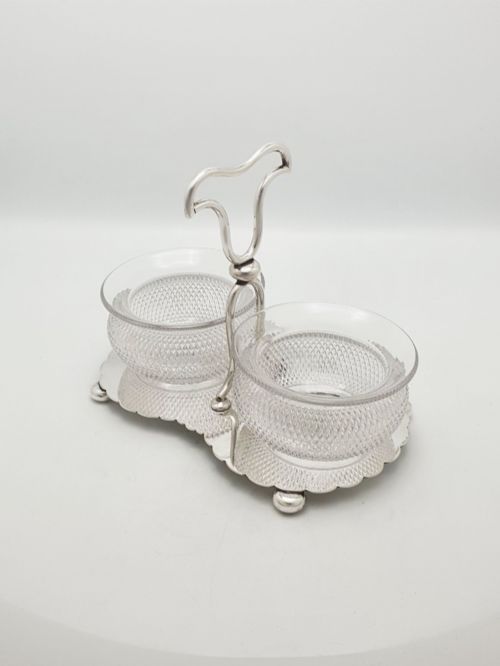
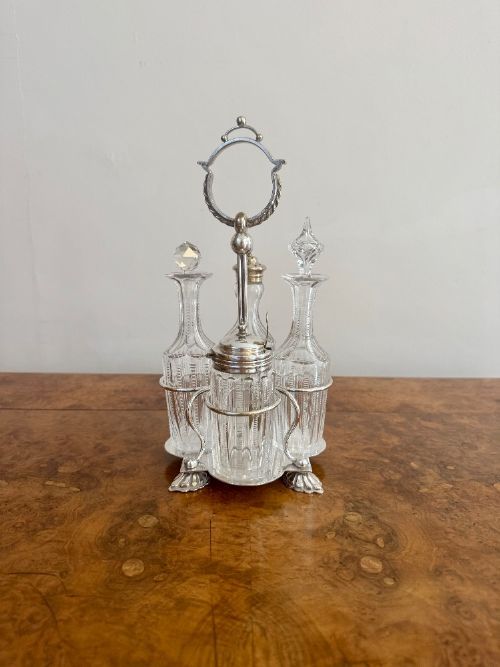
An edwardian condiment caddy brings order to the dining table through fitted stands, bottle frames and handled frames. Most examples seen here date from the Edwardian period or around nineteen hundred, taking the form of cruet sets, condiment stands and relish caddies.
The objects span multiple dining forms beyond the standard caddy, including open salts, strawberry dishes, sugar boxes and caviar ice server sets. Glass bowls, cut glass bottles and silver plated frames dominate the selection, alongside occasional sterling silver pieces.
How they were made
Silver plating on metal forms the foundational structure for the majority of these caddies and cruet stands, providing a durable and reflective finish. Cut glass and crystal are shaped into bottles, jars and twin bowls designed to fit securely within the metal frameworks.
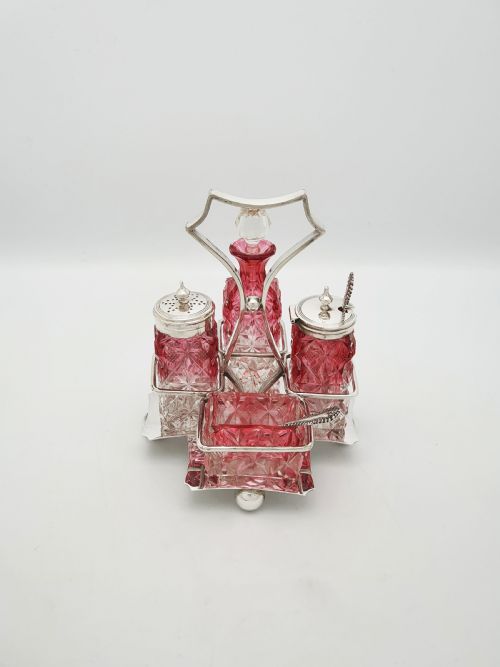
Cranberry glass and flashed glass introduce colour and visual contrast through specialised glassblowing and flashing techniques. Sterling silver is utilised for specific items like sugar boxes, while Scandinavian modern and late Victorian influences shape the decorative metalwork.
Listings feature items from nineteen hundred and nineteen twenty, spanning Edwardian, Victorian, Art Deco and Scandinavian modern styles.
What varies in quality
The standard of an edwardian condiment caddy rests upon the depth of the silver plating and the crispness of the cut glass. Sets featuring six bottles or twin glass bowls demand more intricate metal framing than single open salts.
Subtleties in proportion and the integration of cranberry flashed glass or crystal elevate certain pieces above standard tableware. The weight of the metal stand and the clarity of the glass determine the overall tier of the piece.
The Edwardian Condiment Caddy Glossary
- Cruet set
- A matched collection of glass bottles or jars held within a frame for holding condiments at the table. These sets often include receptacles for oil, vinegar, mustard and pepper.
- Silver plate
- A thin layer of silver bonded to a base metal foundation to give the appearance and lustre of solid silver. This technique allowed manufacturers to produce elaborate tableware at a lower cost.
- Cranberry glass
- A rich red-pink transparent glass created by adding gold chloride to the molten glass batch. It appears frequently in Edwardian tableware and cruet inserts.
- Cut glass
- Glass decorated by cutting facets or patterns into the surface using a rotating wheel. Deeply cut crystal catches the light and adds texture to condiment containers.
Edwardian Condiment Caddy: Frequently Asked Questions
What is an edwardian condiment caddy?
An edwardian condiment caddy is a table accessory designed to hold sauces, relishes or seasonings during meals. These pieces typically combine silver plated frames with fitted glass bottles or bowls.
They serve both a practical function on the dining table and a decorative role in period interior displays.
How were these condiment stands used?
These stands kept various dining condiments organised and accessible during formal meals. Diners could easily reach for oils, vinegars, sauces or salts placed within the central frame.
Larger cruet sets held up to six distinct bottles, while smaller caddies accommodated specific relishes or salts.
How do I clean silver plated stands?
Silver plated metal requires gentle cleaning with a soft cloth and a specialised silver polish to remove tarnish without damaging the plating. Harsh abrasives must be avoided to preserve the reflective surface.
Glass inserts and bowls can be washed separately in warm soapy water before being dried and returned to the frame.
How do I date an edwardian piece?
Dating relies on stylistic markers typical of the Edwardian era around nineteen hundred, alongside manufacturing methods like silver plating. Hallmarks or maker marks on the metal components provide precise chronological indicators.
Comparing the cut glass patterns and form styles against known period pieces helps confirm the decade of production.