


Clear Glass Condiment Set
A clear glass condiment set brings cut crystal and silver mountings to the table, offering a practical centrepiece for oils, vinegars and seasonings.
Clear Glass Condiment Set
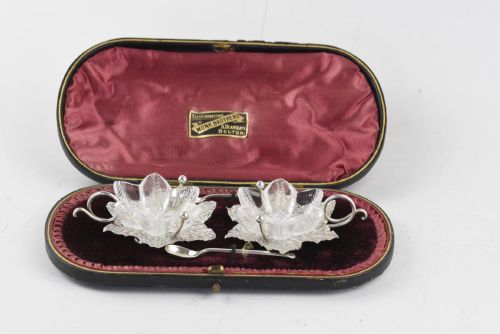
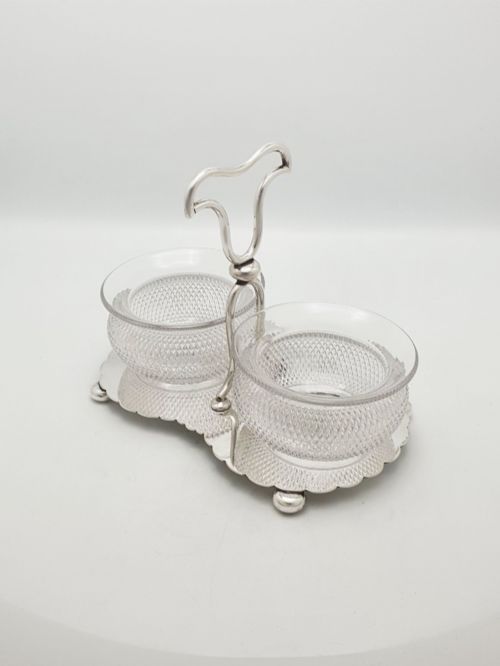
A clear glass condiment set comprises matched vessels, bottles or cellars housed within a dedicated stand or mounted in precious metal. These groupings served dining tables across several distinct eras, holding essential condiments like salt, mustard, pepper, oil and vinegar.
The versions most commonly met on this page range from Victorian silver-mounted oil and vinegar bottles to Edwardian plated stands and heavy lead crystal Art Deco cruets. They combine functional glass containers with supportive frames in silver plate, sterling silver or velvet-lined presentation pieces.
Makers produced these sets across the Georgian, Victorian, Edwardian and Art Deco periods, drawing on Regency, Aesthetic Movement and traditional styles. Buyers encounter everything from twin glass bowls in silver-plated stands to Georgian Irish cut glass salts with fitted saucers.
How they were made
The primary material is clear glass, often hand cut or formed as heavy lead crystal to catch the light on the dining table. Artisans shaped these vessels through blowing and cutting, producing faceted surfaces and geometric patterns that defined styles from the Regency period through to Art Deco.
Metal components provide structure and contrast, utilising sterling silver, silver plate and specialised mounts to secure the bottles and cellars. Craftspeople fitted these metal frames around the glass bodies, occasionally pairing them with matched spoons and velvet elements for luxury service.
Bachelor cruet sets were manufactured for single gentlemen who apparently still required distinct vessels for oil, vinegar, salt, mustard and pepper.
What varies in quality
Quality rests in the weight and clarity of the glass, distinguishing heavy lead crystal and hand-cut Irish pieces from standard pressed vessels. Superior examples display crisp, deep cutting facets and precise geometric lines that demonstrate expert handcrafting.
The metalwork further separates pieces, with substantial sterling silver mounts and fitted silver-plated frames outlasting simpler plated alternatives. Complete sets retaining their matched spoons, original glass liners and unified stands represent the higher tier of production.
Walker & Hall
The Clear Glass Condiment Set Glossary
- Cruet set
- A matched collection of bottles, jars or cellars designed to hold table condiments such as oil, vinegar, salt and pepper. These sets usually sit within a dedicated metal stand for easy transport.
- Lead crystal
- A high-clarity glass containing metal oxide that increases weight, brilliance and the refraction of light. It allows artisans to cut deeper, sharper decorative facets.
- Salt cellar
- A small open bowl or vessel used to hold salt at the dining table before the invention of the spring-loaded shaker. They frequently feature glass liners and dedicated spoons.
- Silver plate
- A base metal coated with a thin layer of silver through electroplating or older mechanical methods. This technique allowed manufacturers to produce decorative tableware with the appearance of solid silver.
- Cut glass
- Glass decorated by grinding and polishing patterns into the surface using rotating wheels. This technique creates sparkling geometric designs seen on Regency and Art Deco condiment pieces.
Clear Glass Condiment Set: Frequently Asked Questions
What is a cruet set?
A cruet set is a matched group of glass bottles or jars held in a frame for dispensing table condiments. They organise oils, vinegars and sauces for dining service.
These collections range from simple pairs to multi-piece arrangements housed in silver-plated stands.
How do I date a glass condiment set?
Dating relies on stylistic clues, mounting metals and the specific cutting techniques used on the glass vessels. Georgian and Regency pieces show different facet patterns compared to Edwardian or Art Deco designs.
Silver hallmarks and maker marks stamped on the metal stands also provide precise manufacturing dates.
Are salt cellars still useful today?
Open salt cellars function well for serving flaky finishing salts on a modern dining table. Their small glass bowls and matched spoons add practical elegance to food presentation.
Collectors also repurpose them as small trinket dishes or desk accessories.
What is lead crystal?
Lead crystal is a heavy, highly transparent form of glass that refracts light brilliantly. Its composition allows artisans to cut deep, sharp decorative patterns into the surface.
This material is common in high-quality Edwardian and Art Deco condiment bottles.
How were oil and vinegar bottles used?
Oil and vinegar bottles held liquid dressings for diners to mix at the table. They typically featured stoppers to preserve the contents and prevent spills.
Pairs of these bottles often sat securely inside silver-mounted frames.