

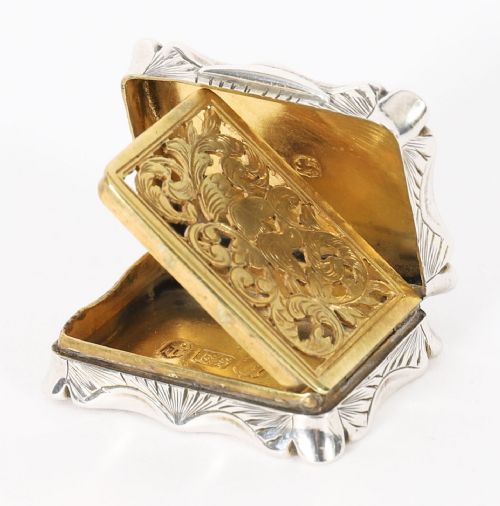


Silver Gilt Smelling Salts
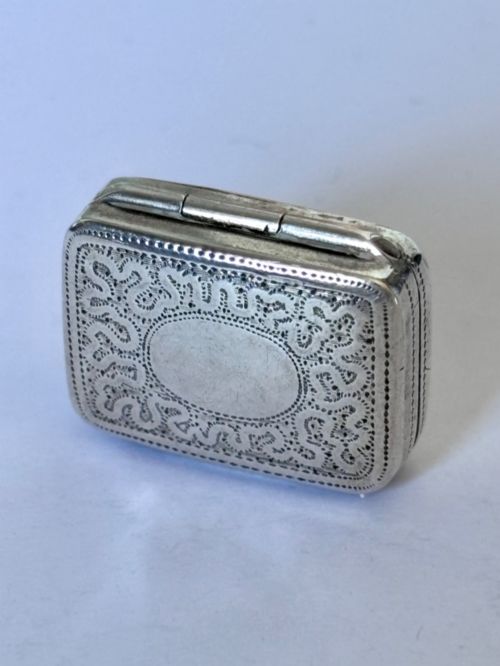
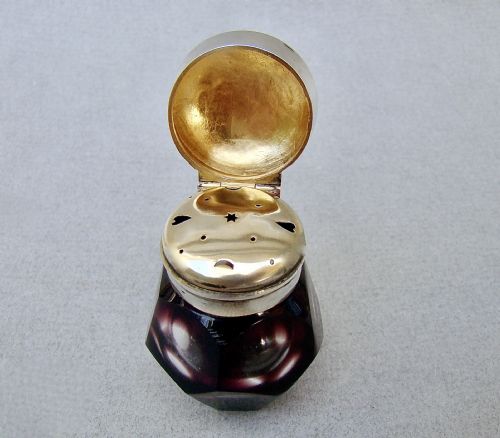
Silver gilt smelling salts are pocket containers holding fragrant salts, crafted in sterling silver with gold gilt and amethyst glass to lift the spirits.
Silver Gilt Smelling Salts
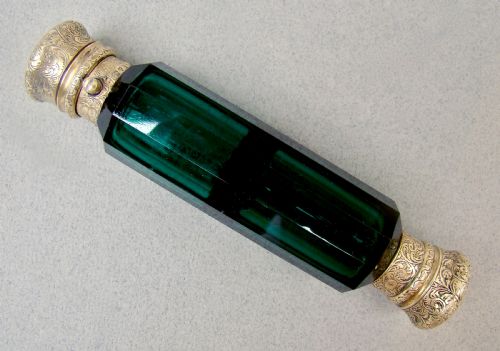
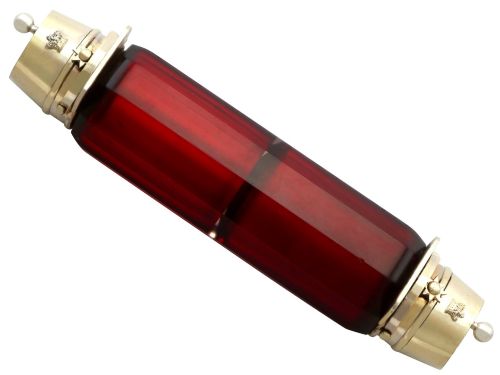
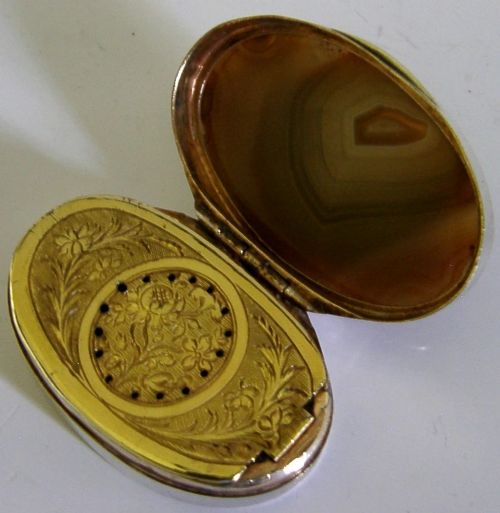
The versions you are most likely to meet on this page span the Georgian era, the William IV period, and the later Victorian years. Makers utilised materials such as agate and amethyst glass alongside sterling silver and gold gilt to create functional ornaments.
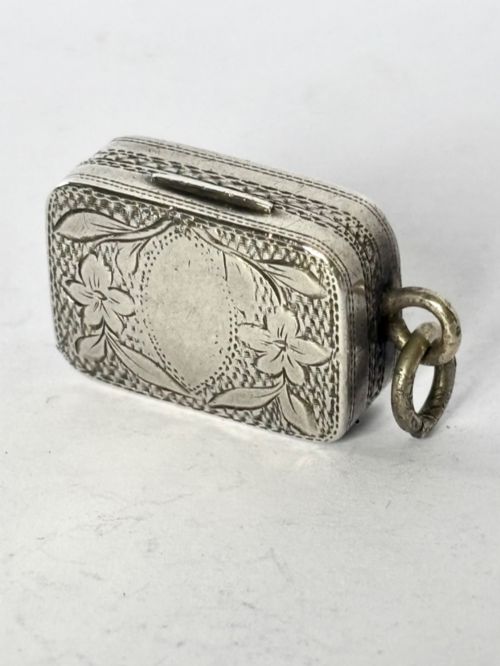
Forms range from conventional rectangular boxes to novelty pieces shaped like fish or walnuts. Each item served a practical social purpose in an era when carriage rides and crowded rooms demanded a quick restorative.
Materials and construction
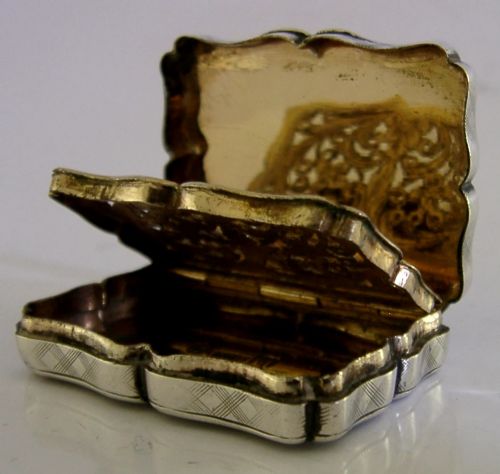
The foundation of these items is sterling silver, often heavily layered with gold gilt to protect the interior from corrosive salts. Silversmiths worked this metal alongside natural stones like agate and deep-hued amethyst glass.
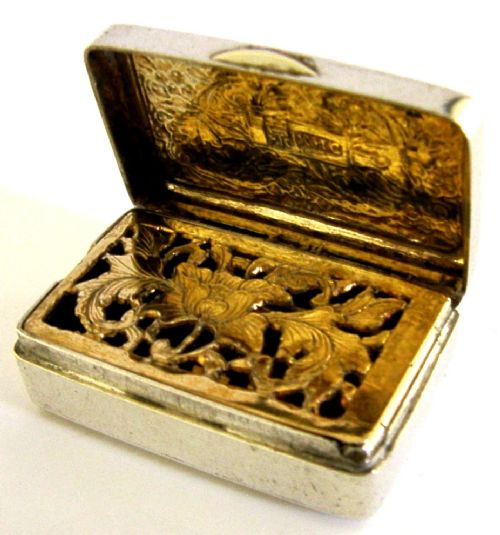
Intricate piercing and engraving formed the internal grilles of vinaigrettes, allowing the scent to escape while holding the sponge securely in place. Structural elements such as hinges and screw caps required precise metalworking to ensure a tight seal.
Listings feature Georgian, William IV, and Victorian periods, utilising sterling silver, silver gilt, agate, and amethyst glass.
Judging quality and character
The distinction between standard items and exceptional examples lies in the crispness of the chased decoration and the ingenuity of the form. Novelty shapes and pieces retaining their original fitted leather cases command greater attention from collectors.
The quality of the gilding and the intact nature of internal components, such as the original sponge or a well-pierced grille, dictate the standing of a piece. Maker marks and clear hallmarks also elevate the stature of an item.
SAMUEL PEMBERTON BIRMINGHAM·THOMAS JOHNSON·NATHANIEL MILLS·Edward Smith·Samson Mordan
The Silver Gilt Smelling Salts Glossary
- Silver gilt
- Silver that has been coated with a thin layer of gold. This technique provides the rich warm colour associated with these luxury containers.
- Vinaigrette
- A small ornamental box featuring a perforated internal grille. It held a sponge soaked in aromatic vinegar or smelling salts.
- Sterling silver
- An alloy of silver containing ninety-two point five percent silver by mass. It served as the primary metal for these antique boxes and bottles.
- Hallmark
- An official stamp applied to precious metals indicating the standard of purity, the maker, and the year of assay. These marks help date the piece accurately.
Silver Gilt Smelling Salts: Frequently Asked Questions
What are silver gilt smelling salts?
These are small, portable antique containers made from silver with a gold wash, designed to hold aromatic salts. People carried them to counter faintness or unpleasant odours in public spaces.
The pieces combine practical utility with high craftsmanship, often featuring decorative engraving and pierced internal grilles.
How do you use a vinaigrette?
A vinaigrette opens to reveal a small sponge soaked in scented vinegar or ammonia-based salts. The pierced inner lid allows the fragrance to diffuse gently when needed.
Collectors generally display these items rather than using them, though the mechanical parts remain fully functional.
How do I date these items?
Dating relies heavily on the hallmarks stamped into the silver by the assay office. These marks reveal the specific year and town of manufacture.
Stylistic clues, such as Georgian geometric engraving or Victorian naturalistic motifs like walnuts and fish, also point to the correct period.
Are all pieces made of solid silver?
The structural bodies utilise sterling silver as the base metal. This silver is then gilt with a layer of gold on the interior or exterior surfaces.
Some examples incorporate other materials like agate or amethyst glass alongside the silver components.
How should I care for my piece?
Silver gilt requires gentle handling to preserve the delicate gold layer. Avoid harsh chemical dips that can strip the gilding and damage stones like agate.
Dusting with a soft cloth is usually sufficient to maintain the surface appearance over time.