


Silver Gemstone Drop Necklace
A silver gemstone drop necklace brings together tactile metalwork and cool stones, offering an understated piece of historical jewellery to wear every day.
Silver Gemstone Drop Necklace
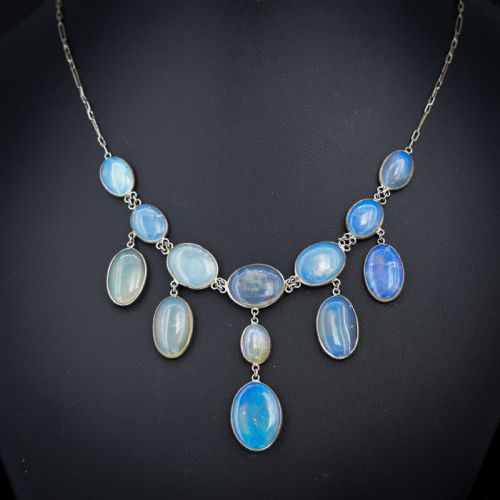
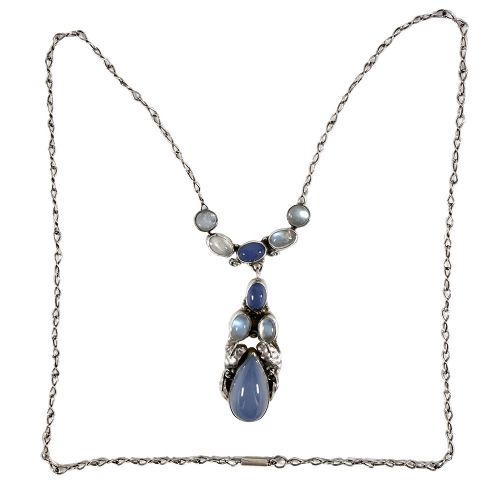
A silver gemstone drop necklace spans several defining stylistic movements from the nineteenth century through to the mid twentieth century, with Arts and Crafts and Art Nouveau examples appearing frequently.
The pieces on this page combine silver mounts with stones such as amethyst, moonstone, chalcedony, and pearl, structured either as pendants on chains or integrated festoon necklaces.
Makers and designers from the early decades of the twentieth century dominate the selection, bringing distinctive regional and workshop characteristics to the form.
How they were made
Silversmiths constructed these mounts using sterling silver and occasionally silver gilt or white gold, shaping wire and sheet metal to hold the stones securely.
Enamelling techniques, notably plique-à-jour, add translucent colour that catches the light behind or around the gems.
Gemstones are typically cabochon cut or faceted depending on the stone type, selected to complement the organic motifs of the metalwork.
At least one Austro-Hungarian maker decided that silver, enamel, pearls, and multi-gemstones all belonged in a single joyful cascade.
What varies in quality
Quality rests upon the individuality of the design and the integration of the metalwork with the chosen stones, moving from standard commercial output to master workshop pieces.
The finesse of the handwork, particularly in chased silver details and delicate enamel work, distinguishes the finest examples.
The selection and matching of stones, such as moonstones with good adularescence or clear amethysts, elevate the overall presence of the piece.
Mary Thew·Dorrie Nossiter·Liberty and Co·John Paul Cooper·Amy Sandheim·Theodor Fahrner
The Silver Gemstone Drop Necklace Glossary
- Festoon necklace
- A necklace featuring draped chains, swags, or suspended drops that sit across the collarbone. This format was especially popular during the Edwardian and Arts and Crafts periods.
- Plique-à-jour
- An enamelling technique where enamel is applied in cells without a backing, creating a stained-glass effect that lets light pass directly through. It appears frequently in Art Nouveau jewellery.
- Cabochon
- A gemstone shaped and polished with a smooth, rounded convex surface rather than faceted. This cut is commonly used for moonstones, chalcedony, and opals.
- Silver gilt
- Silver that has been coated with a thin layer of gold, providing a warm golden tone while retaining a silver base. It offers a rich contrast against coloured stones and enamel.
- Adularescence
- The optical phenomenon where a milky, bluish light shimmers across a gemstone, most notably seen in moonstones. Higher quality stones display a stronger, floating light effect.
Silver Gemstone Drop Necklace: Frequently Asked Questions
How do I wear a drop necklace?
These necklaces suit necklines that leave the pendant space clear, such as V-necks or simple round collars, allowing the drop to hang without interference from clothing fabrics.
Because many examples originate from the early twentieth century, pairing them with simpler modern attire helps the historical metalwork and stones stand out.
How do I date an antique silver necklace?
Dating relies on stylistic markers, such as the fluid whiplash lines of Art Nouveau or the hand-hammered surfaces and bezel settings typical of the Arts and Crafts movement.
Materials and specific gemstone combinations also point to particular decades, aligning with the workshop practices recorded across the period.
Are these necklaces suitable for daily wear?
While these pieces were made for regular use, softer stones like pearls and moonstones require care to avoid scratches or impact against hard surfaces.
Store them separately in lined boxes and remove them before swimming or heavy physical activity to protect the delicate silver settings and enamel.
What is the difference between Edwardian and Art Nouveau styles?
Edwardian jewellery often leans towards delicate garlands, platinum or silver work, and crisp gemstone settings that reflect an airy, neoclassical elegance.
Art Nouveau embraces organic, asymmetrical forms inspired by nature, frequently incorporating flowing plant motifs alongside enamelling and cabochon stones.