



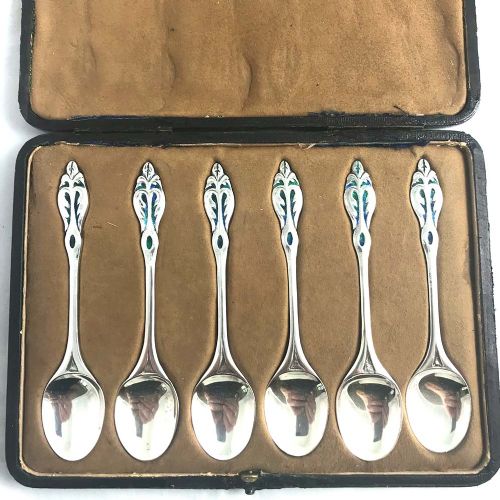


Silver Enamelled Teaspoon
A silver enamelled teaspoon brings a flash of bright colour to the table, combining precious metal with glassy vitreous decoration.
Silver Enamelled Teaspoon
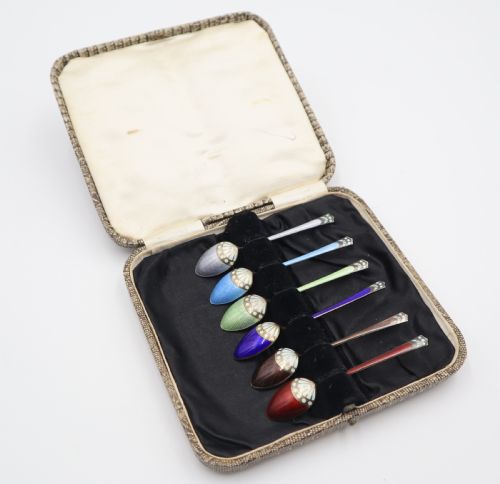
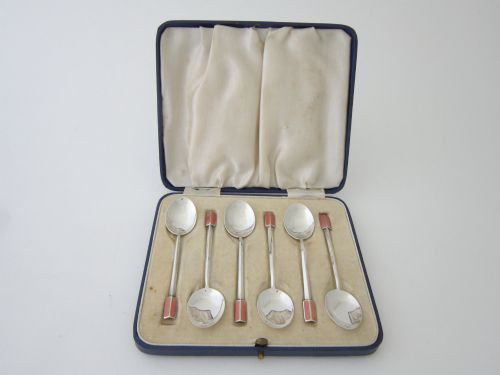
When you search for a silver enamelled teaspoon, you are looking at small flatware pieces that fuse metalworking with fused glass powder. These objects include individual items and matched sets, often found housed in velvet-lined fabric cases.
The pieces on this page span several decades from the nineteenth century through the mid twentieth century. You will encounter forms designed for tea and coffee, alongside novelty card suit designs and club commemoratives.
Origins range across British workshops and Scandinavian makers, taking in Imperial Russian pieces and specific retail houses. The styles move from organic floral motifs to geometric modernist designs.
How they were made
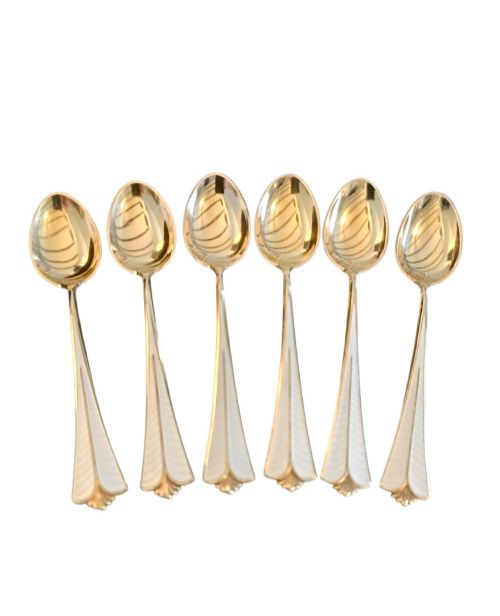
Makers shaped the spoon bases from sterling silver and solid silver, frequently applying a gold gilt layer over the metal surface. This inner wash of gold provides a rich warm contrast against the bright vitreous enamel applied to the bowls or handles.
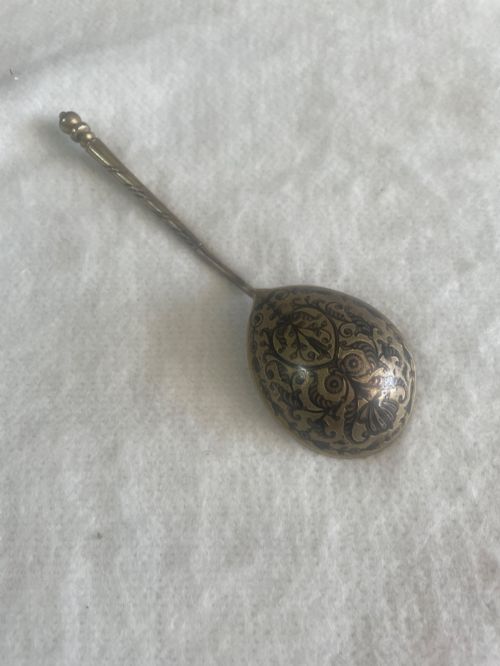
Techniques involve fusing powdered glass to metal under high heat, sometimes bounded by fine wire work in cloisonne pieces or dark contrasting niello inlays. The resulting glass surface hardens into a smooth, colourful layer that resists tarnishing.
Silver Enamelled Teaspoon Retail Price Guide 2026
Typical asking prices for silver enamelled teaspoon among the pieces listed under this phrase on Sellingantiques today, from the lower quarter to the upper quarter. They describe what is for sale here now, not the wider market.
Some spoons feature the four card suits stamped directly into the design, ready for a high-stakes tea party.
What varies in quality
The standard of these items rests on the precision of the metalwork and the clarity of the fused glass. Finer examples show crisp outlines in the metal dividers and an even, glossy finish across the coloured sections without clouding or surface pitting.
Provenance and presentation elevate certain pieces above standard production work. Complete boxed sets with their original fitted fabric cases and attribution to notable designers or makers distinguish the higher tiers of the range.
David Andersen Norway·Vasily Agafonov·Liberty & Co
The Silver Enamelled Teaspoon Glossary
- Sterling Silver
- A standard alloy consisting of silver and other metals to increase durability. It provides the structural foundation for many twentieth-century teaspoons.
- Silver Gilt
- Silver that has been coated with a thin layer of gold. This treatment gives the spoon a warm, golden interior glow.
- Niello
- A black metallic alloy used as an inlay on engraved silver. It creates sharp, dark contrasting patterns against the bright silver background.
- Cloisonne
- An enamel technique where thin metal wires are soldered to the metal base to create compartments for glass paste. These wires define the intricate patterns seen on the finished spoons.
Silver Enamelled Teaspoon: Frequently Asked Questions
How were silver enamelled teaspoons used?
These small spoons served practical and social roles in formal domestic hospitality, primarily for stirring tea or coffee. Many sets were kept specifically for special occasions and afternoon gatherings.
Because of their decorative nature, they also functioned as presentation pieces, club prizes, or commemorative gifts, often preserved safely in fitted presentation boxes.
What periods do these spoons come from?
The pieces span the late nineteenth century through to the middle of the twentieth century. Early examples often feature intricate traditional work, while later decades favour geometric designs.
Stylistic shifts reflect broader artistic movements, moving from organic floral aesthetics to clean modernist lines over the course of several decades.
How do I care for enamelled silver?
Glass enamel and silver require gentle handling to preserve their surfaces over time. Cleaning should involve soft cloths and mild solutions rather than harsh abrasive dips that might harm the vitreous glass.
Storing pieces in their original fabric cases protects the delicate enamel work from scratches and minimises exposure to tarnish-causing air.
Are these spoons usually found in sets?
While individual spoons appear regularly, many surviving examples remain together in matched sets of four or six. These collections frequently retain their original fitted presentation boxes lined with satin.
Complete cased sets were standard for gifting and formal dining, which helps explain why many survive today in preserved groupings.