





Enamelled Demitasse Spoon
An enamelled demitasse spoon is a small, bright piece of functional silverwork that brings sharp colour and careful metalwork to the after-dinner coffee table.
Enamelled Demitasse Spoon
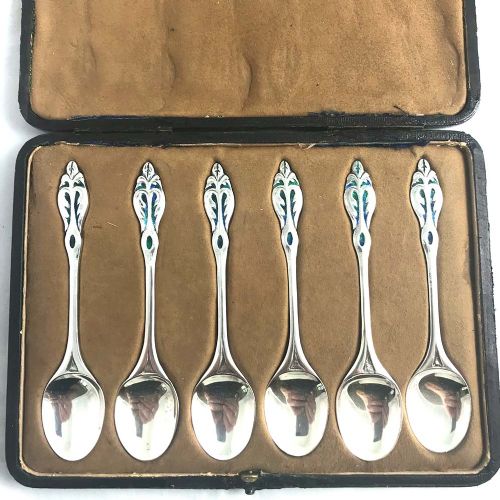
When you search for an enamelled demitasse spoon, you enter a field of miniature silver flatware designed specifically for small coffee cups. These pieces combine miniature bowls and stems with coloured glass or vitreous pastes fused to the metal surface.
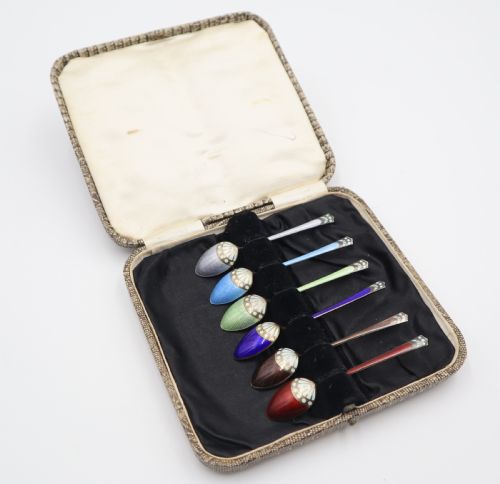
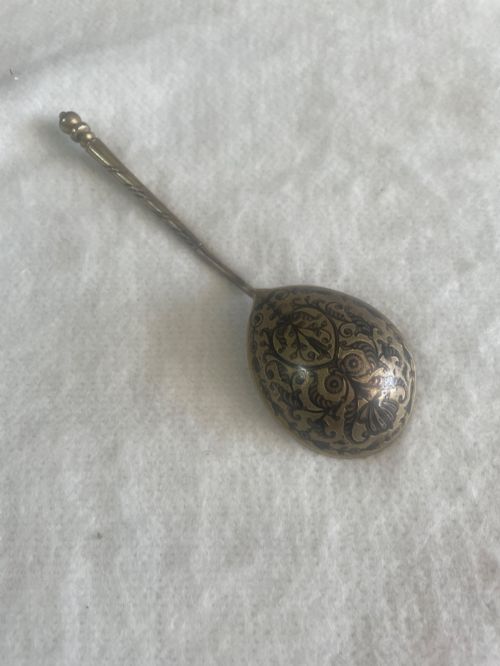
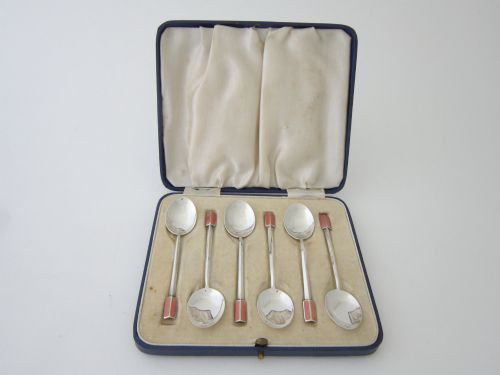
You are most likely to meet cased sets of six from the twentieth century, particularly items from the Art Deco period or mid-century British makers. Single nineteenth-century examples and Russian works also appear.
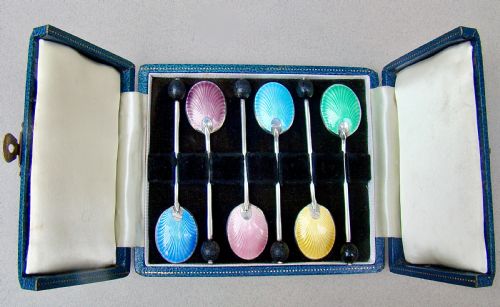
The forms range from simple bean-knop terminals to intricate cloisonné patterns across the handle and back of the bowl. They frequently survive inside their original fabric-lined presentation cases.
Materials and construction
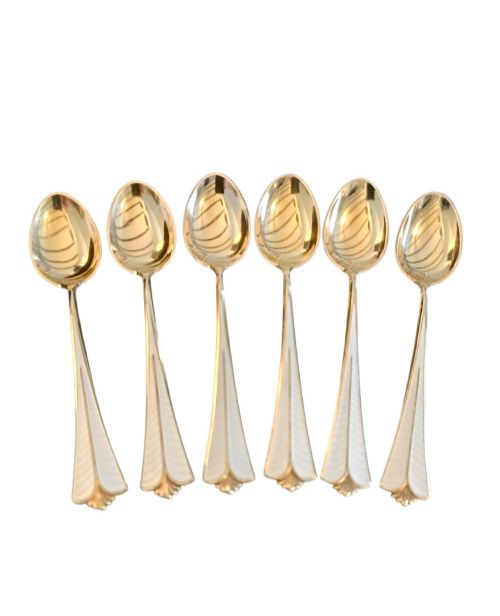
Makers formed these spoons from sterling silver or silver gilt, often applying a layer of gold over the silver base to give a warm interior glow to the translucent enamel. The metal provides a rigid skeleton for the glassy surface decoration.
Coloured glass paste is melted into recessed compartments on the spoon, known as champlevé or cloisonné, or laid over an engine-turned guilloché background. Firing in a kiln fuses the vitreous enamel permanently to the silver.
Enamelled Demitasse Spoon Retail Price Guide 2026
Typical asking prices for enamelled demitasse spoon among the pieces listed under this phrase on Sellingantiques today, from the lower quarter to the upper quarter. They describe what is for sale here now, not the wider market.
Some sets feature 'bean-knop' terminals, giving each tiny spoon the appearance of ending in a miniature vegetable.
Assessing quality and execution
The distinction between standard production items and finer pieces lies in the precision of the metalwork and the clarity of the enamel. Crisp guilloché patterns beneath translucent layers show greater hand labour than flat opaque fills.
Complete sets remaining within their original fitted fabric cases hold a different status from scattered individual spoons. The preservation of the gilding on the silver gilt surfaces also indicates how well the piece was cared for over the decades.
Turner & Simpson·David Andersen·Vasily Agafonov·Liberty & Co
The Enamelled Demitasse Spoon Glossary
- Demitasse
- A small cup used for serving strong black coffee after a meal. The spoons made for these cups are noticeably smaller than standard teaspoons.
- Vitreous enamel
- Glass powder melted at high temperatures onto a metal substrate. It creates a hard, glossy coloured surface that resists wear.
- Silver gilt
- Silver objects that have been coated with a thin layer of gold. This technique protects the silver from tarnish in the bowl.
- Guilloché
- A decorative mechanical technique that etches precise geometric patterns into metal. Enamel applied over this pattern catches the light from beneath.
- Cloisonné
- An enamel technique where thin metal wires are soldered to the metal base to form cells. Coloured pastes are packed into these wires before firing.
Enamelled Demitasse Spoon: Frequently Asked Questions
What were enamelled demitasse spoons used for?
These small spoons were designed specifically for stirring sugar into strong after-dinner coffee served in small demitasse cups. Their diminutive size suited the restricted proportions of the cups.
Beyond functional use at the dining table, sets of these spoons were frequently given as wedding gifts or presentation pieces, often remaining protected inside fabric-lined cases.
How do you clean silver and enamel spoons?
Cleaning requires a cautious approach because the glass enamel and thin gold gilt can be damaged by harsh abrasives or strong chemical dips. Warm soapy water and a soft cloth are usually sufficient for removing mild tarnish.
Care must be taken to avoid abrasive metal polishes on the enamelled sections, as rubbing can dull the glassy surface or scratch the delicate metal wires.
How can I tell Art Deco spoons apart from older pieces?
Art Deco pieces from the 1920s and 1930s often feature geometric motifs, stepped terminals, and bright, high-contrast enamel colours. They reflect the modern industrial design influences of the interwar period.
Nineteenth-century examples tend to show traditional floral motifs, niello work, or heavier cloisonné techniques associated with Imperial Russian workshops rather than clean modernist lines.
Why do some sets include fabric cases?
Makers and retailers housed better quality flatware in fitted fabric cases to protect the fragile enamel surfaces from scratching against each other in storage. These boxes preserved the pieces in nearly unused condition.
Finding a complete set of six spoons in an original velvet or silk-lined box indicates that the service was treated as a special possession from the time of purchase.