
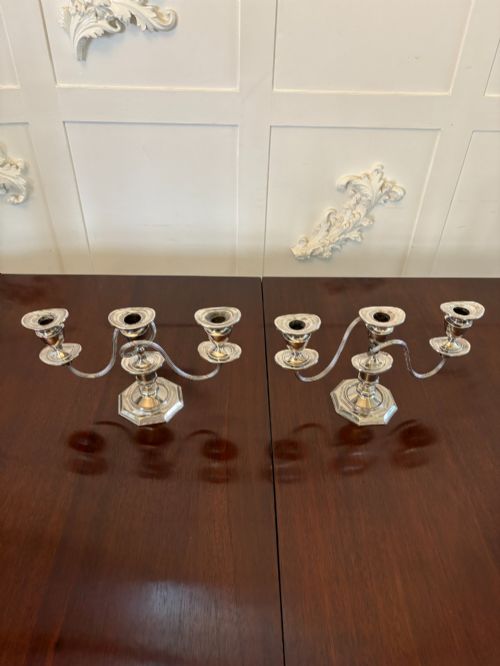
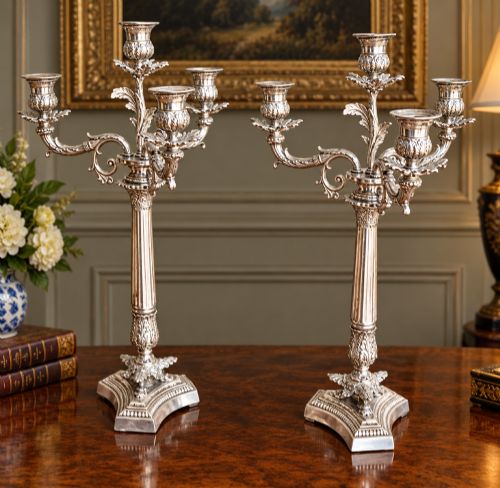
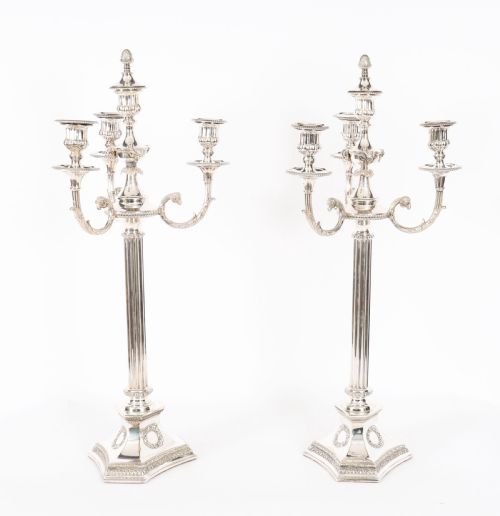
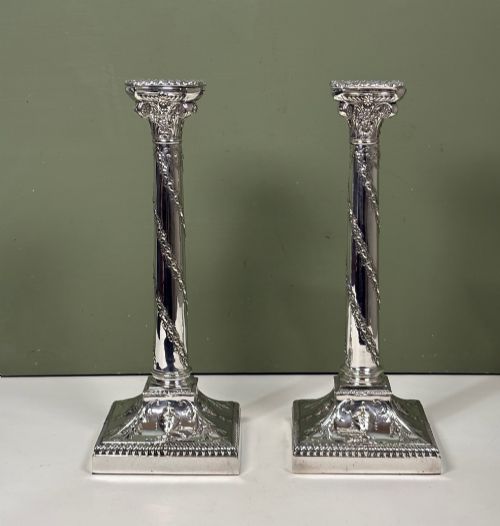
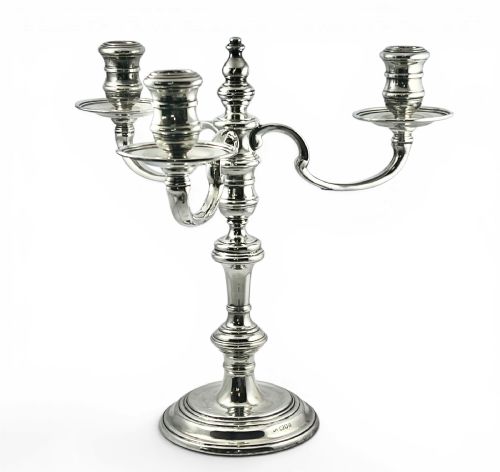
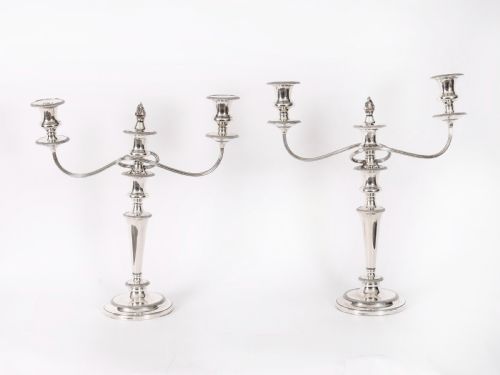
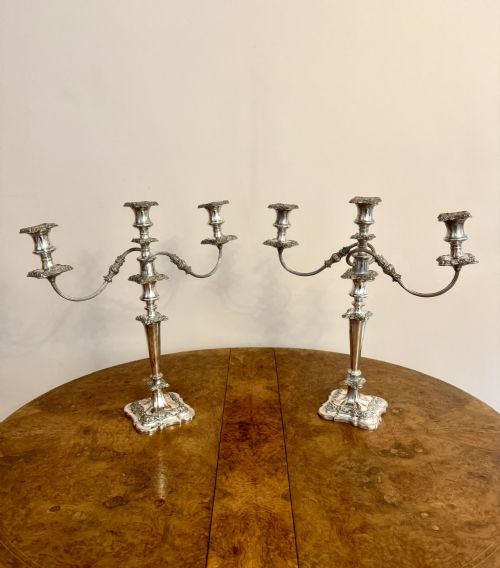
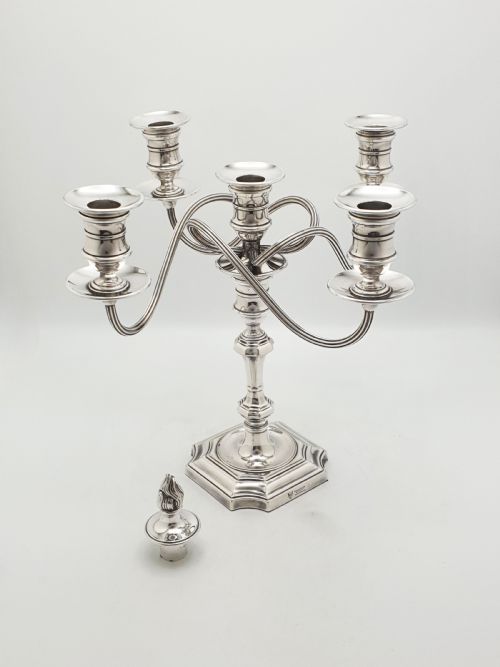
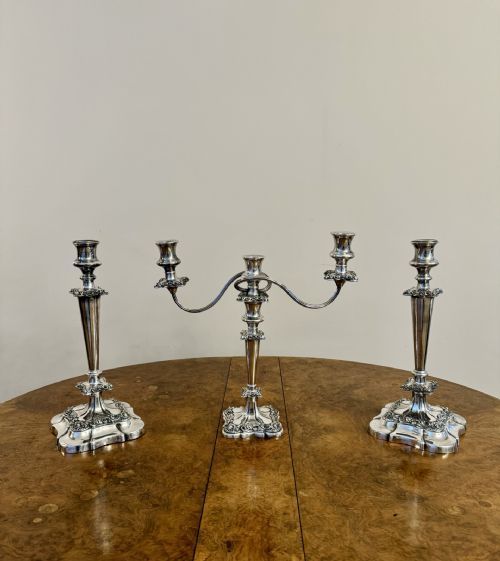


Silver Dining Table Candelabra
Silver dining table candelabra command attention at any feast, casting a warm, flickering glow from multiple branches.
Silver Dining Table Candelabra
Silver dining table candelabra are multi-branch lighting pieces designed to sit centrally during meals, providing illumination from candle power. You will frequently encounter large pairs and suites dating from the Victorian and Edwardian eras.
The selections span from the mid-nineteenth century up through the mid-twentieth century, showcasing styles like Victorian Rococo Revival and Neoclassical. These lighting devices often feature detachable branches that allow the main support to function as a standalone candlestick.
Common configurations include two-branch, three-branch, four-branch, and five-branch setups, sometimes accompanied by matching candlesticks. Origin points range from English workshops in London and Sheffield to continental European makers.
Materials and construction methods
Makers utilised solid sterling silver alongside various plated metals, notably silver plate, Old Sheffield plate, and electroplated nickel silver over a base metal core like copper. Many larger antique examples employ a weighted base to maintain stability on the dining surface when branches are fully loaded with candles.
The manufacturing process involved casting detailed decorative elements such as cherubs, lyres, and scrolling foliage, which were then soldered or mechanically joined to the central shafts and branch arms.
Listings feature items spanning from 1850 to 1968, utilising sterling silver, silver plate, copper, and nickel silver across Victorian, Edwardian, and Art Deco styles.
Distinctions in craftsmanship
The level of ornamentation dictates much of the distinction, separating plain utility lighting from heavily chased and embossed showpieces with intricate cast scrollwork and figural details. Heavier gauge metal and robust construction ensure that the branch arms remain rigid rather than sagging under the weight of the sconces.
Makers known for exceptional output, such as Garrard or Elkington, typically executed crisper details in the relief work and applied heavier layers of silver plating that endured decades of polishing without exposing the base metal beneath.
Garrard & Co·Smith & Sissons·Elkington·Blagden Hodgson And Co·Barker Ellis
The Silver Dining Table Candelabra Glossary
- Candelabrum
- A large branching candlestick designed to hold multiple candles simultaneously. The plural form candelabra is frequently used even when referring to a single piece.
- Sconce
- The small cup at the end of a branch that directly holds the base of the candle. These are often detachable for easier cleaning.
- Electroplated Nickel Silver
- A base metal alloy of copper, nickel, and zinc coated with a thin layer of pure silver through an electrolytic process. It became a dominant method for producing affordable silver-appearance tableware.
- Sheffield Plate
- An early fusing technique where a sheet of sterling silver was fused to a thick copper core by heat and pressure. Pieces produced this way display a characteristic thin copper line along exposed edges.
- Chasing
- A metalsmithing technique where a hammer and punch are used to ornament or emboss the surface from the front. This pushes the metal inward to create raised decorative designs without removing material.
Silver Dining Table Candelabra: Frequently Asked Questions
How do I clean tarnished silver candelabra?
Use a soft microfibre cloth alongside a reputable liquid or paste silver polish designed specifically for plated or sterling surfaces. Avoid harsh abrasive pads that can wear down thin plating layers.
Work gently around embossed details and crevices where polish residue might accumulate, then rinse thoroughly with warm water and dry immediately to prevent spotting.
How do I distinguish sterling silver from silver plate?
Examine the piece closely for hallmarks, which typically include a lion passant or numerical purity marks indicating solid precious metal content. Silver plated items usually lack these official assay marks or bear maker-specific marks indicating electroplate.
Look closely at raised edges or high-contact zones where the underlying base metal might show through as a yellowish or coppery hue if the silver layer has worn away.
Were these always used as dining table centrepieces?
While many substantial examples were specifically commissioned to stand in the middle of formal dining tables, smaller pairs were frequently placed on sideboards, mantels, or pier tables.
The inclusion of detachable branches in many designs allowed owners to reconfigure the pieces as simple candlesticks for smaller settings or different rooms.