



Vintage Silver Branch Candelabra
These vintage silver branch candelabra bring botanical form and branching light to a table, combining sculptural weight with practical illumination.
Vintage Silver Branch Candelabra
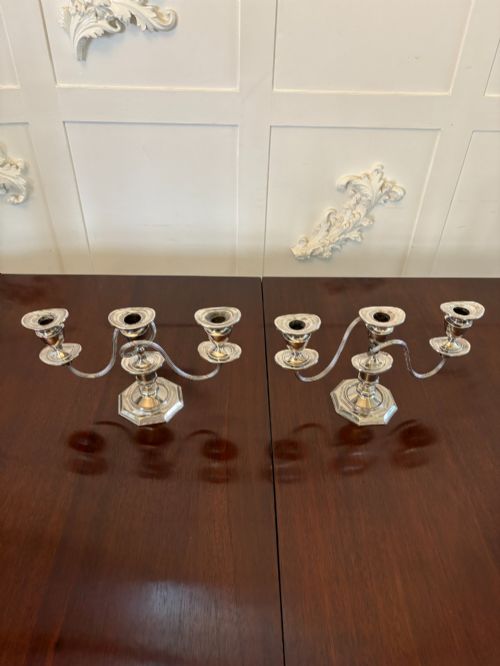
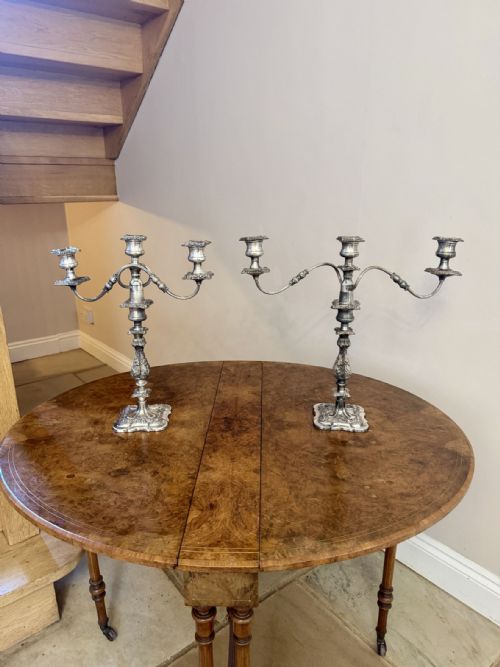
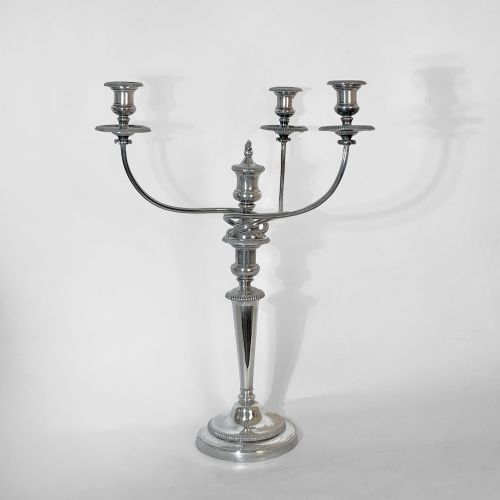
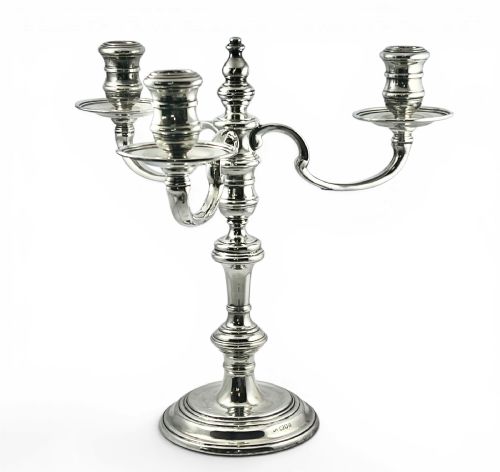
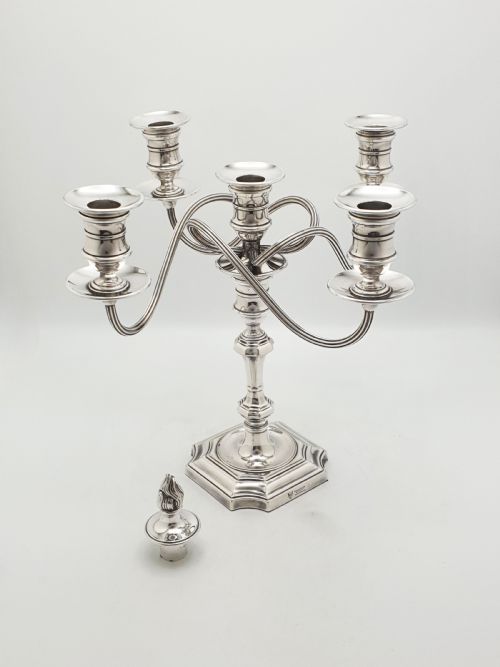
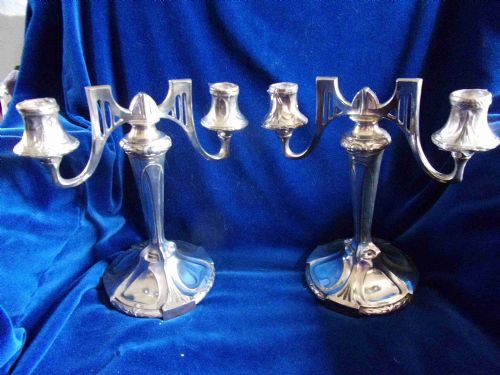
When you search for vintage silver branch candelabra, you are looking at multi-light table pieces that mimic the growth of natural branches or incorporate botanical motifs into their design. The selection includes pairs and single pieces spanning the nineteenth century through the mid-twentieth century.
The most common examples you will meet on this page are silver plated or sterling silver pieces shaped in Victorian Naturalism, Art Nouveau, or Jugendstil styles. These range from low two-branch table lights to large five-light candelabras with elaborate branching arms.
Makers and origins vary widely, featuring English production from Sheffield and London alongside Continental and Italian workshops. Forms encompass traditional multi-arm candelabras, centrepieces incorporating dish elements, and figures styled in Art Deco or Regency revivals.
How they were made
Construction relies heavily on silver plate, Old Sheffield plate, and solid sterling silver, alongside underlying metals such as copper, nickel silver, and spelter. Many pieces combine these metallic foundations with cast or hand-wrought elements to achieve organic branching structures.
Techniques range from traditional Sheffield plating and electroplating on nickel silver (EPNS) to hand-wrought fabrication and silver smithing. Artisans soldered or cast individual arms and drip pans to mimic the irregular, flowing contours of real tree branches and vines.
Listings feature pieces spanning the Victorian, Edwardian, and Art Deco periods, created in sterling silver, Sheffield plate, and silver plate.
What varies in quality
Quality rests on the crispness of the botanical casting and the structural integrity of the branching arms where they join the main shaft. Superior examples display deep, deliberate chasing and hand-wrought details rather than softened, mass-produced surface relief.
The choice of material also dictates the grade of the piece, with substantial sterling silver or heavy Old Sheffield plate demonstrating superior weight and longevity compared to thin electroplate over base metal. Proportion and balance under the weight of multiple candles separate standard production from exceptional workshop output.
Barker Ellis·Blagden Hodgson And Co·Elkington And Company·Robert Edgar Stone
The Vintage Silver Branch Candelabra Glossary
- Sheffield Plate
- A fused composite material made by melting a sheet of silver onto a thicker copper base before rolling them together. This technique was largely superseded by electroplating in the nineteenth century.
- EPNS
- Electroplated Nickel Silver, denoting a base metal alloy of copper, nickel, and zinc coated with a layer of pure silver through an electrolytic process.
- Jugendstil
- The continental European counterpart to Art Nouveau, prevalent around nineteen hundred, characterised by fluid, plant-inspired linear designs.
- Candelabra
- A branched candlestick holder designed to support multiple candles simultaneously from a single central base.
- Victorian Naturalism
- A nineteenth-century design movement that favored literal representations of flora and fauna, frequently seen in twisted branch and leaf motifs.
Vintage Silver Branch Candelabra: Frequently Asked Questions
What is the difference between Sheffield plate and silver plate?
Sheffield plate refers to an older mechanical fusion method where a thin sheet of sterling silver is fire-fused to a copper core. This produces a distinctive cross-section where the underlying copper may eventually show through high points.
Standard silver plate involves depositing a layer of silver electrically onto a base metal such as nickel silver or brass. This method became dominant after the mid-nineteenth century and provides a more uniform silvery coating.
How many candles do these candelabra hold?
These candelabra typically hold between two and five candles, depending on the number of branching arms and central sockets. Two-arm and three-light configurations are common for table use, while larger five-light examples provide substantial illumination.
Check the nozzle diameters carefully, as older European and English sockets often require specific tapered candle sizes to fit securely without wobbling.
How do I date a Victorian naturalism candelabrum?
Examine the piece for hallmarks, registry marks, or maker stamps located on the base, drip pans, or underside. Victorian naturalism pieces from the mid to late nineteenth century frequently combine organic branch motifs with heavy cast construction and traditional Sheffield or early electroplate techniques.
Stylistic cues such as asymmetric vine arrangements and cast leaf details help narrow the period when official hallmarks are absent or worn.