



Silver Demitasse Spoon Set
A silver demitasse spoon set brings small scale and fine metalwork to the table, offering matched small spoons for after dinner coffee.
Silver Demitasse Spoon Set
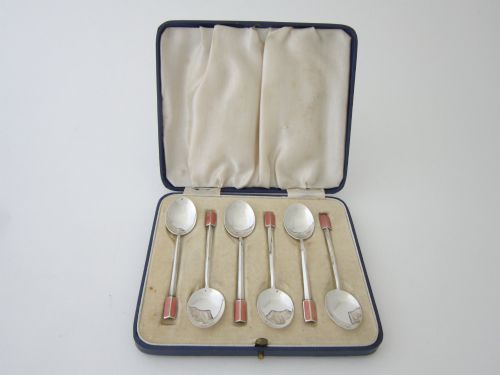
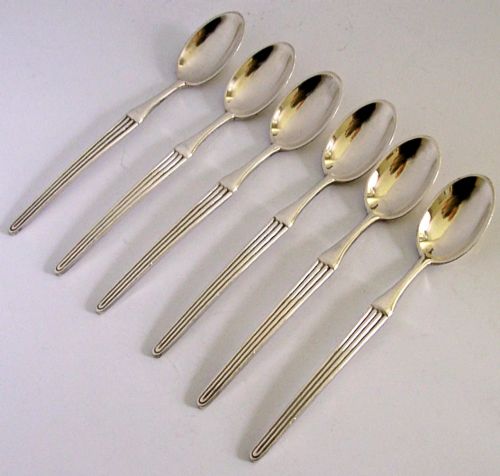
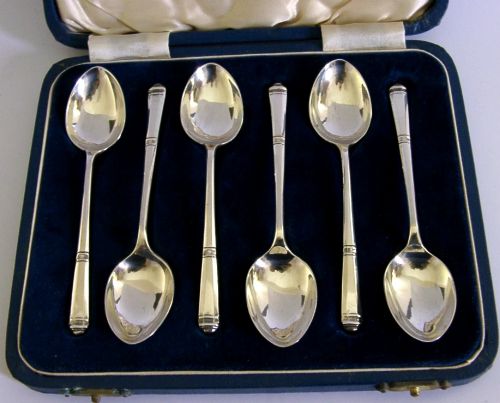
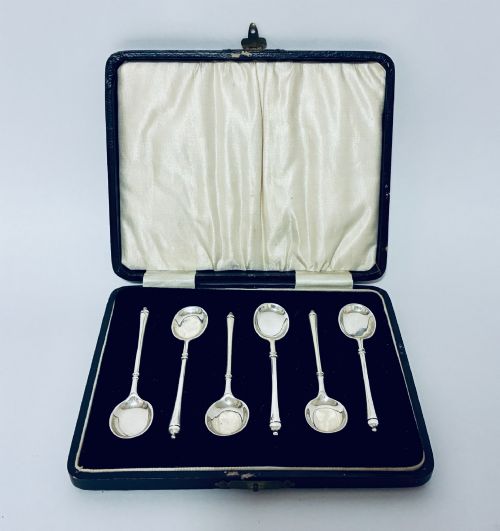
A silver demitasse spoon set comprises matched groups of small spoons designed specifically for coffee service, most often found in sets of six within fitted presentation boxes. These small utensils emerge frequently from twentieth century workshops, spanning periods from Victorian and Edwardian eras through Art Deco and Mid Century Modern designs.
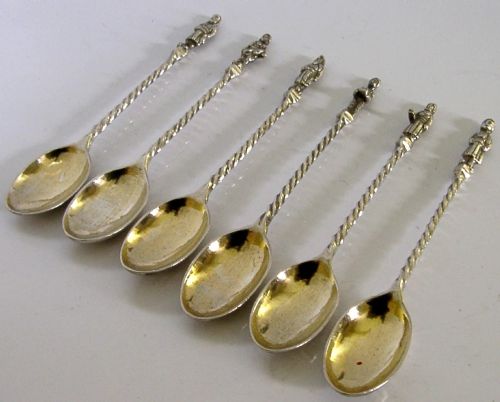
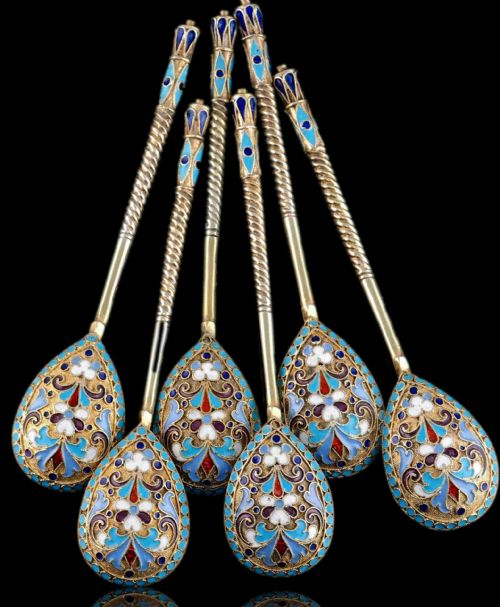
The form encompasses plain sterling silver items alongside decorative pieces featuring enamel bowls and handles, silver gilt finishes, and occasionally paired accompaniments such as sugar tongs or ceramic coffee cans. Origin points range across English provincial assay offices to international makers from Norway, Russia, the Ottoman Empire, and the Netherlands.
Buyers encountering this search phrase will regularly find cased sets intended for gifting or formal dining, preserved alongside fitted velvet or satin linings inside original boxes. The material execution relies heavily on solid sterling silver and silver gilt, with distinct regional styles dictating whether a set favours geometric Art Deco lines or intricate coloured enamel work.
How they were made
Silversmiths constructed these utensils from solid sterling silver or silver gilt, employing traditional techniques of stamping, casting, and hand finishing to shape bowls and slender handles. Assay offices in cities such as London, Birmingham, and Sheffield applied official hallmarks directly onto the metal to certify purity.
Sets incorporating colour frequently utilise enamel applied through cloisonné or translucent techniques, fusing glass powder onto the silver surface beneath high heat. Protective fitted boxes lined with silk, satin, or velvet were custom built to house the precise dimensions of each spoon set.
Some sets come tucked into velvet beds so snug the spoons require polite patience to extract.
What varies in quality
The standard of a silver demitasse spoon set depends heavily on the crispness of the original silversmith work, the weight of the silver used across the entire set, and the intact preservation of any applied enamel. Superior examples maintain unblemished enamel surfaces without chipping, alongside clear, legible hallmarks stamped into every individual spoon.
Presentation also dictates distinction, where sets retaining their original fitted boxes lined in silk or velvet command greater interest than loose utensils. The presence of renowned retail houses or specific maker marks elevates the standing of a set above standard provincial production.
Dmitrii Nikolaevich Nikolaev·David Andersen·Liberty and Co·Walker and Hall·Cooper Brothers and Sons
The Silver Demitasse Spoon Set Glossary
- Demitasse
- A small cup used for serving after dinner espresso or strong coffee, which these small spoons accompany.
- Hallmark
- An official stamp applied by an assay office to indicate metal purity, maker identity, and year of manufacture.
- Silver Gilt
- Sterling silver that has been coated with a thin layer of gold on its surface, creating a warm yellow sheen.
- Cloisonne
- An enamel technique where thin metal wires are soldered to the metal base to create compartments filled with coloured glass paste.
- Assay Office
- An official organisation charged with testing the purity of precious metal items and stamping them with legal hallmarks.
Silver Demitasse Spoon Set: Frequently Asked Questions
What is a demitasse spoon?
A demitasse spoon is a small spoon designed specifically for stirring espresso or after dinner coffee served in small cups.
They measure significantly smaller than standard teaspoons and form the primary components of the sets found in these listings.
Are these spoons made of solid silver?
The listings include pieces struck from solid sterling silver, silver gilt, and standard silver formulations.
Assay marks stamped onto the handles or stems verify the specific metal standard used by the maker.
Why do many sets include boxes?
Many sets were retailed in fitted presentation boxes lined with velvet, satin, or silk to protect the small utensils.
These original cases kept the matched set together for gifting and formal dining storage over the decades.
How do I identify the date of a set?
Dates can be determined through the official hallmarks stamped on the silver, which include date letters corresponding to specific assay office records.
Stylistic indicators such as Art Deco geometric motifs or Art Nouveau curves also help assign pieces to broad design periods.