




Silver Decanter Tantalus
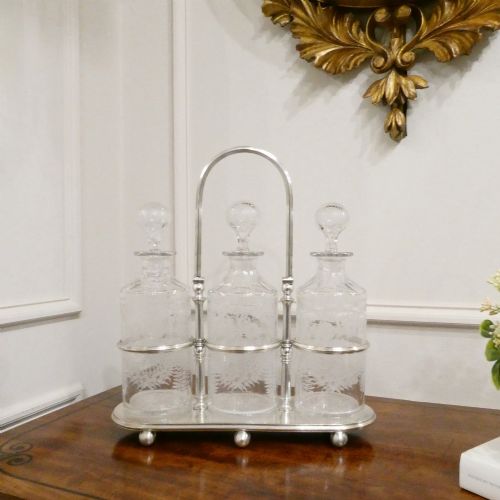
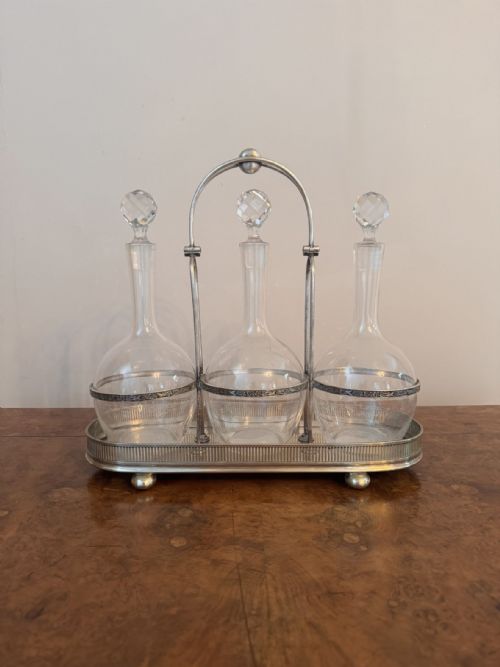
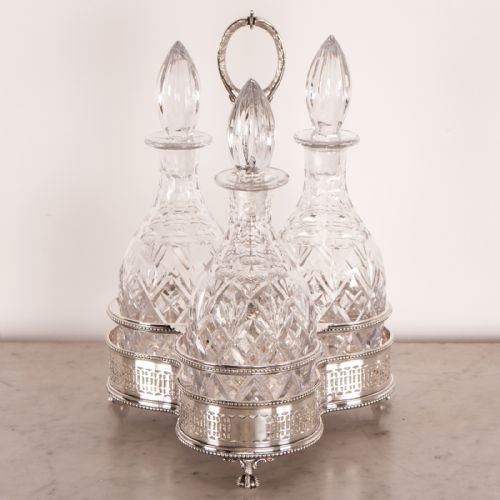
A silver decanter tantalus locks away spirits behind a metal frame, keeping the contents visible yet secure from thirsty guests.
Silver Decanter Tantalus
A silver decanter tantalus brings together a locking frame and matching glass vessels designed for holding spirits. Buyers searching for a silver decanter tantalus encounter designs spanning the Victorian and Edwardian eras through to the Art Deco period.
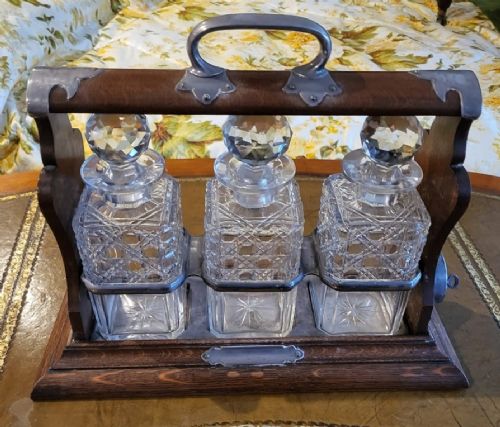
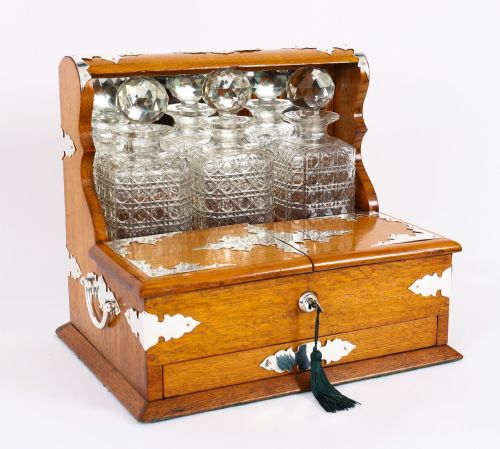
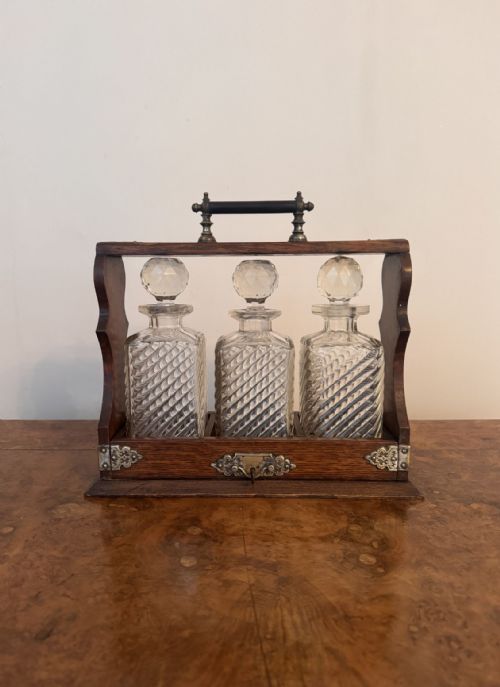
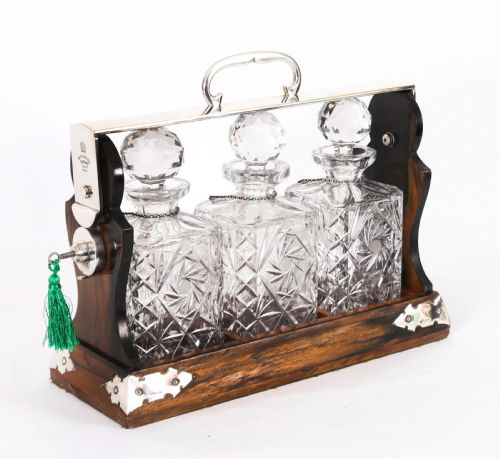
The most common formats on this page include three-bottle oak frames fitted with silver plating and cut glass decanters. Examples range from simple single-bottle stands to elaborate dry bars combined with games compendiums.
Origins trace back to nineteenth-century England, where makers combined cabinetry with metalwork to create locking barware for the home. Pieces appear in various configurations, including spirit barrels, cruets, and liqueur stands alongside standard decanter sets.
Materials and construction
Makers constructed the frames primarily from oak, coromandel, or metal, applying silver plate or sterling silver mounts to secure the structure. Wood cases often feature hinged mechanisms connected to a locking bar that catches the stoppers of the decanters.
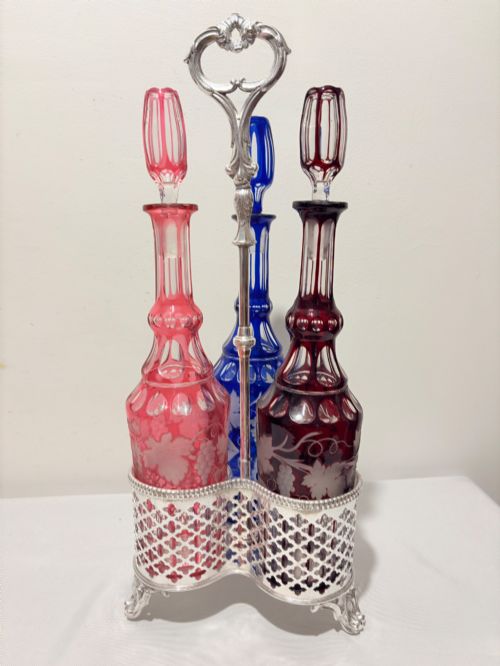
Glass components consist of cut crystal, frosted crystal, or moulded glass shaped into decanters, barrels, or bottles. These vessels fit precisely into lined wooden bases or metal stands designed to hold them firmly during travel or service.
Silver Decanter Tantalus Retail Price Guide 2026
Typical asking prices for silver decanter tantalus among the pieces listed under this phrase on Sellingantiques today, from the lower quarter to the upper quarter. They describe what is for sale here now, not the wider market.
Listings feature pieces spanning the Victorian, Edwardian, and Art Deco periods, executed in oak, silver plate, sterling silver, and cut crystal.
Craftsmanship and execution
Quality rests in the precision of the locking mechanism and the weight of the metal plating over the base metal or solid silver. Better examples integrate the locking bar seamlessly into the timber frame, operating smoothly with a matching key.
The fineness of the glass cutting and the clarity of the crystal distinguish higher tiers of production. Heavier timber housings, such as figured oak or exotic veneers combined with integrated games compartments, indicate more ambitious manufacture.
Lee and Wigfull·Walker and Hall·Elkington·Philip Ashberry·Hukin and Heath·Mappin Brothers·Jacques Adnet
The Silver Decanter Tantalus Glossary
- Tantalus
- A locking drink stand that holds decanters securely by their stoppers so the contents remain visible but inaccessible without a key. The name derives from the mythological figure of Tantalus.
- Silver Plate
- A layer of silver fused to a base metal substrate, commonly utilised for frames and mounts throughout the nineteenth and twentieth centuries. It provides the appearance of solid silver at a different cost of production.
- Cut Crystal
- Glass containing lead oxide that is faceted by grinding and polishing to refract light. It forms the heavy decanters typically housed within these locking frames.
- Games Compendium
- A fitted box containing equipment for various table pastimes, occasionally incorporated into the base of a tantalus. These multi-functional pieces combine barware with entertainment.
- Old Sheffield Plate
- An early method of fusing a sheet of silver to a copper core before rolling them together. This technique appears on earlier stands and frames.
Silver Decanter Tantalus: Frequently Asked Questions
How does a tantalus lock work?
Turning the key releases the metal top bar, allowing it to lift and swing clear of the decanter stoppers. When the bar is returned and locked down, it traps the stoppers so the bottles cannot be removed from the frame.
Most mechanisms rely on a matching key that engages a side-mounted lock, securing the entire wooden or metal retaining bracket.
Were these made for specific rooms?
These pieces were designed primarily for entertaining spaces such as the dining room, study, or drawing room. They allowed hosts to display expensive spirits while restricting access.
Travelling versions were also produced for use on journeys, incorporating secure storage for glassware and games within a single case.
How do I date an oak tantalus?
Dating relies on timber choices, hardware styles, and any registration marks or maker stamps stamped onto the silver plate. Victorian examples often feature heavy oak frames and ornate cast mounts.
Later Edwardian and Art Deco pieces tend to show cleaner lines, simpler woodwork, or the introduction of chrome and modernist metalwork alongside crystal.
Are the keys usually original?
Finding an original working key is uncommon because keys were frequently misplaced over decades of domestic use. Many surviving pieces operate with replacement keys fitted to the historical lock.
The presence of an original maker-stamped key adds to the completeness of the item.