
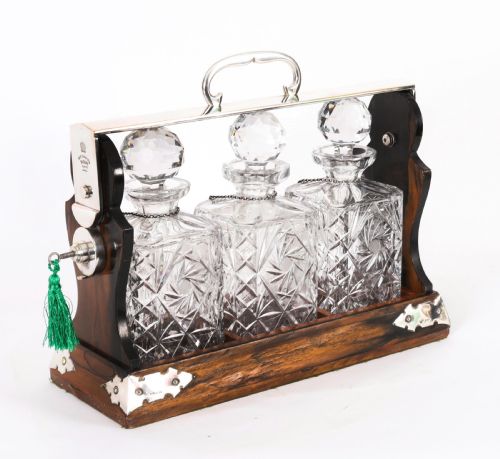
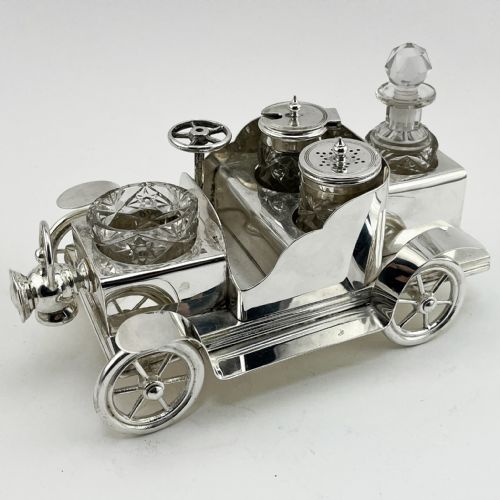


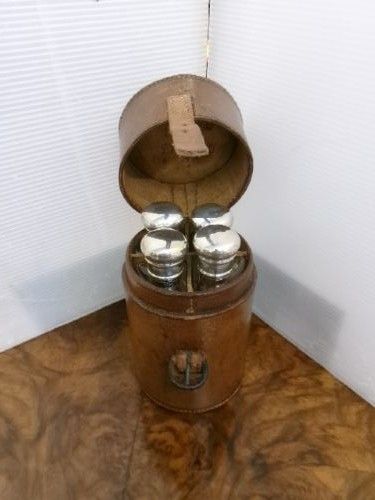


Silver Decanter Set
When you search for a silver decanter set, you encounter everything from secure oak tantali to elaborate stands bearing cut glass bottles.
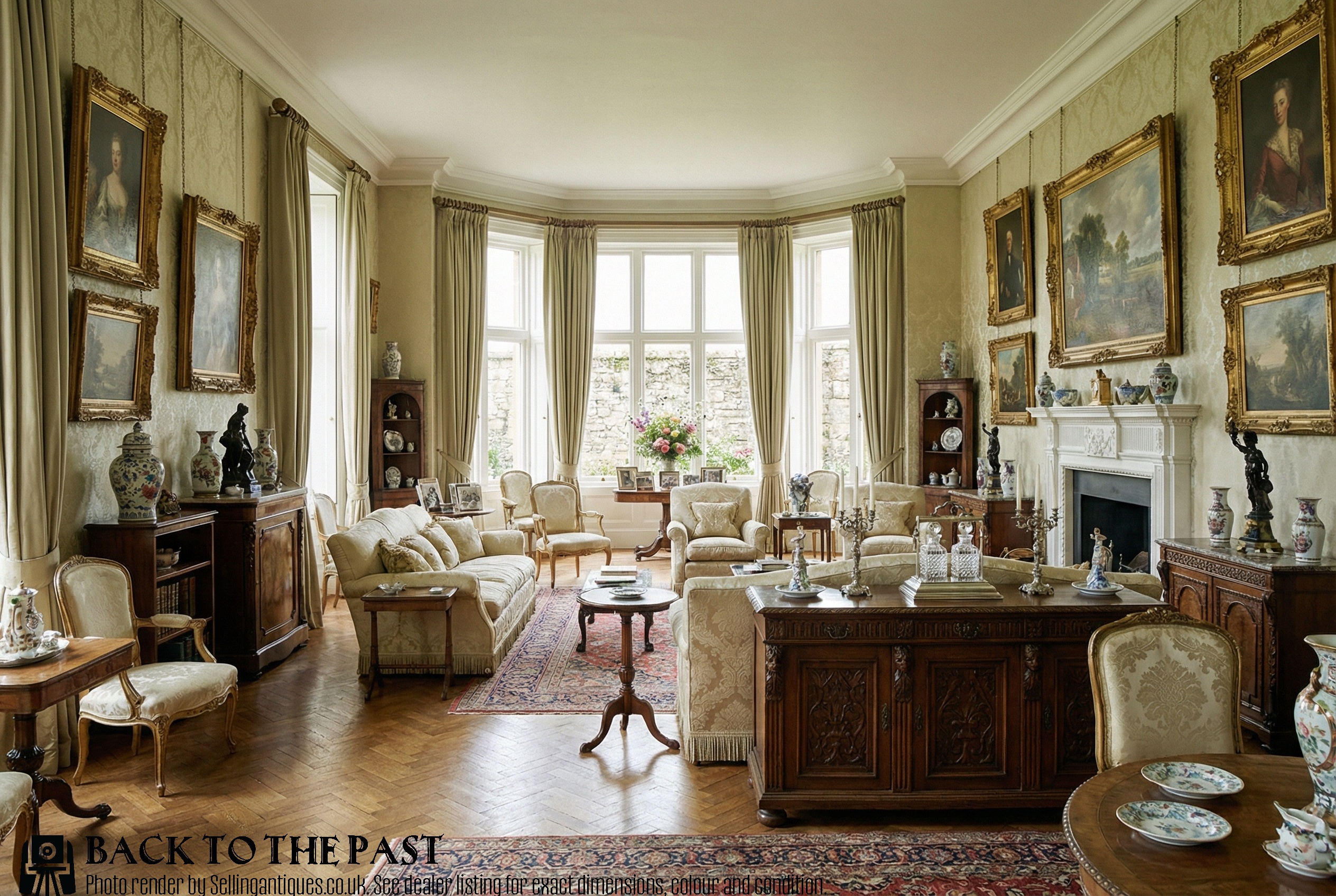
Silver Decanter Set
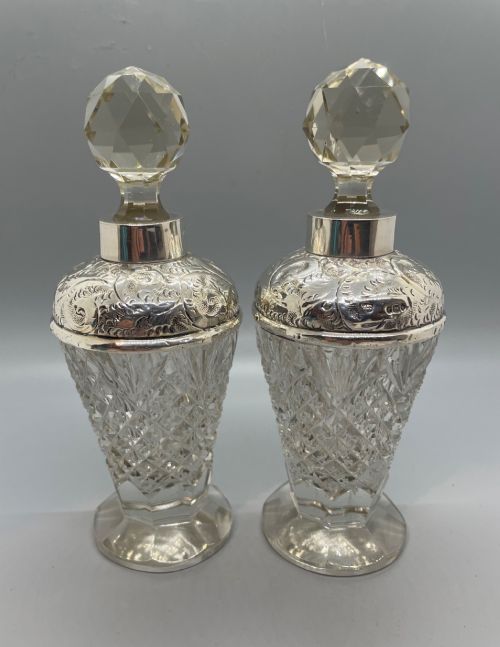
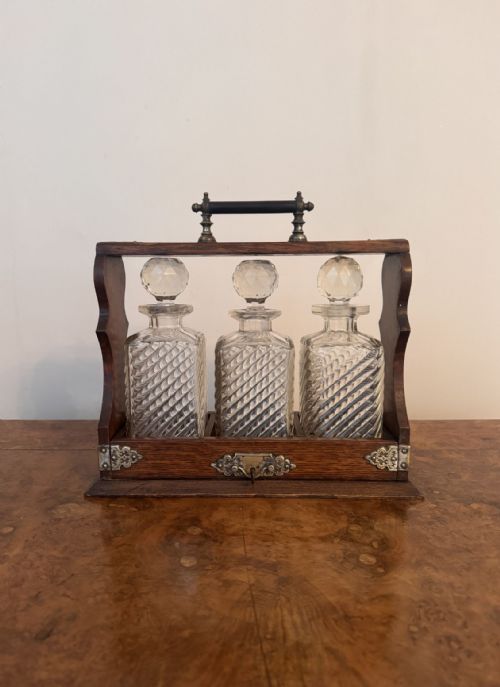
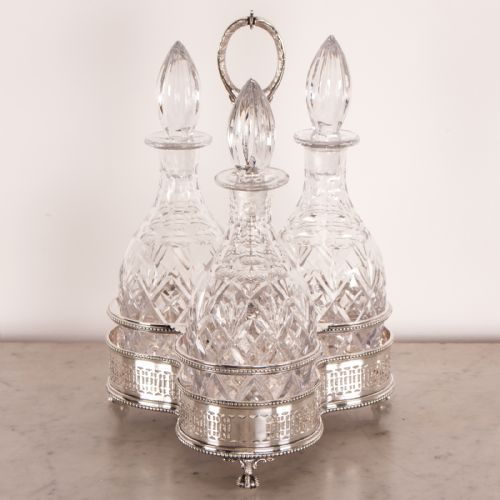
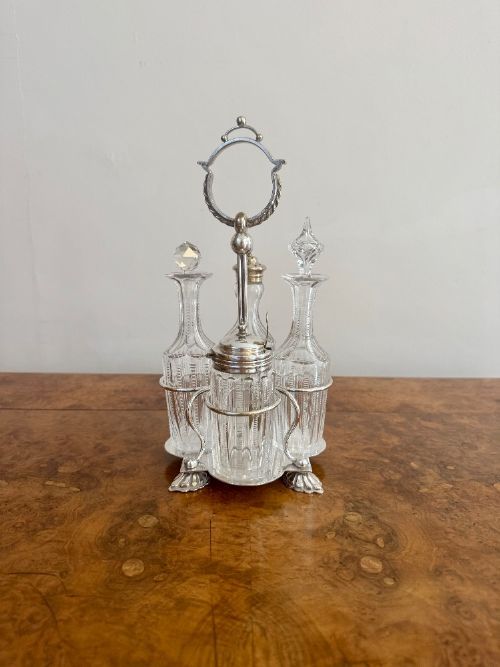
A silver decanter set brings together glass vessels and metal mountings, often taking the form of a tantalus, a cruet set, or a fitted stand holding multiple bottles. These arrangements served the formal dining and entertaining customs of the Victorian, Edwardian, and Georgian periods.
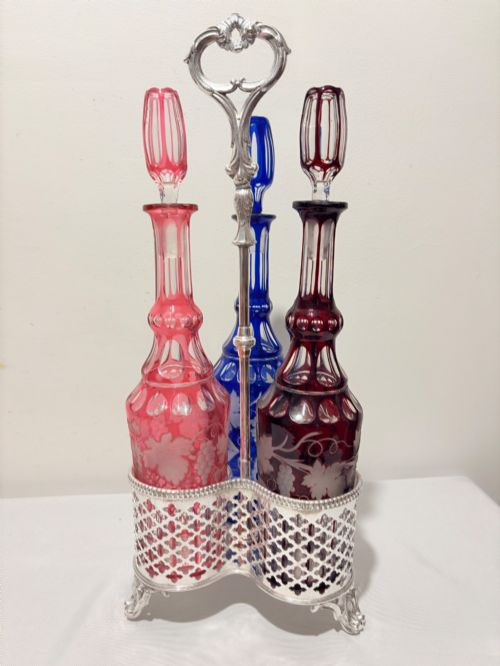
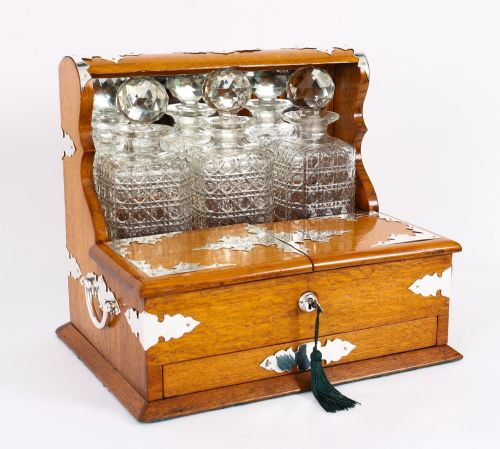
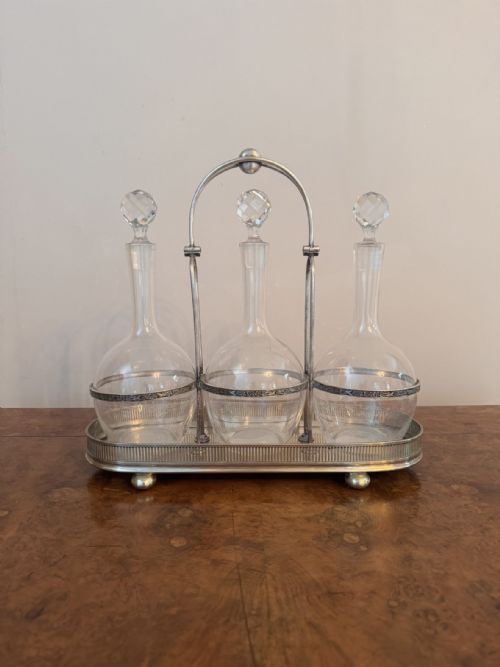
The versions most commonly met on this page include silver-plated stands fitted with three cut glass decanters, oak-cased tantali with locking mechanisms, and collections of hanging silver bottle labels. Many pieces combine structural timber frames with metal hardware and glass bodies designed for serving spirits and liqueurs.
Materials and construction methods
Makers utilised sterling silver, Old Sheffield plate, and later silver plating over base metals to form the stands, mounts, and bottle labels. These metallic elements were often combined with sturdy timber frames constructed from oak, coromandel, or blonde oak.
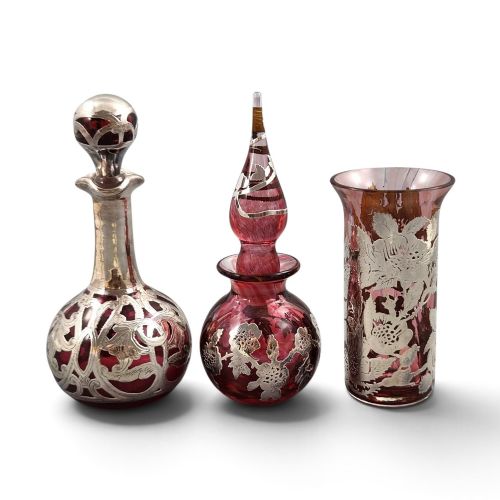
The glass components rely on techniques such as hand-blowing, moulding, and deep cutting to produce ruby glass, frosted crystal, and coloured decanter bottles. Metal locking bars and hinges complete the assembly, particularly on secure tantalus units designed to restrict access to the contents.
Some nineteenth-century decanter sets come combined with games compendiums, hiding playing cards right beneath the whisky.
Factors determining quality
The standard of a silver decanter set depends heavily on the weight and integrity of the metalwork, whether solid sterling silver or substantial silver plating over a sturdy base. Craftsmanship in the housing also dictates value, with fine dovetailing and polished hardwoods setting apart superior examples.
Matching components elevate a piece significantly, particularly when the original cut glass bottles or crystal stoppers remain intact alongside the fitted stand or tray. Maker marks from established silversmiths provide further distinction to the overall ensemble.
Gorham·Walker And Hall·Betjemann·Elkington·Hester Bateman·Charles Thomas Fox·Joseph Angell I·Leslie Gorden Durbin·Henry Wilkinson And Co·Sampson Mordan
The Silver Decanter Set Glossary
- Tantalus
- A locking drink cabinet that holds decanters securely within a metal and wood frame so the bottles cannot be removed without a key. This clever device prevented household staff from sampling the owner's spirits.
- Decanter Label
- A small metal tag hung by a chain around the neck of a bottle to identify the contents, such as port or sherry. These are frequently fashioned from sterling silver or Old Sheffield plate.
- Cruet Set
- A fitted stand holding multiple glass bottles or cruets for condiments, oil, vinegar, or sauces. Georgian and Victorian examples often feature intricate silver-plated or solid silver frames.
- Old Sheffield Plate
- An early method of fusing a thin sheet of sterling silver onto a thicker copper core. This technique predates modern electroplating and produces a warm, characteristic sheen.
Silver Decanter Set: Frequently Asked Questions
What is a tantalus?
A tantalus is a secure locking frame that holds decanters in place to prevent unauthorised access to the contents.
Originating in the nineteenth century, these oak or mahogany units feature a metal bar that engages the stoppers until unlocked with a key.
How do I care for silver plate?
Silver-plated stands and mounts require gentle cleaning with a soft cloth and specialised polish to preserve the metallic coating.
Avoid harsh abrasives that can wear away the thin layer of silver over the underlying base metal.
Are the glass bottles original?
Many sets retain their original hand-blown or cut glass decanters, which match the precise slots and contours of the metal stand.
Inspect the glass for consistent colour, weight, and wear patterns that correspond with the age of the silver-plated or wooden base.