
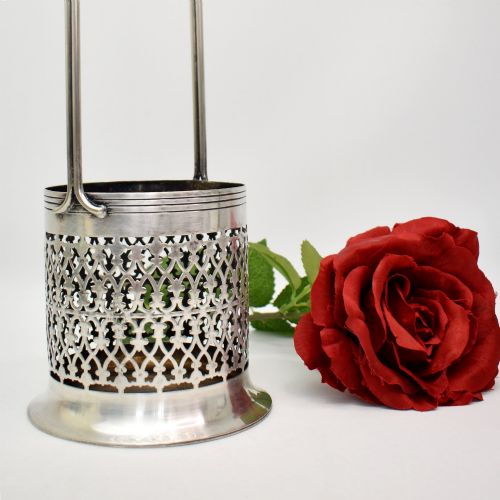


Silver Decanter Holder
A silver decanter holder sets the table with distinction, keeping fine wine and spirits secure during service.
Silver Decanter Holder
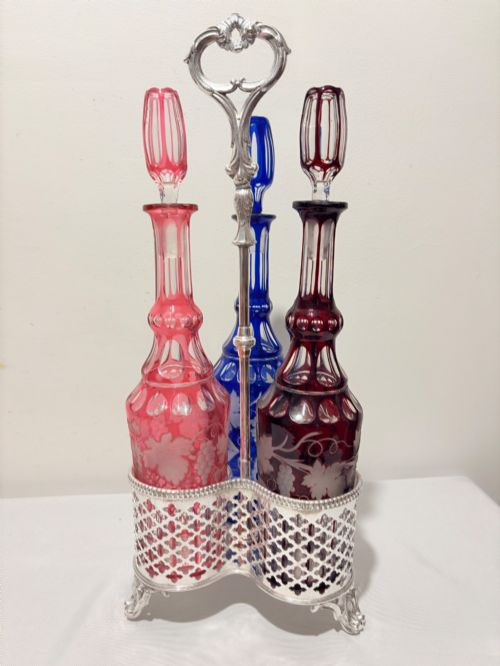
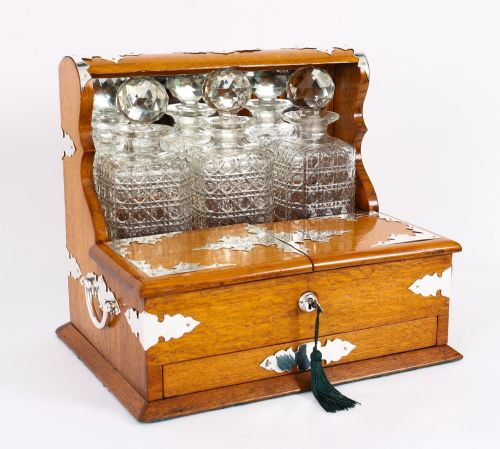
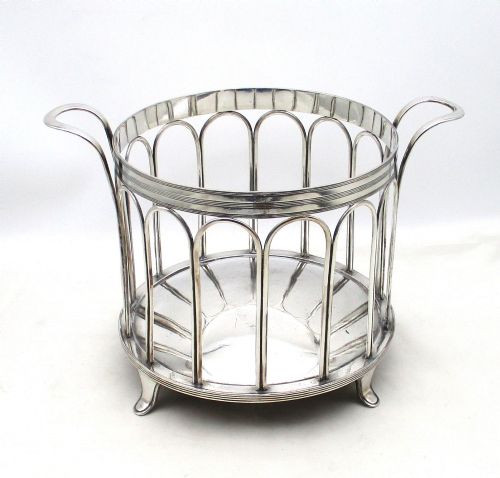
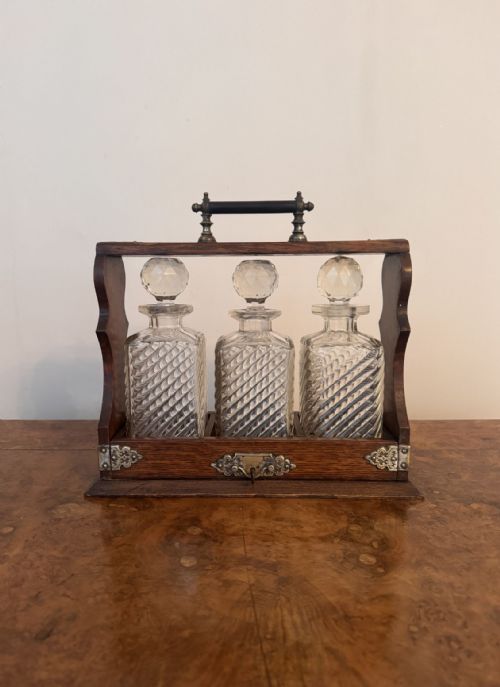
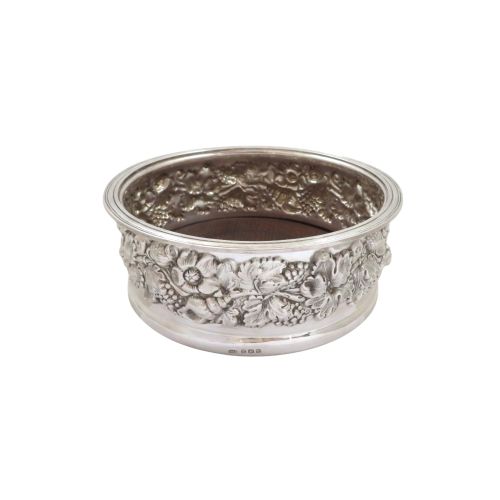
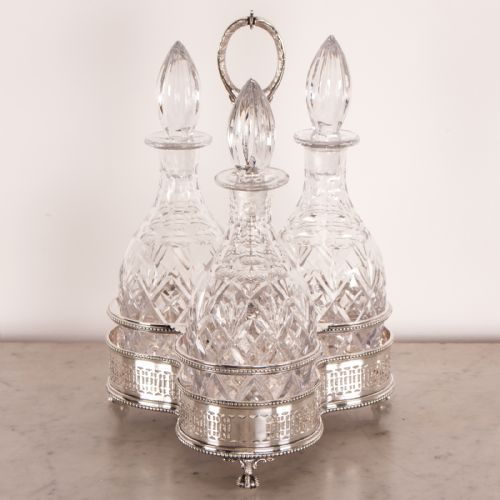
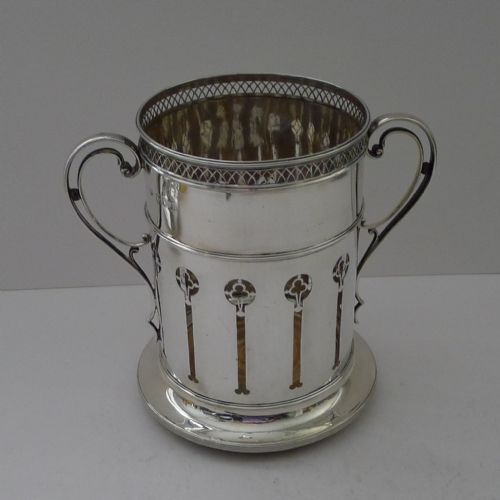
A silver decanter holder encompasses various table pieces designed to carry and display glass vessels, including single wine coasters, multi-bottle stands, and secure locking tantaluses. These items appear across several eras, ranging from Georgian and Victorian examples to Edwardian and Art Deco designs.
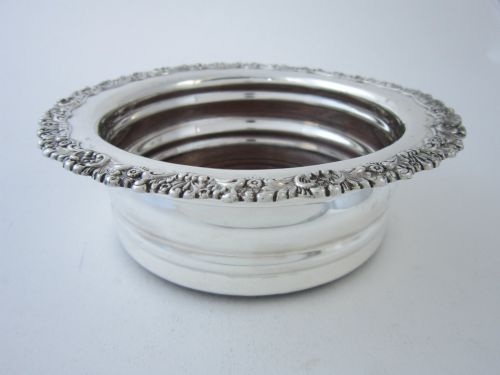
The version most commonly encountered on this page is the silver-plated bottle coaster or wine holder, often paired with cut glass or crystal decanters. Alongside these single coasters, collectors frequently find multi-bottle frames and oak-cased tantaluses equipped with cut glass vessels.
How they were made
Silversmiths utilised sterling silver and silver plate, frequently employing Old Sheffield Plate techniques on copper bases for earlier Georgian and Victorian examples. Many pieces combine these metallic elements with dense hardwoods like oak and mahogany, often featuring turned wooden bases fitted with central buttons or shields.
Cut glass and crystal insert bottles were shaped to fit snugly within pierced or solid metal galleries. Decorative details were achieved through chased grape and vine motifs, gadroon borders, and cast mounts applied to the rims.
Listings feature items spanning from the Georgian era through Victorian and Edwardian periods into the Art Deco twentieth century.
What varies in quality
The standard of a silver decanter holder depends heavily upon the crispness of its chased ornamentation and the weight of the metal used in its frame. Heavier gauge sterling silver or thick Old Sheffield Plate retains its structural integrity and polish far better than thinner later platings.
The integration of materials dictates overall craftsmanship, visible in the snug fit of turned wooden bases and the clarity of matched cut glass decanters. Pieces retaining original unblemished crystal alongside robust locking mechanisms or maker marks demonstrate superior workshop origin.
Walker and Hall·Hester Bateman·Elkington·Matthew Boulton·Mappin Brothers
The Silver Decanter Holder Glossary
- Tantalus
- A locked cabinet or frame holding decanters that displays the contents while preventing unauthorised pouring. The locking mechanism secures the stoppers in place until a key is turned.
- Old Sheffield Plate
- An early method of fusing a thin sheet of sterling silver to a thicker copper base before rolling and shaping. This technique leaves characteristic traces of copper visible at exposed edges and seams.
- Wine Coaster
- A small circular dish fitted with a base, designed to hold a wine bottle or decanter and protect the dining table. They frequently feature wooden inserts and felt-lined bottoms.
- Cruet Set
- A frame holding multiple small bottles or cruets for condiments, oils, or liqueurs. These often share similar silver-plated wirework construction with bottle holders.
Silver Decanter Holder: Frequently Asked Questions
What is a tantalus?
A tantalus is a locking drink stand designed to secure decanters behind a metal bar. It allows guests to admire the spirits while keeping them safely locked away.
Most examples use a key-operated mechanism that blocks the decanter stoppers from being removed until unlocked by the host.
How do I clean a silver bottle holder?
Cleaning requires a soft microfibre cloth and a mild silver polish formulated to protect delicate platings. Avoid abrasive scrubbing brushes that might wear away thin silver layers.
Wooden bases should be treated separately with appropriate furniture wax to nourish the grain without touching the metal gallery.
Can I use old decanter holders daily?
These holders were built for dining tables and remain entirely suitable for holding wine bottles during modern meals. Regular handling adds a pleasant lustre to the metal over time.
Care should be taken to dry the silver and glass thoroughly after use to prevent moisture damage to wooden components.
How do I date a silver holder?
Dating relies on identifying assay office hallmarks on sterling pieces or recognising the manufacturing traits of silver-plated items. Georgian and Victorian examples often display distinct decorative styles and construction methods.
Maker marks stamped into the metal provide a reliable guide to the workshop origin and active operating period.